
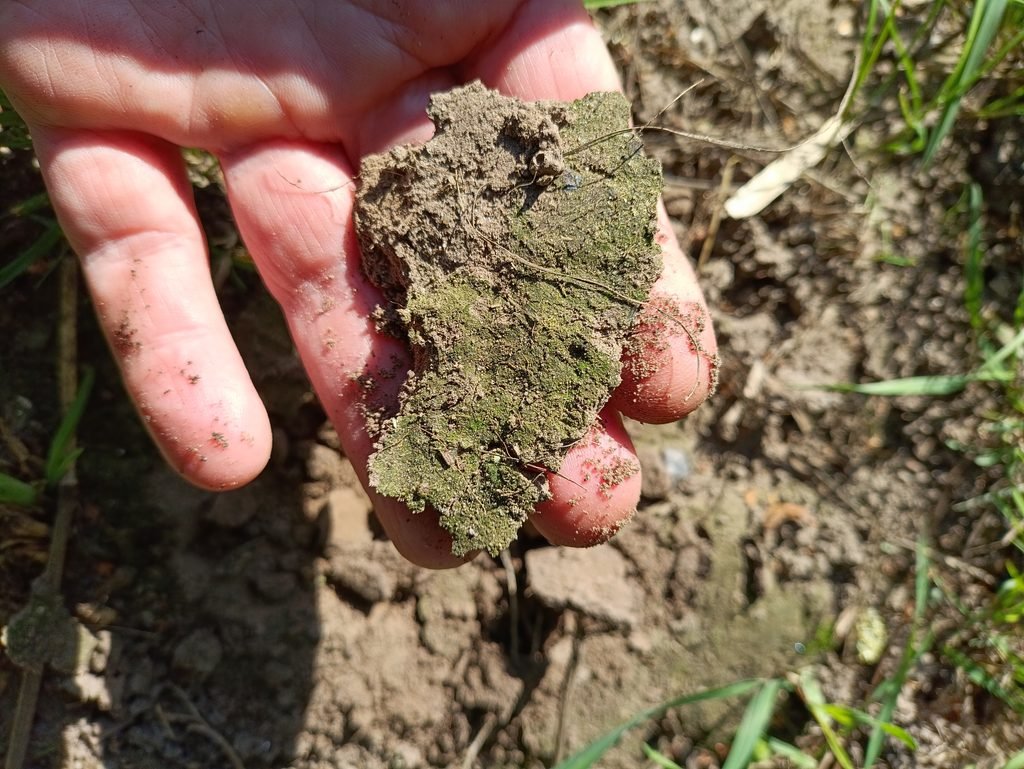
According to our only soil sample analyzed by a laboratory, our soil is classified as loamy sand, consisting of 88% sand, 6% silt, and 4% clay. According to the analysis report, the soil is not prone to surface sealing. Because of the hard, bare patches of soil, I had doubts about whether the soil type in other areas differed from that at the sampling site. Therefore, I began taking soil samples at various points across the pasture and using the so-called jar sedimentation test to examine the layers that form.
You can use your fingers to roll clay into a thin cylinder about half the thickness of a pencil. The sand fraction can't really be rolled into a cylinder.
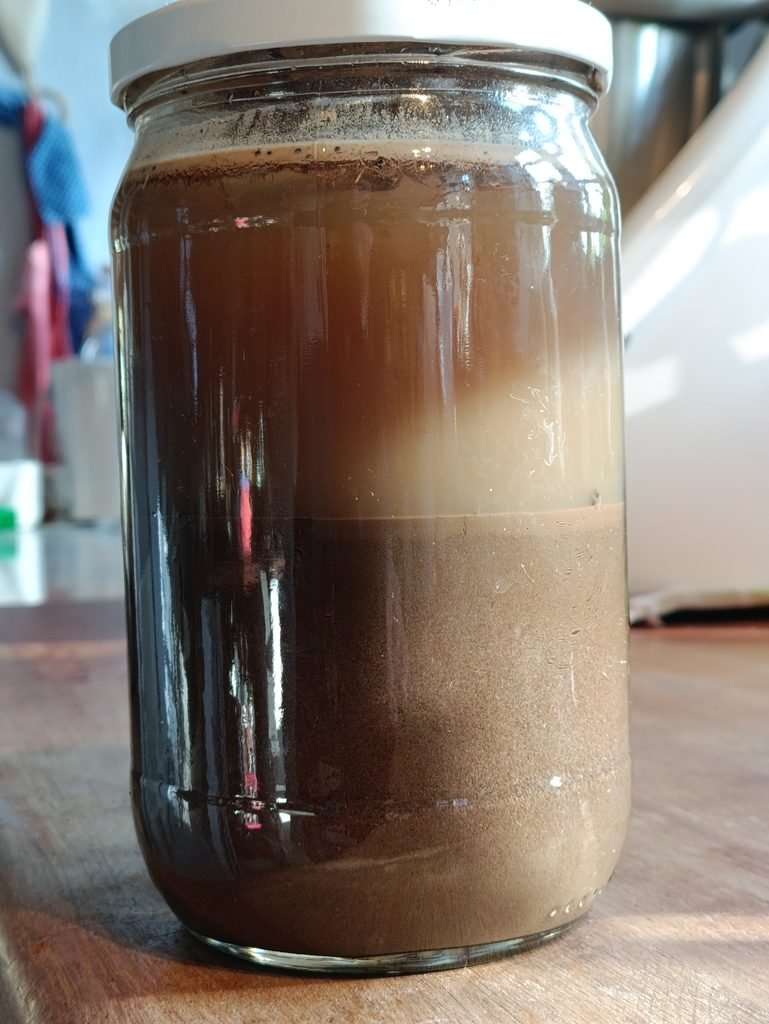
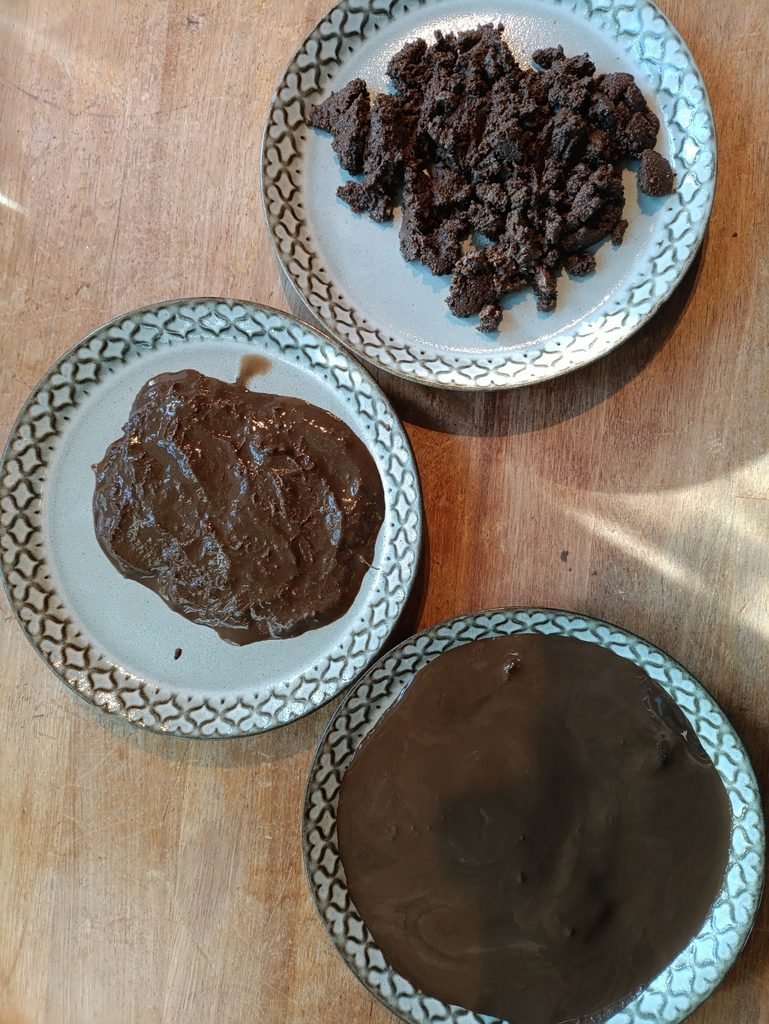
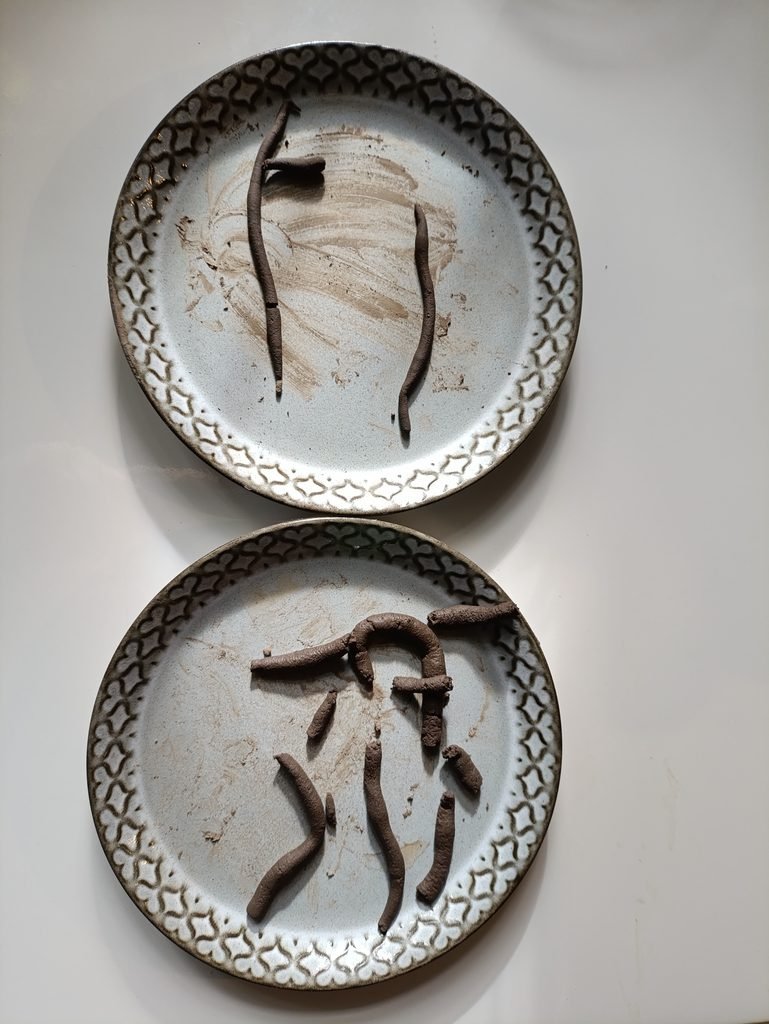
The three soil samples taken so far came from a hard clump of soil in the compost, a hardened patch in the field, and an area with good grass cover. There does not appear to be much difference in the layers that formed.
In the sample taken from the grassy area, the water still hadn't cleared even after five days. This may indicate a high organic matter content. Before taking this sample, I removed the layer of grass with a spade, but apparently I didn't dig deep enough (only about 6 cm).
In all samples, the combined layer of silt and clay was about half a centimeter thick, while the sand layer was approximately 6 cm thick. Thus, there do not appear to be any areas with significantly higher proportions of silt or clay.
 Deutsch
 Dansk
 English