
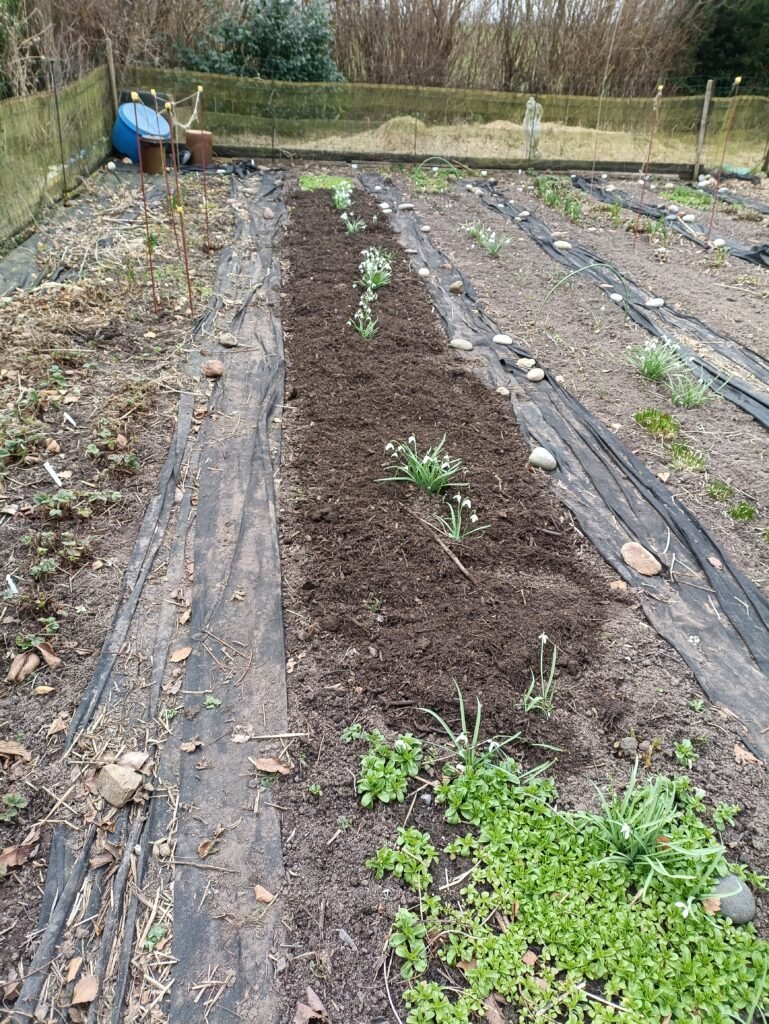
Over the weekend, we picked up compost from the recycling center and spread it on the beds for the heavy feeders (zucchini, pumpkin, white cabbage) as well as in the greenhouse. Over the last five years, we have picked up several trailer loads of municipal compost. In the long run, we mainly want to use our own home-produced compost, but so far we don't have that much of it, and sometimes the quality isn't so good for the kitchen garden because it contains a lot of weed seeds.
Right now, we have four different ways of composting ourselves.
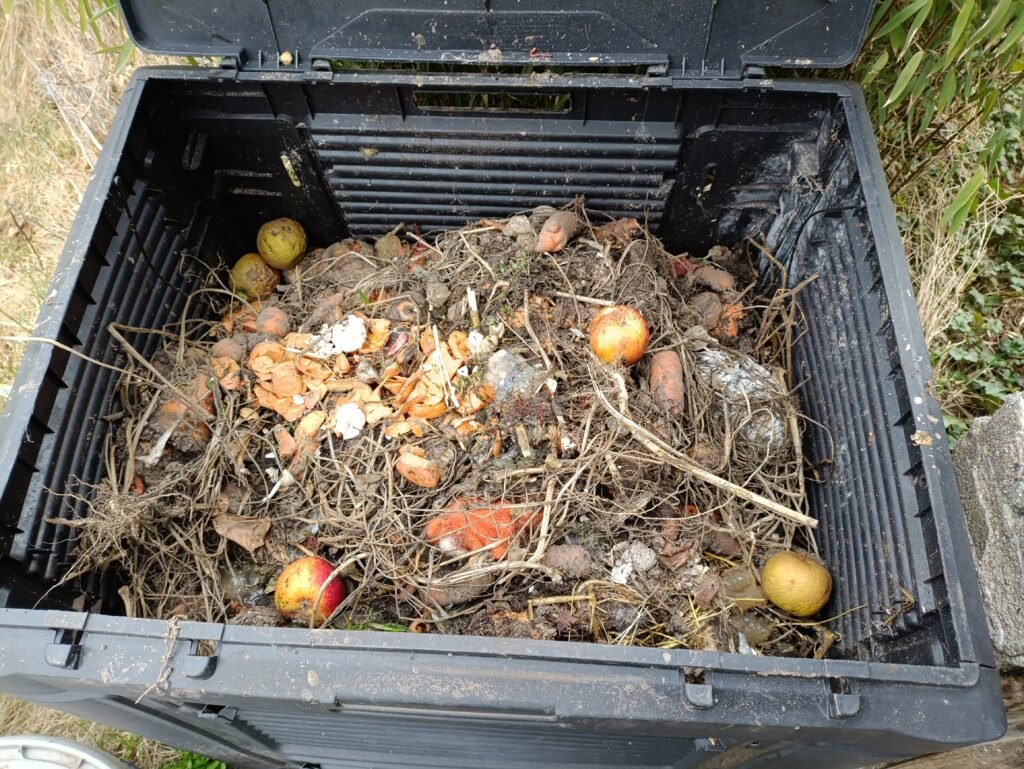
Our kitchen waste and small parts of the garden waste, which does not contain many seeds, go into a composter that we inherited from our predecessors. We don't pay much attention to correct filling here because we usually don't use this material directly, but rather as a starter for the next stage.
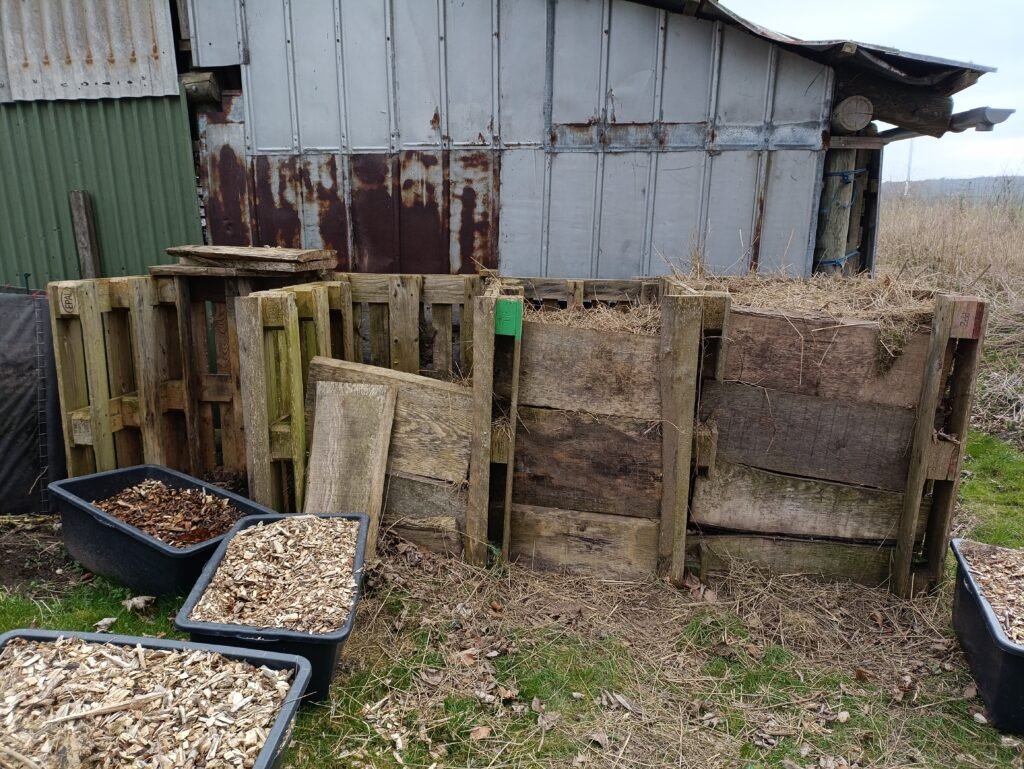
The majority of our garden waste ends up in self-made pallet bins. Since we don't water these and the bins are open at the top, it takes quite a long time for the coarse material to break down. After that, however, the compost is nice and loose. We mainly use this compost around our planted fruit trees in the fruit garden to improve the soil a bit and suppress the growth of grasses, etc., under the layer of compost.
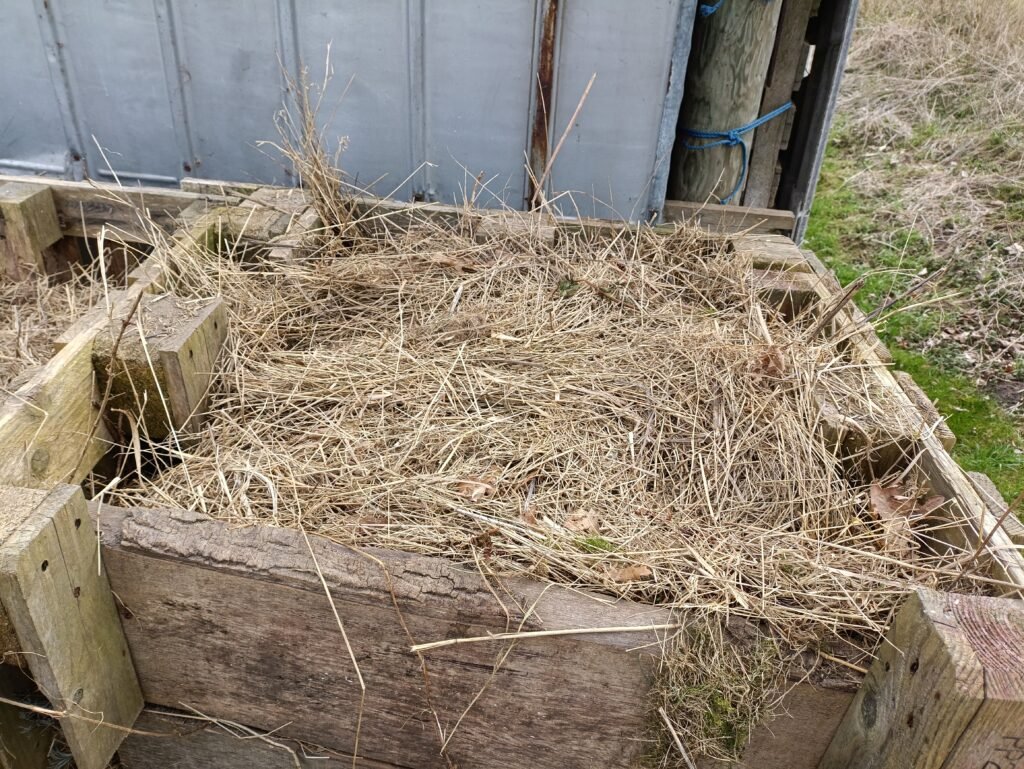
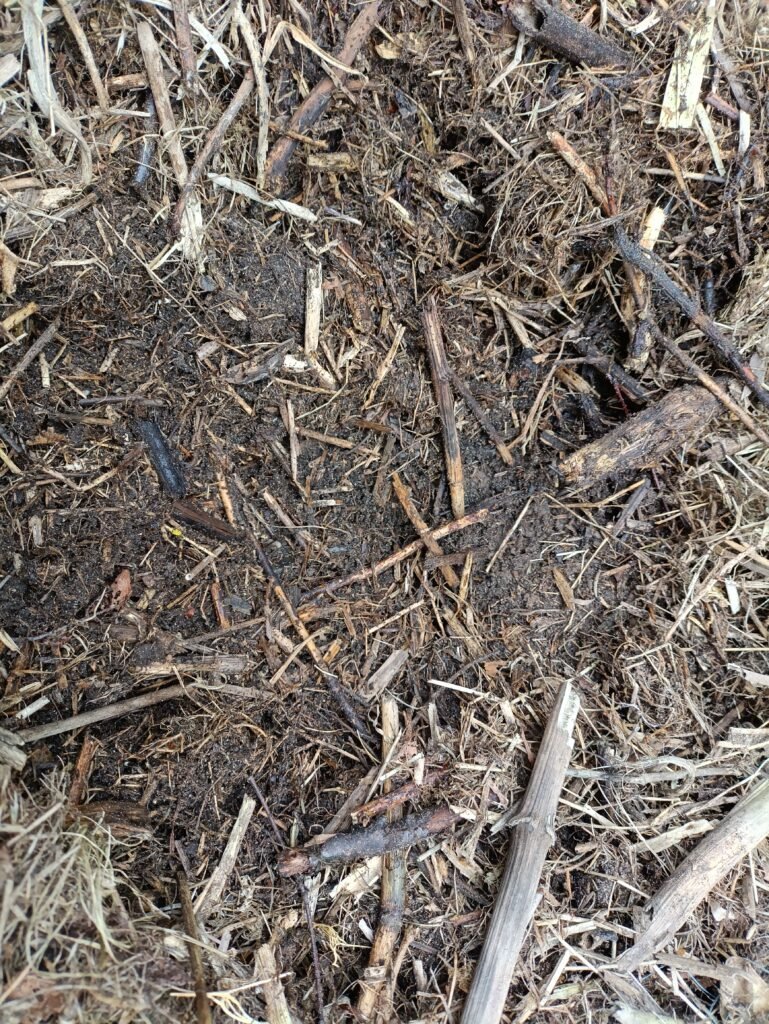
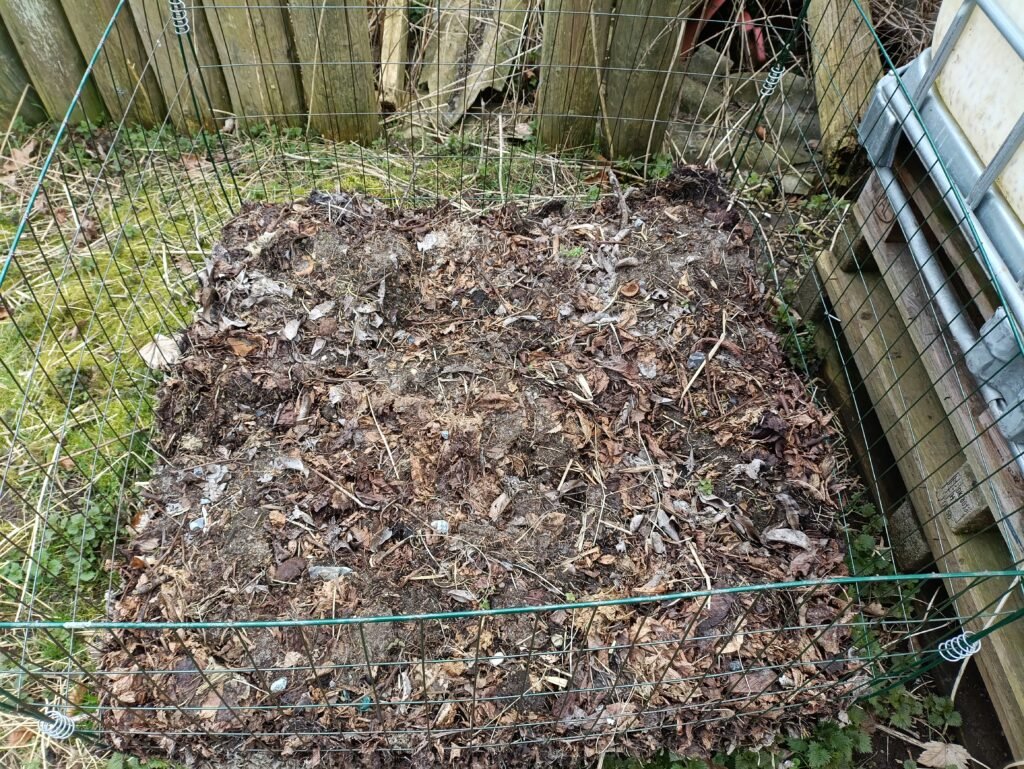
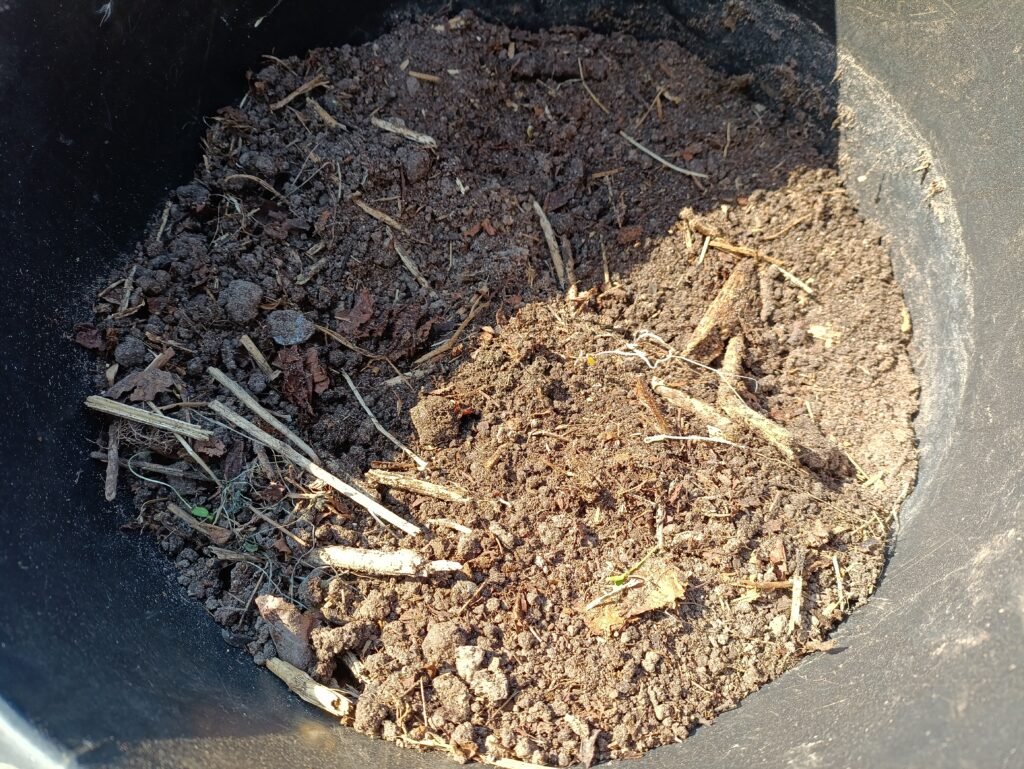
I use leaf compost for mixing my seed-starting soil. I rake up the leaves in autumn and pile them into one of the compost bins. They stay in there for at least a year. After that, the collapsed mass is moved into a small wire bin so that the large bin is free again. The material stays in the wire bin for another year before it is sifted. In the post from February 26, 2026, I describe how the potting soil is mixed.
Last year in May, we started a new method of composting based on the so-called „Johnson-Su“ compost, though slightly simplified. Here, air is supplied through tubes, and the material is sprinkled with water daily. This is intended to promote a large number of beneficial microorganisms over a period of at least one year.
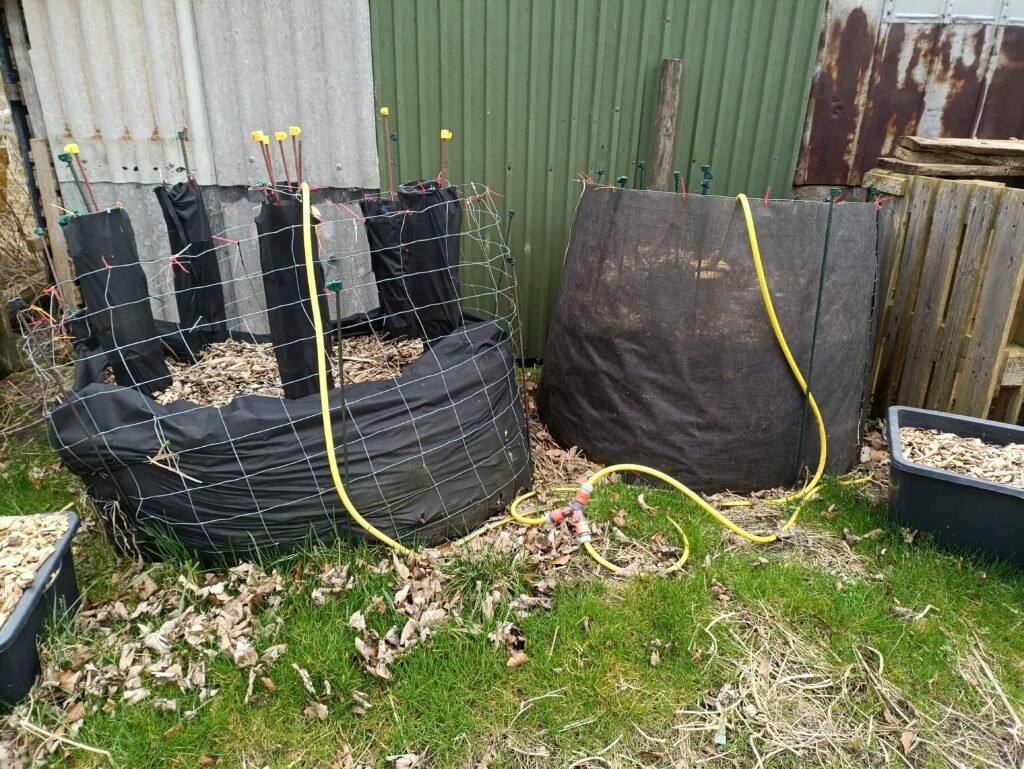
The Johnson-Su goes with garden waste, old straw and hay, as well as kitchen compost and compost from our pallet boxes that has not yet completely decomposed. Actually, almost any organic material can go in there.
 Deutsch
  Dansk
Dansk  English