16/3/26

The decision of whether the animals should be moved to a new paddock is not always easy to make. On the one hand, we must keep in mind that the plants have enough time to recover, which is why we must not move the animals too quickly or we must significantly reduce the size of the fenced areas. Especially when plant growth picks up again, they are sensitive to frequent grazing.
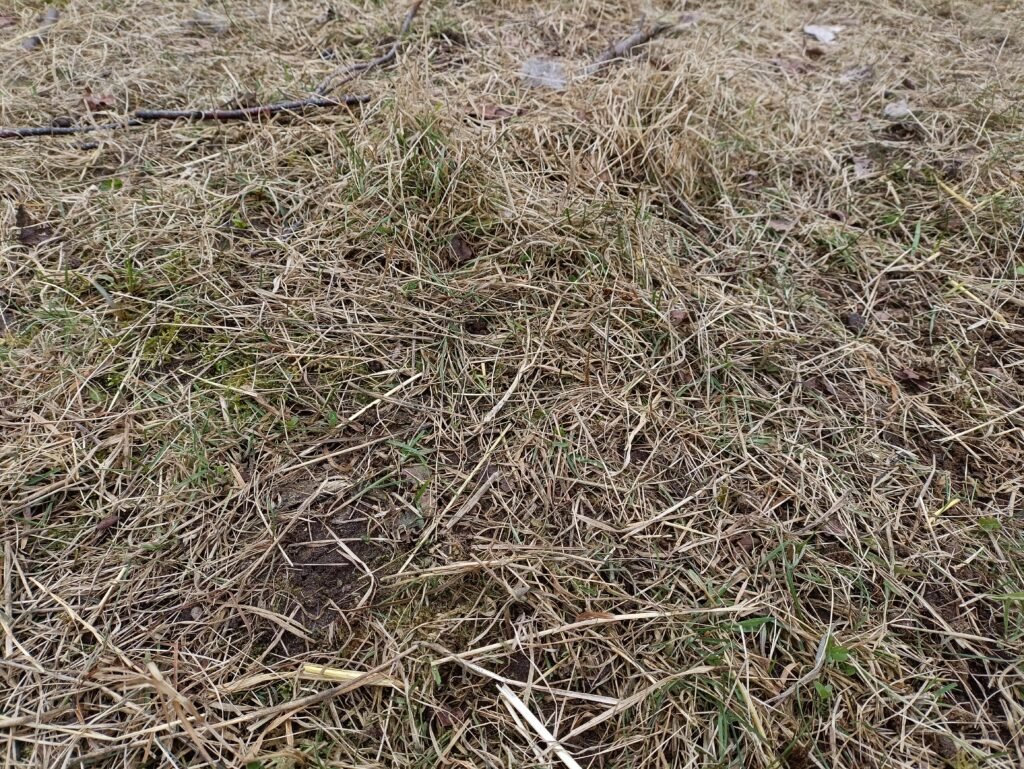
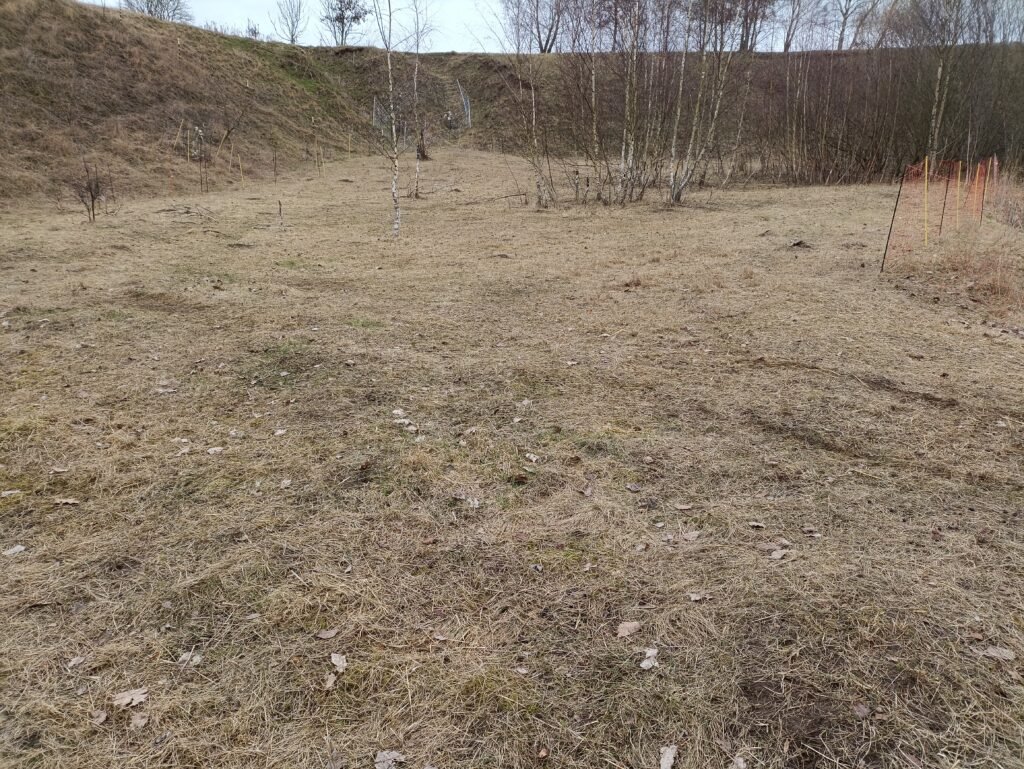
In the gravel pit, it didn't look like the growth phase had really started again yet. Therefore, we would have liked to leave the animals there a little longer. Small remnants of grass were still present on the large pasture area.

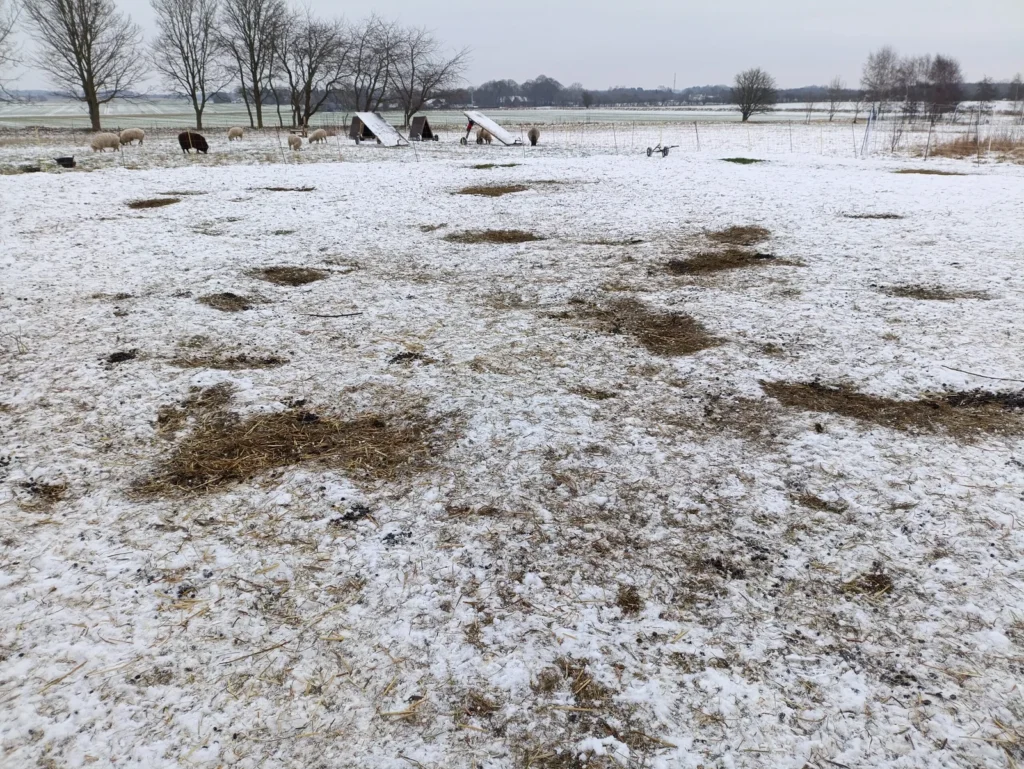
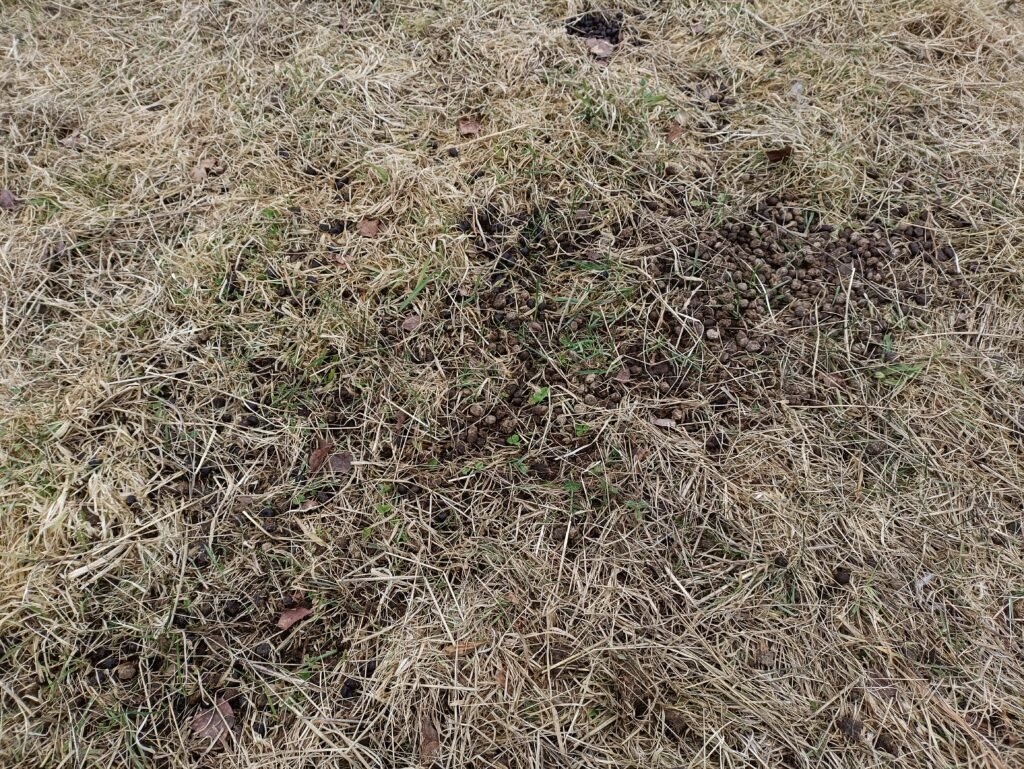
On the other hand, the animals had grazed down almost everything across a large portion of the area, and in places there was plenty of dung on the ground. The animals avoid these areas. Since our hay storage is already severely depleted, we did not want to supplement with whole bales of hay, but only a minimum so that some roughage is definitely available during feeding.
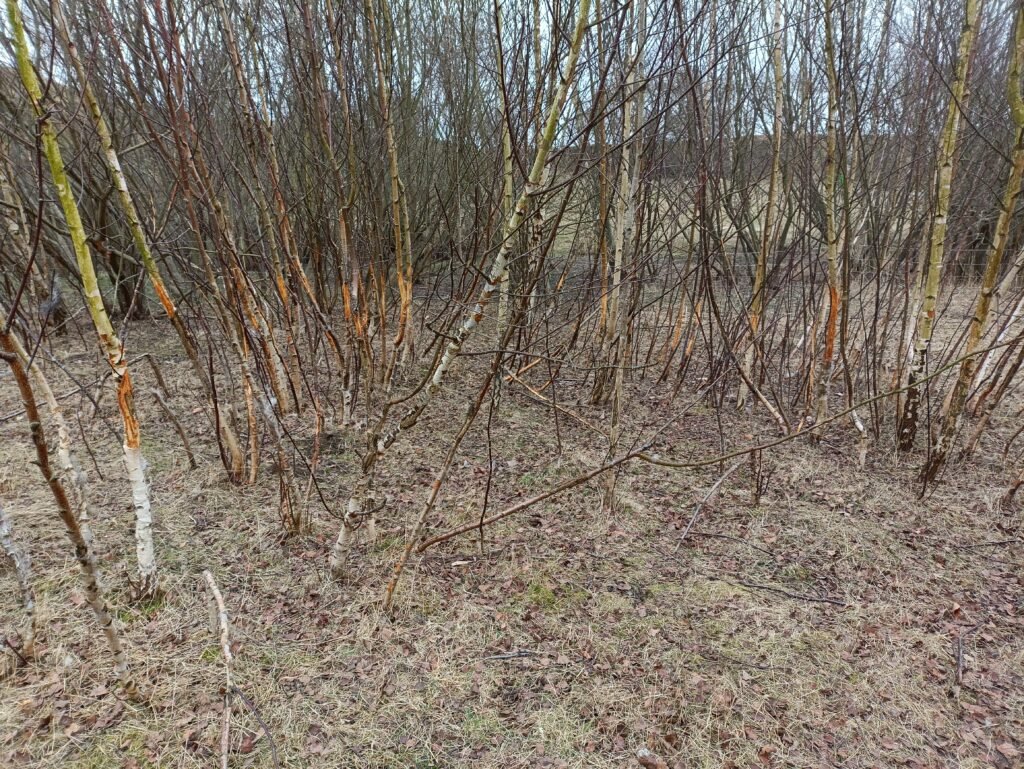
Furthermore, the goats in particular had already damaged a large portion of the trees, and the chances of survival for these trees were decreasing with each passing day. Therefore, we decided to move the animals to the next section.
11/2/26

After it snowed last week, there is still a continuous layer of snow outside. Especially our four Danish Landrace chickens were initially not thrilled and immediately turned back on the chicken ladder in the morning to head back into the coop.

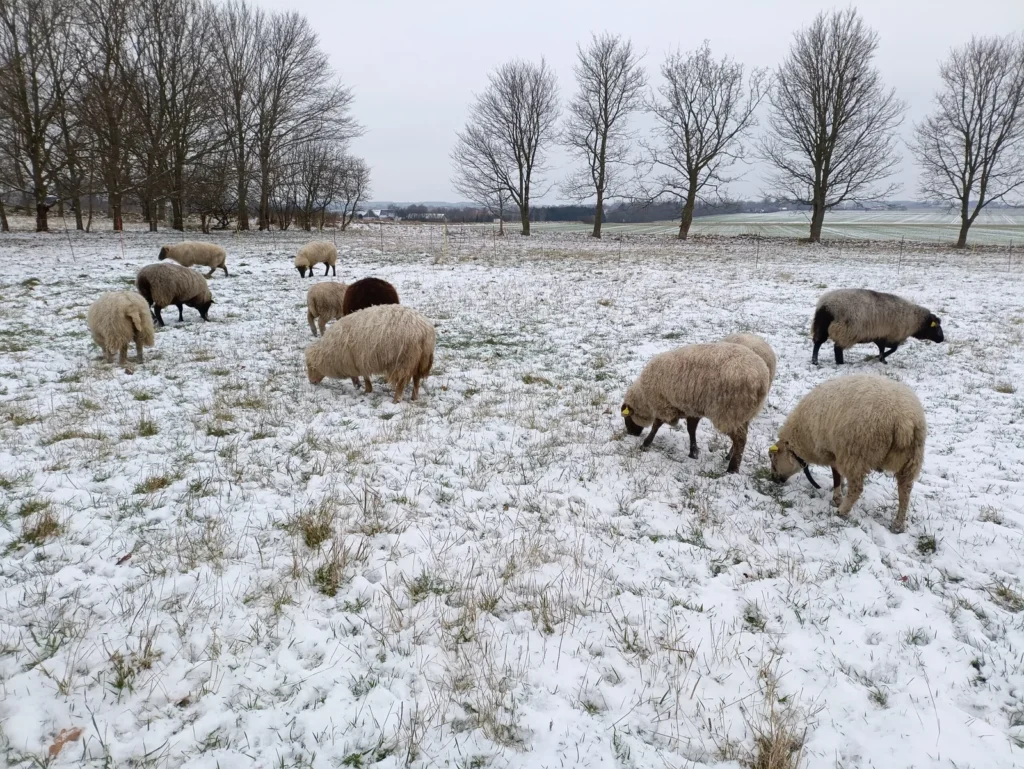
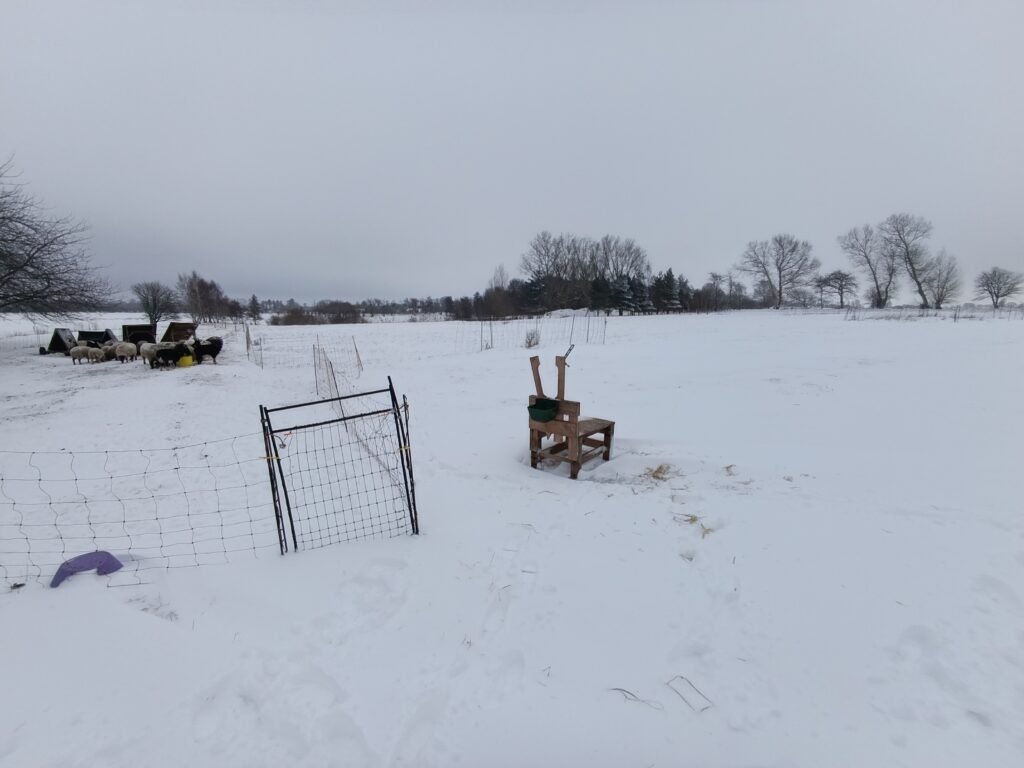
The temperatures have been hovering around freezing for the past few days. Johnny managed to hammer the fence posts into the ground so that we could move the sheep and goats. While the yield isn't quite as high due to the layer of snow, at least the area isn't too full of manure.

animals in the snow

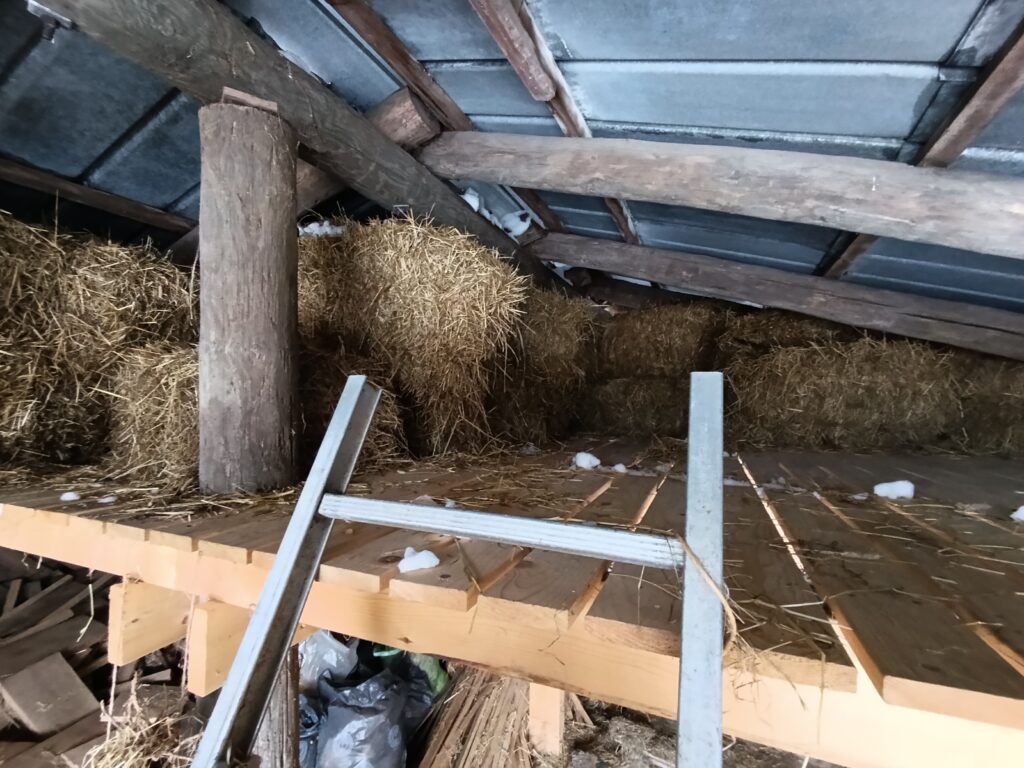
We can also save some hay. The last winters weren't that cold, so we didn't need much. This year, there aren't as many bales left. 

hayloft

We hope the remaining bales will last until the grass grows again. Otherwise, we will have to buy more. We prefer the smaller hay bales because we don't have any equipment to handle them.

Small hay bales are called Morten Korch bales in Denmark. Sometimes they are already sold out in the spring and we have to resort to the large round bales.

7/1/26

Our animals have moved to the next piece of pasture.
Despite the light snow cover, they immediately started grazing.
Some even prefer the grass of the concurrently provided hay ration.

img 20260107 100226 scaled

There is not much left on the old piece.
If we hadn't supplemented with hay and our daily ration, that certainly wouldn't have been enough.
The sheep and goats didn't seem too stressed before the move.
Without supplementary feeding, we would have had to move them after one to two days.

img 20260107 100552 scaled
Scroll to Top