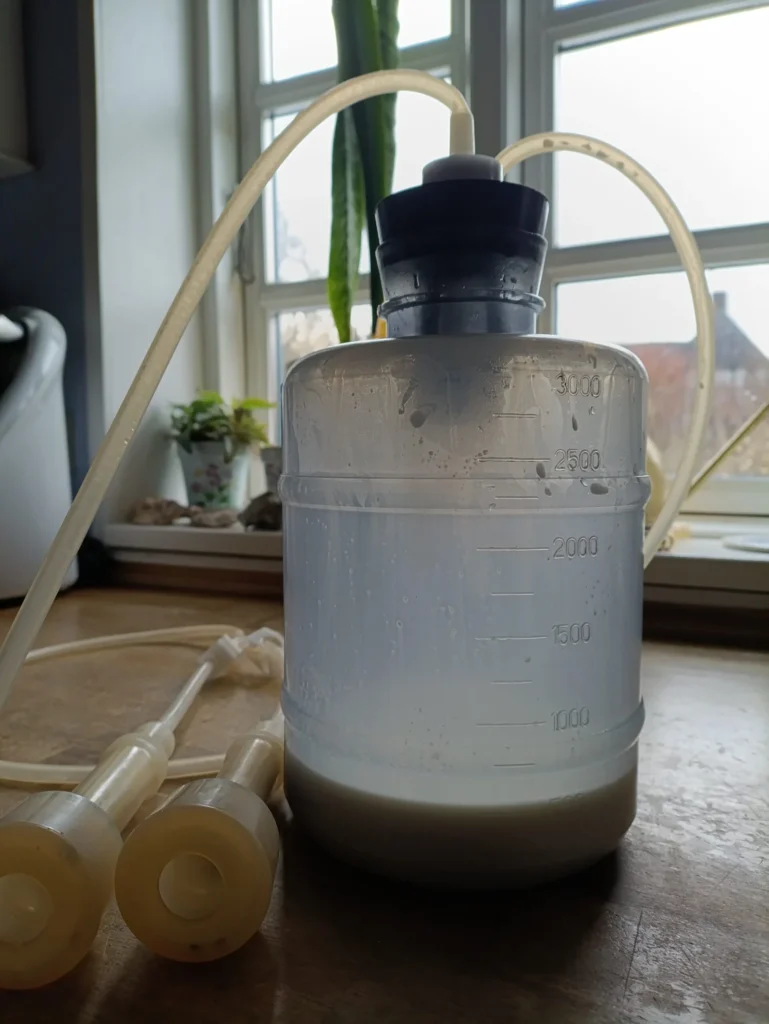
10/3/26

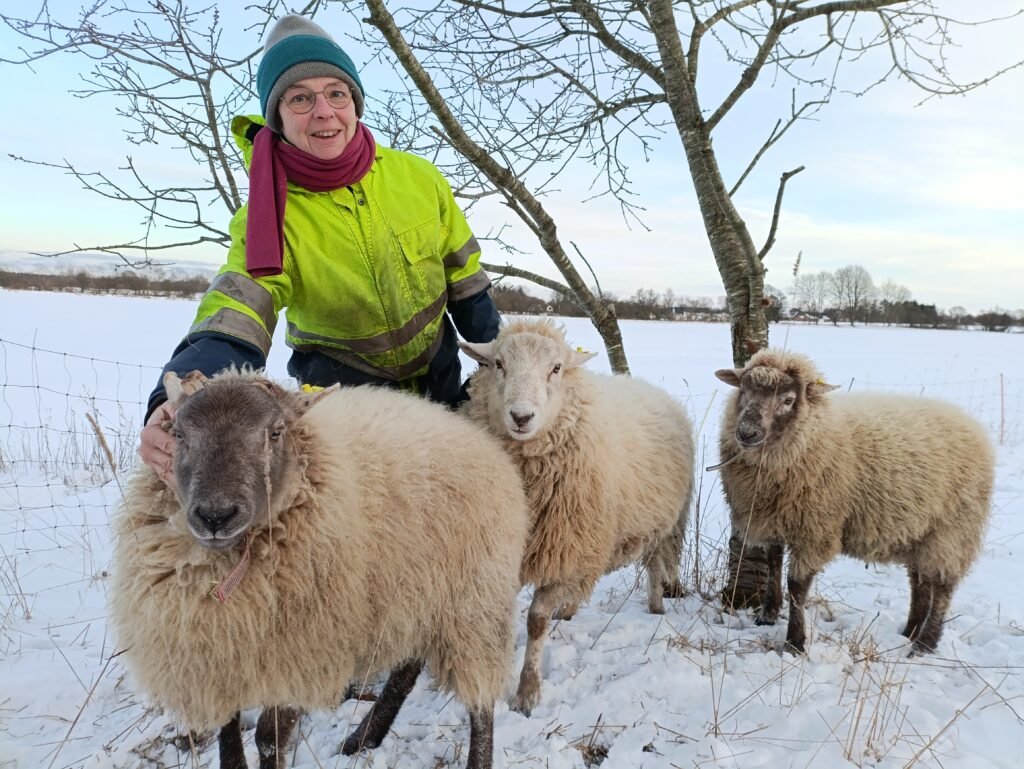
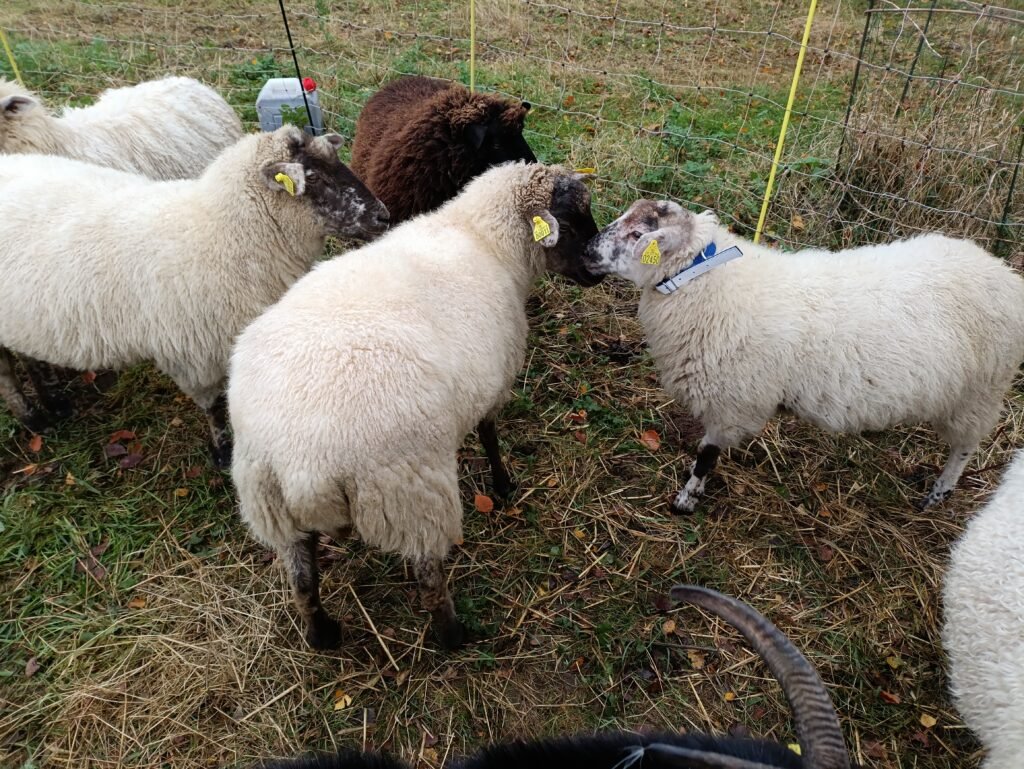
Slowly, the first signs are appearing that our sheep and goats are pregnant. This is especially difficult to tell with the sheep.
Many already look very rounded, but this can also be due to their thick fur.  
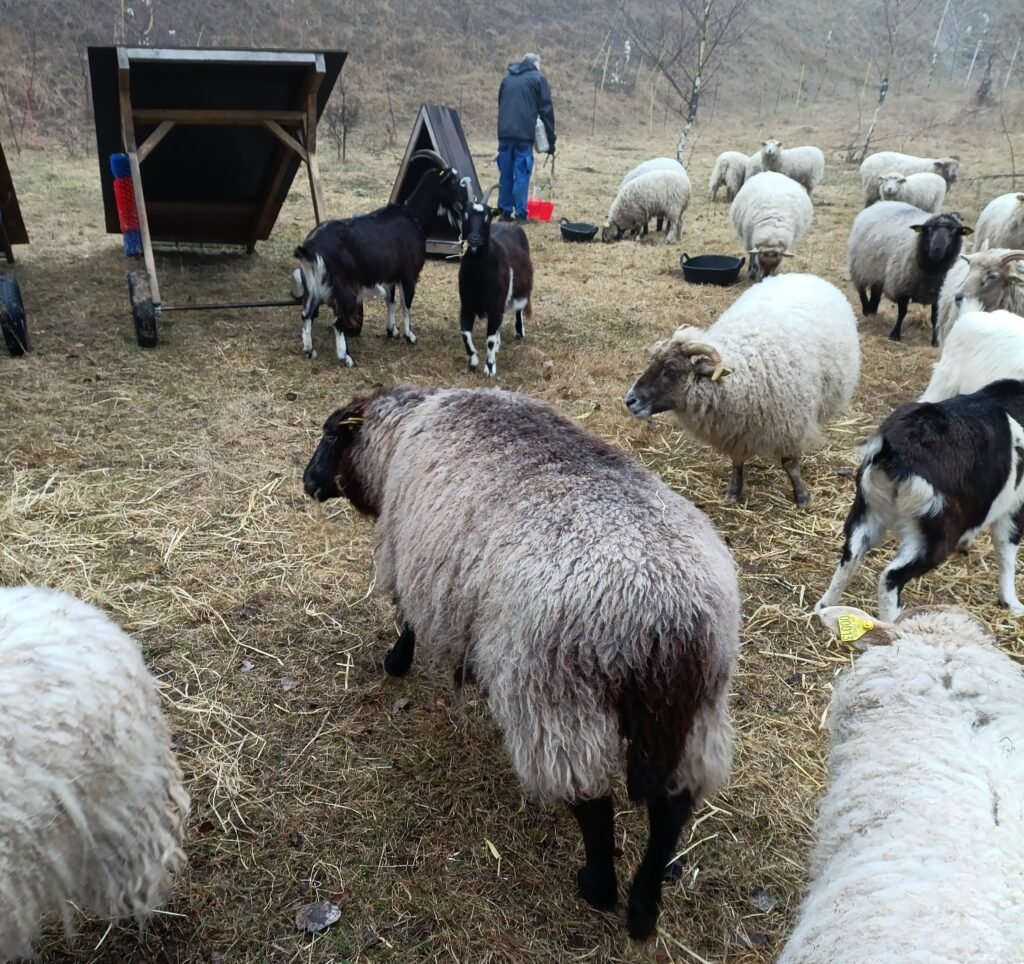
Chocolate
Schoki in March 2026

Last year Schnauzi, our oldest lamb from the year before that, had grown very wide, but did not give birth to a lamb. 
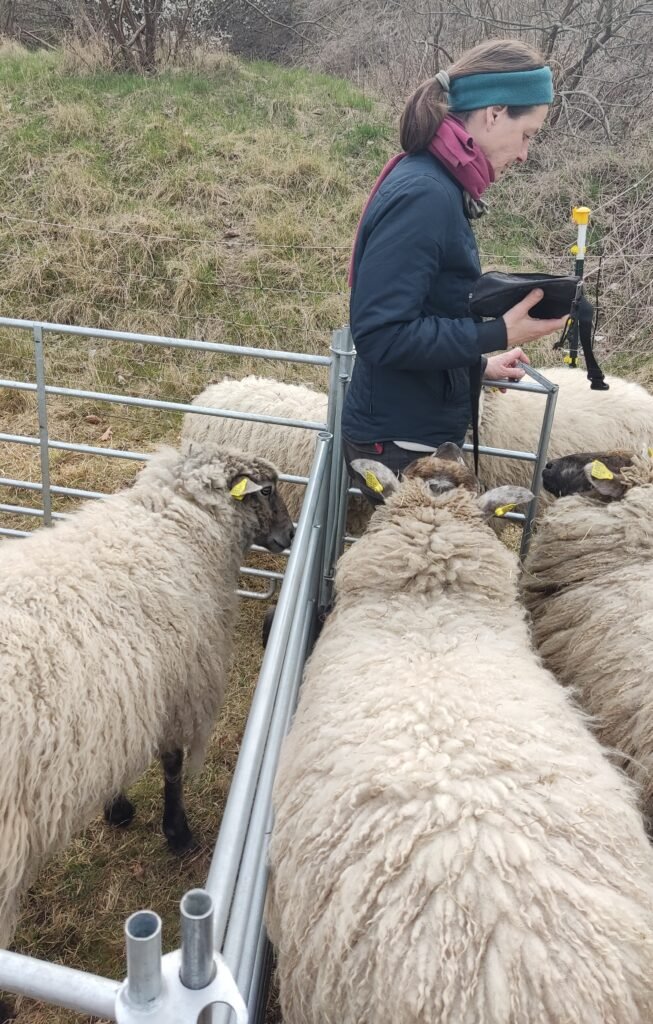
Schnauzi
Schnauzi in March 2025

In addition, the animals drink significantly more, even though the temperatures this year have not exceeded 14°C so far.
Today we even had frost again. While only 10-20 liters were drunk during the winter months, 60 liters are currently being consumed.

Another sign that may indicate an impending birth is that sheep isolate themselves from the flock.
However, this can also happen for other reasons.
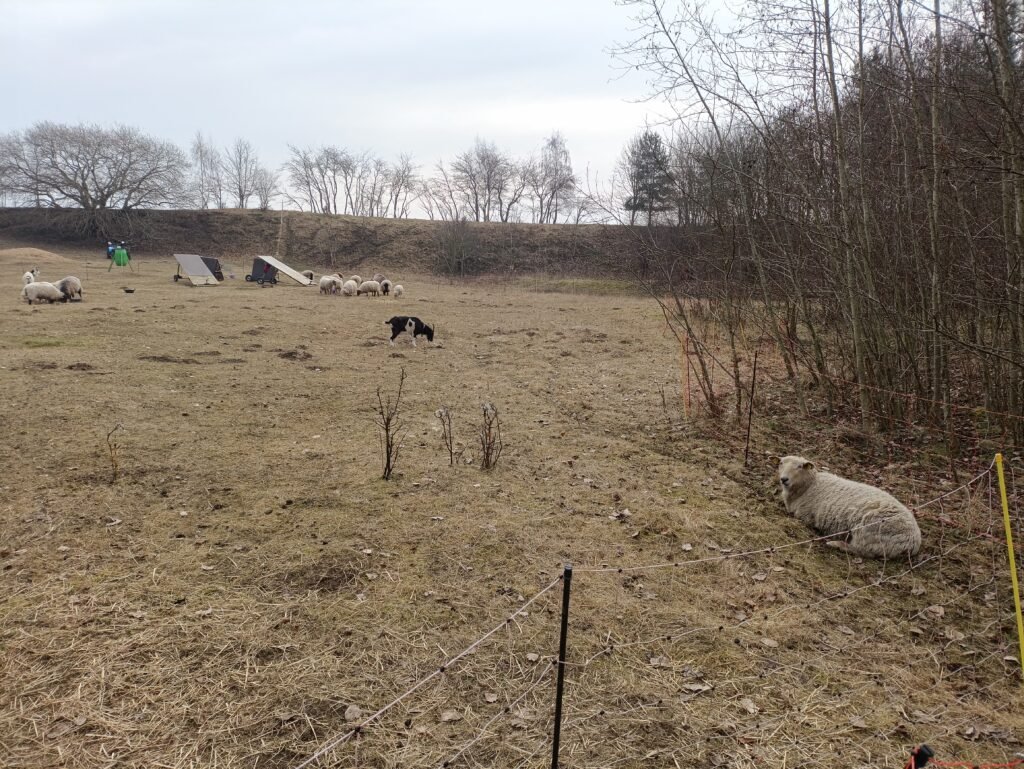
Schlacksi
Schlacksi is taking some time off

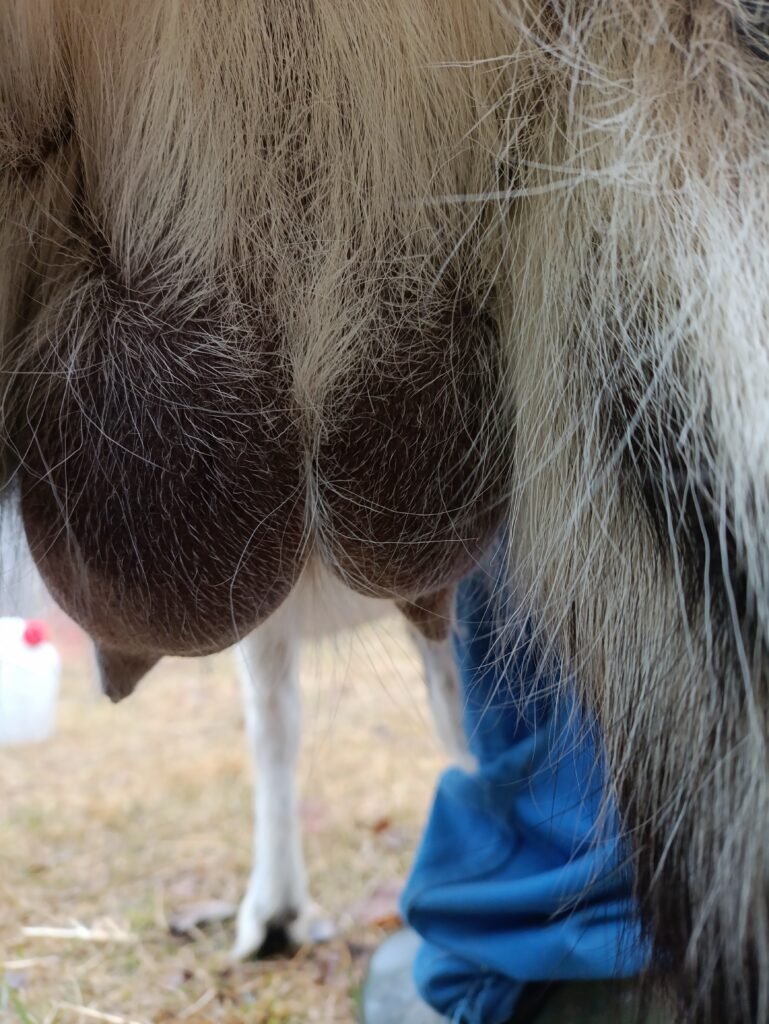
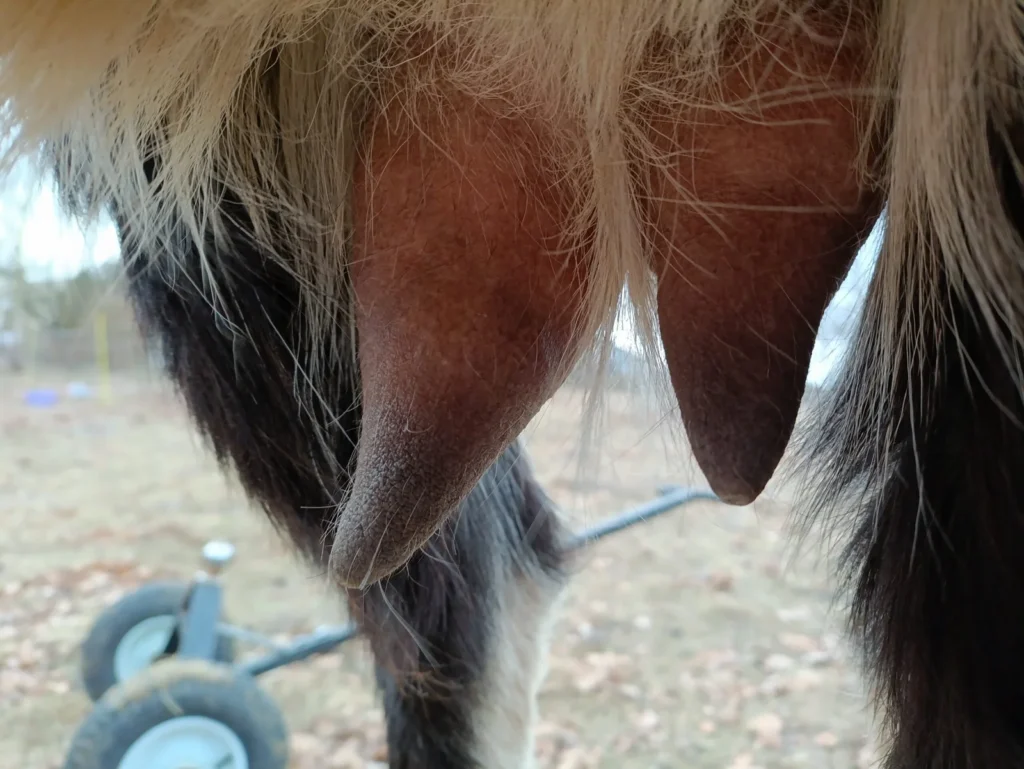
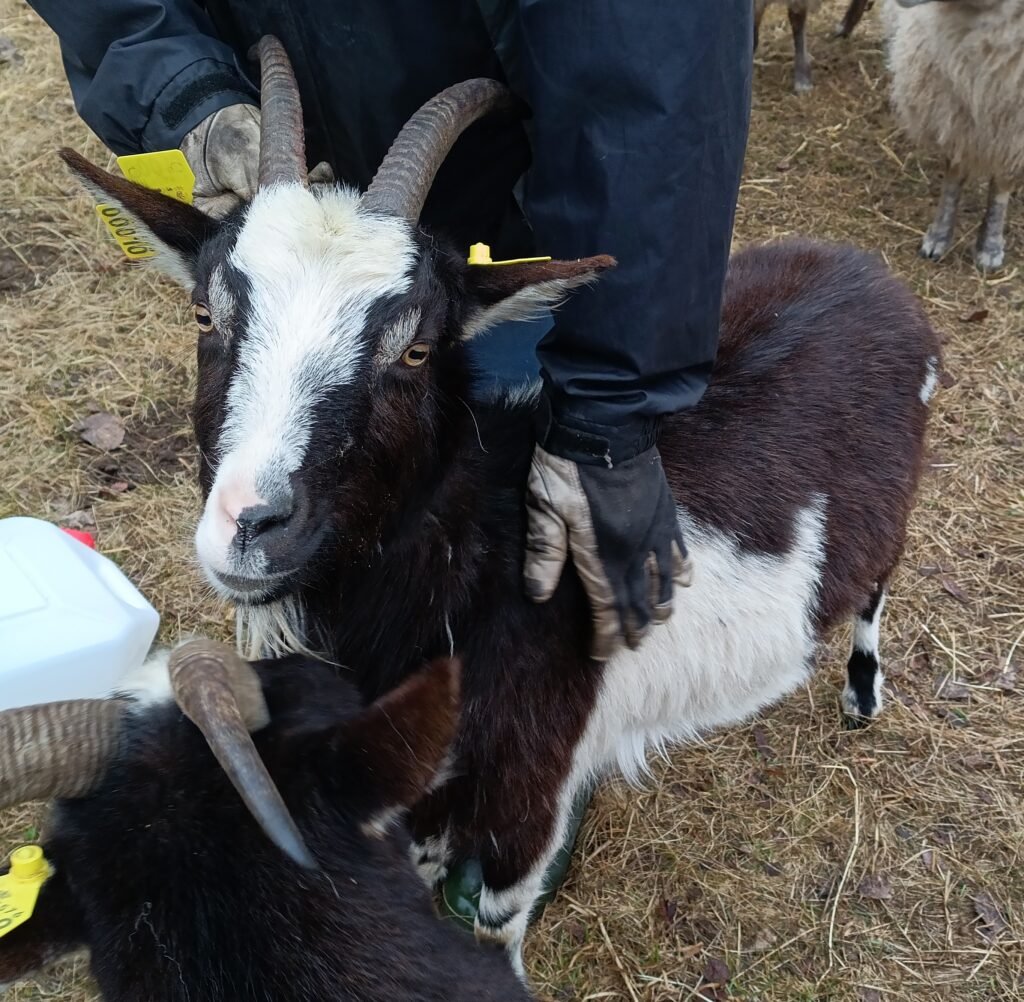
In the case of Splitti, one of our two goats who have been put with a buck for the first time since reaching sexual maturity, you can now clearly see that her udder has enlarged. In this case, we are quite sure that she is pregnant. 
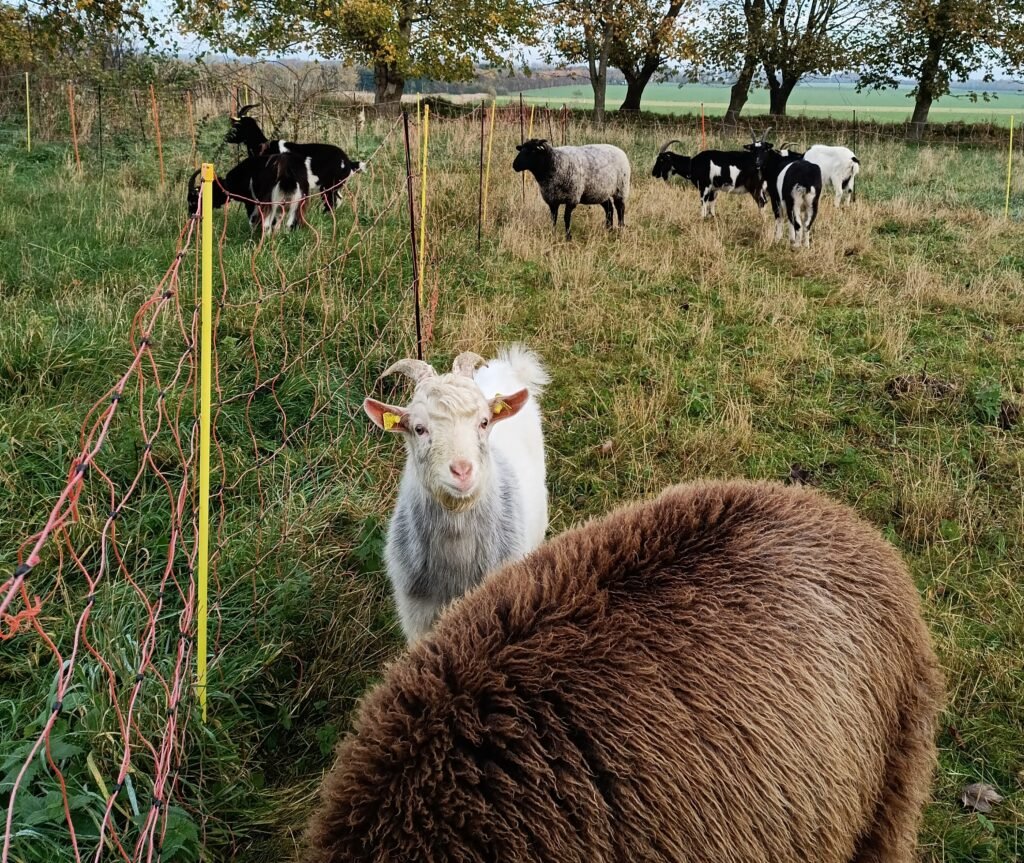
There is also the option of confirming pregnancy with an ultrasound examination. However, we have never had this done and fortunately have always had rams or bucks that did their job well. This year we weren't quite sure if everything would go well again because both gentlemen are quite small. But apparently it worked out anyway.
26/2/26

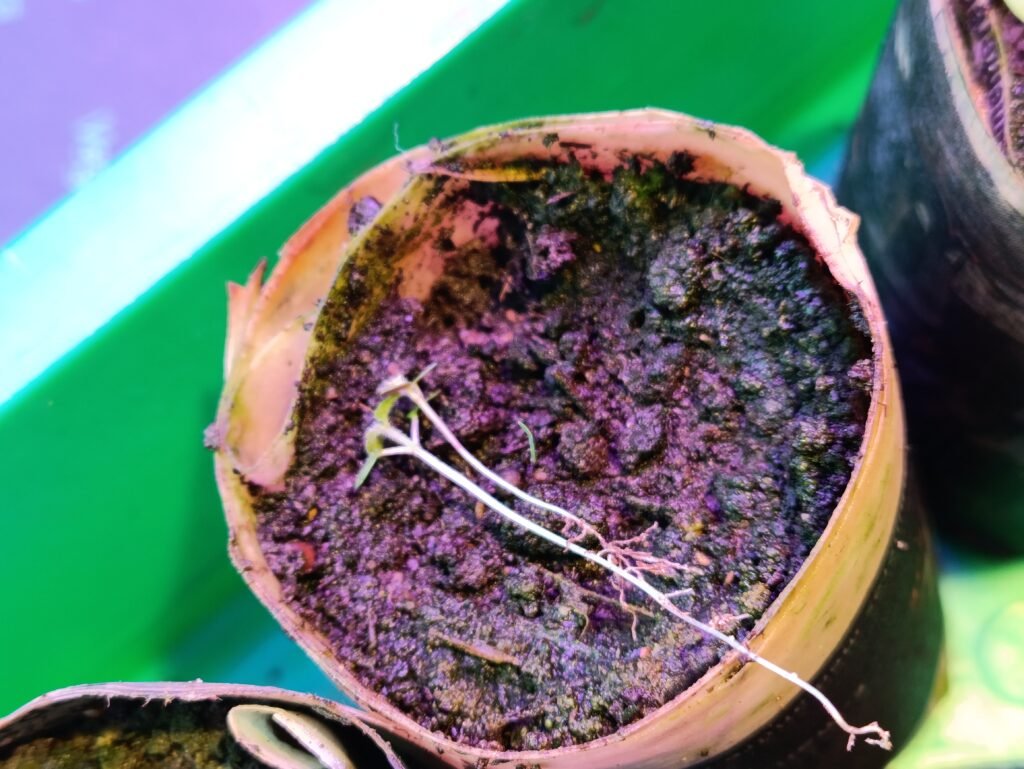
Even though our main focus is on the animals, we try to grow some vegetables in our small greenhouse and kitchen garden. During the frost period in early February, I sowed bell pepper seeds. Since both the topsoil and our sand hill were frozen, the only seed-starting soil I had available was our home-composted leaf mold, which I had roughly sieved back in December. Unfortunately, not a single bell pepper germinated. Instead, various weeds sprouted, and a fine layer of algae is slowly spreading.

e15030de 7950 43a9 97c0 0d269bd00a1c

I didn't heat the leaf compost because I was hoping that many beneficial microbes had colonized it over the last two years.

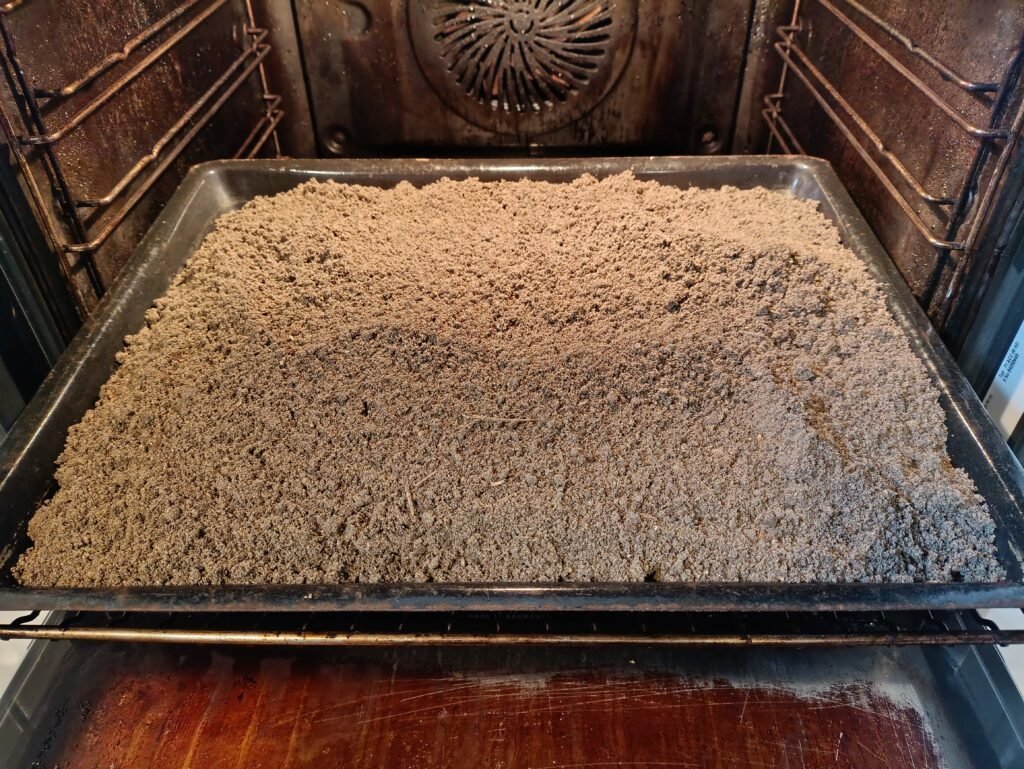
Yesterday I made a second attempt with the pepper seeds. This time the top layer of soil was thawed and I was able to mix the seed starting soil from 1/3 leaf compost, 1/3 molehill soil and 1/3 sand. The mixture then went into the oven at over 100 °C for a good hour, so that probably everything that lived in it was killed.

706855d8 d4a1 4ad2 b563 06c9c72024bf

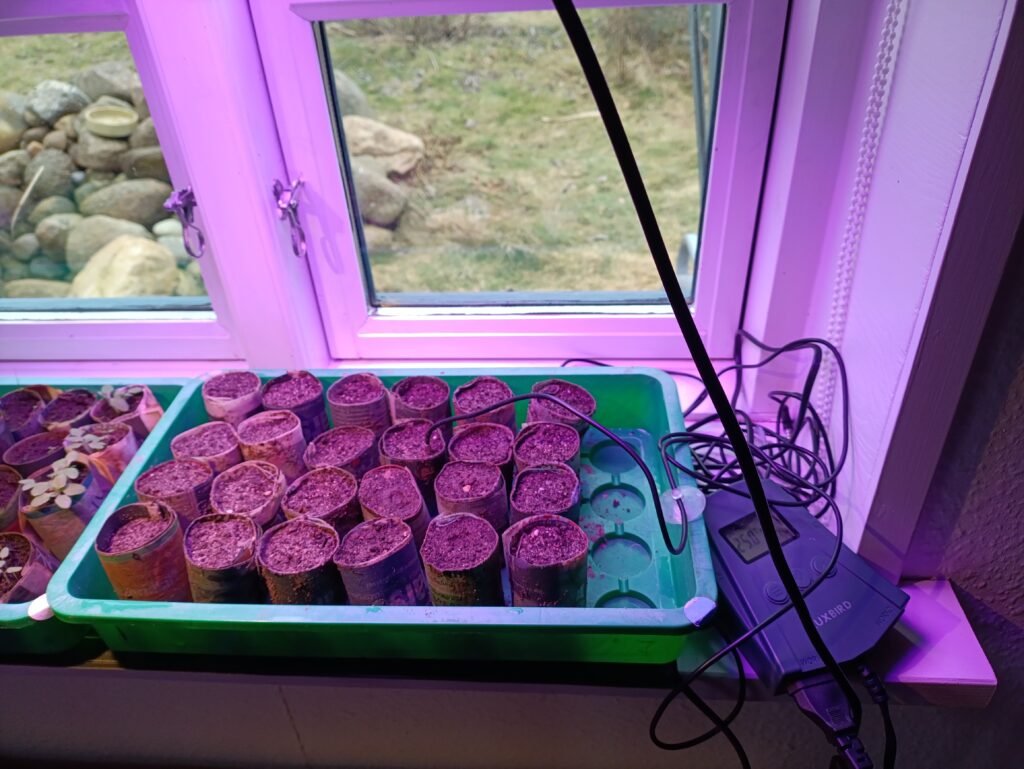
The soil then goes into small paper pots that I make myself with a “Paper Pot Maker”.

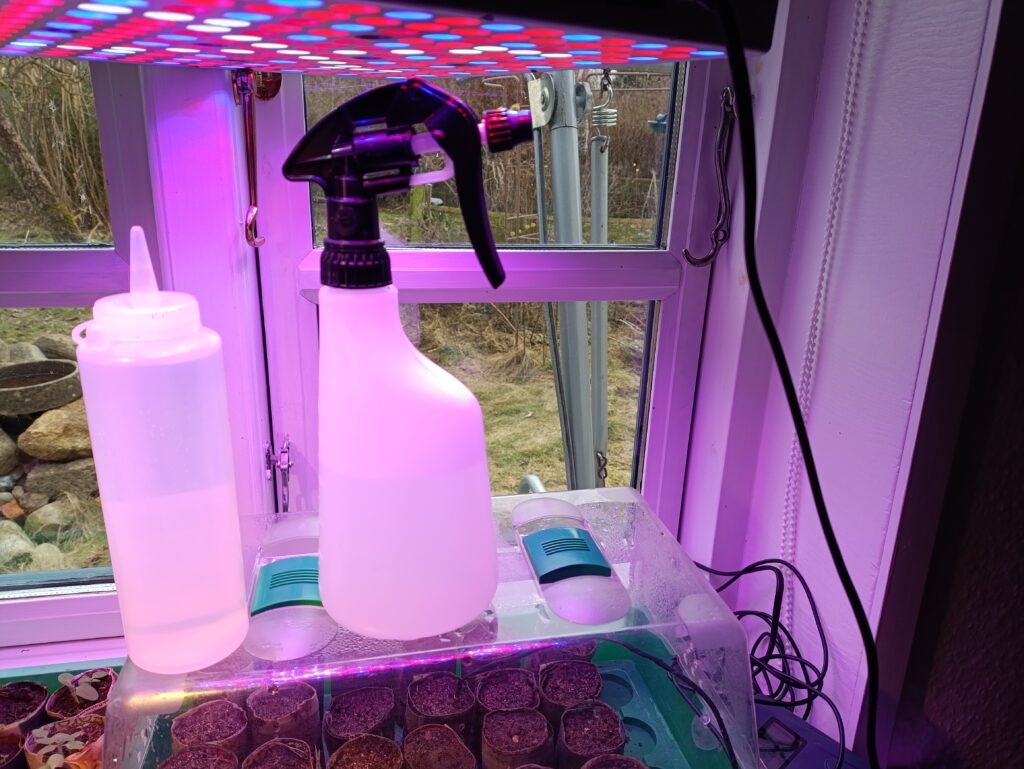
First, it is filled only to just below the upper edge, then the very dry soil is almost saturated with water from the dressing bottle. The seeds are distributed over the slightly sunken soil, and another layer of soil about 1 cm thick is placed on top. This time I moistened this layer only with a spray bottle so that the seeds are not completely wet and do not rot.

The entire mini greenhouse is placed on a heat mat between 22 °C and 25 °C and illuminated with a grow light. The lid is removed for 1-2 hours daily to prevent it from becoming too humid. After aerating, it is misted again.

21/2/26

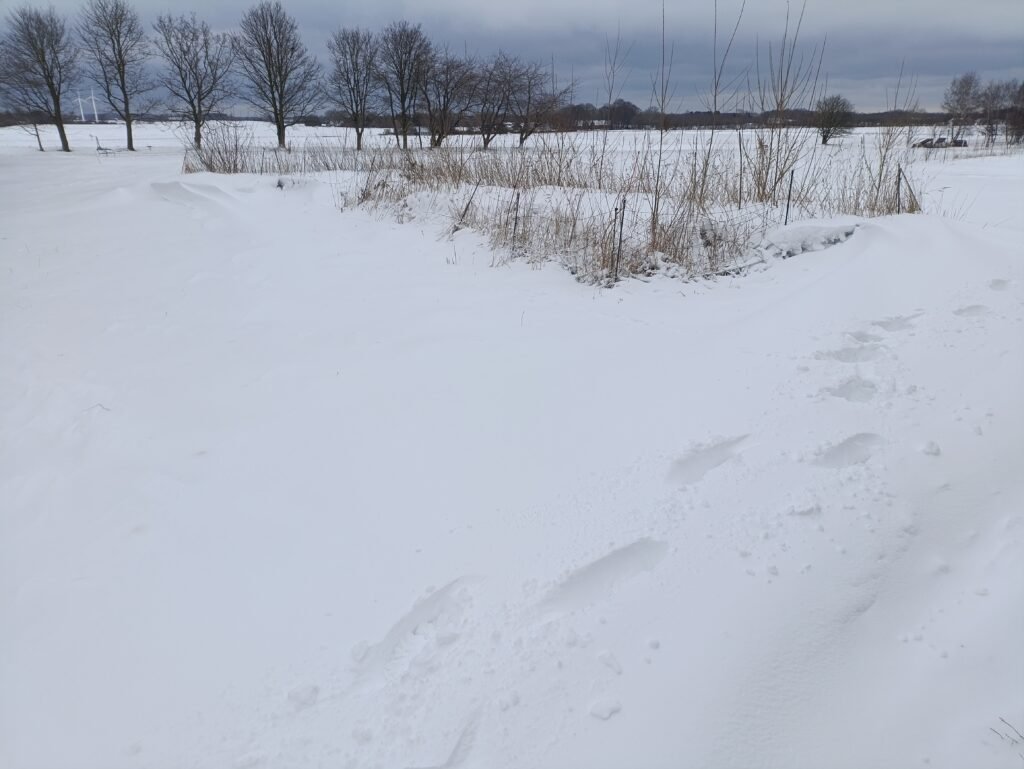
Until recently, the world was completely white. After being moved, the sheep set upon the few blades of grass. In part, they also used their hooves to scrape away a bit of the snow.

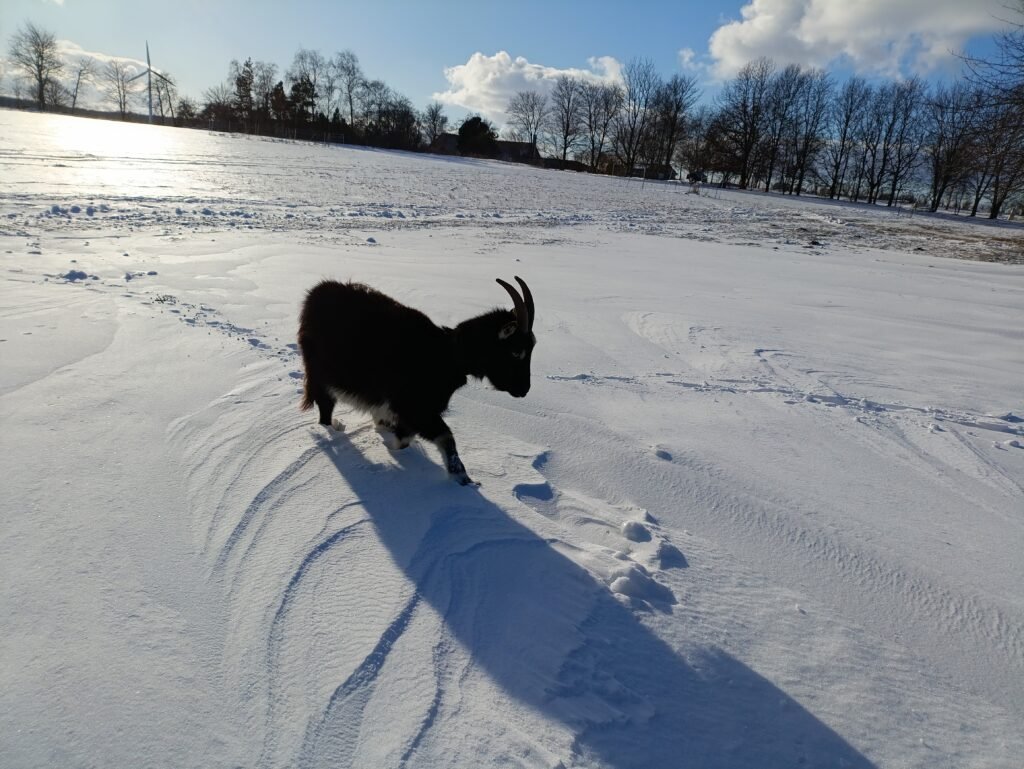
The goats ventured into the deep snow because a few blackberry shoots were too tempting to resist.

The less daring goats set upon the branches of the birches. Unfortunately, they later set upon the bark again. The sheep also want to get a share of the branches and try to profit from the goats' actions.

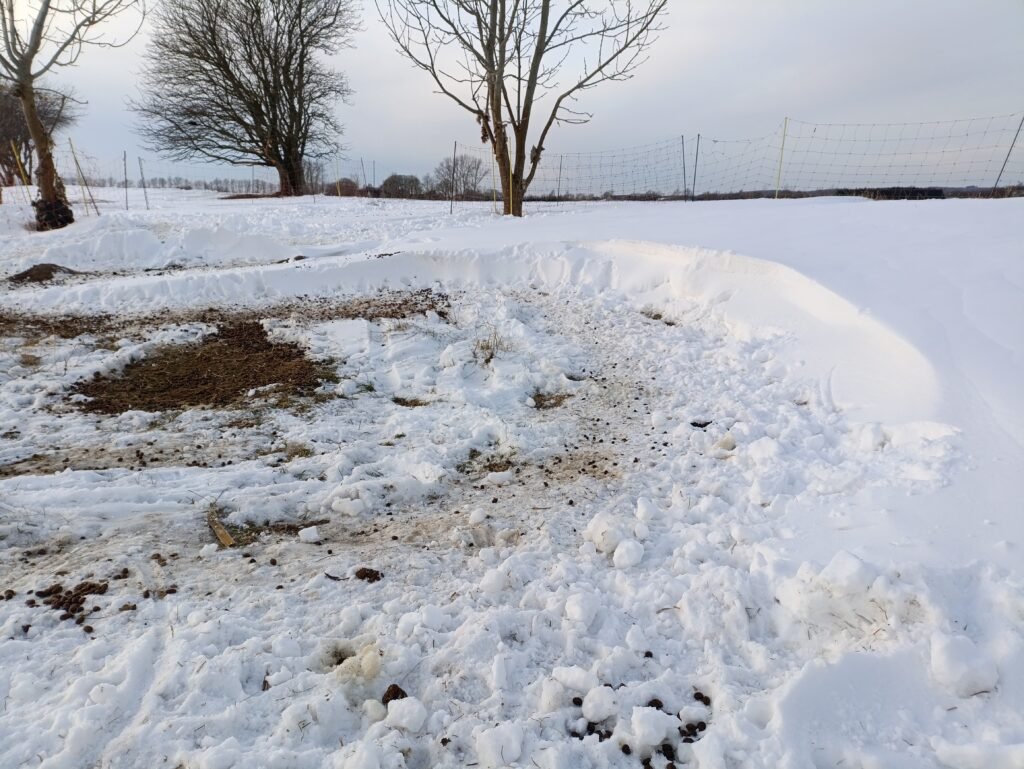
Last night, a thaw set in and today the world looks completely different. There are no trees on the current plot that we need to worry about, but due to the meltwater, the ground is very wet and there is a risk that grazing will cause more severe hoof damage and weaken the vegetation. Therefore, we will move the animals faster than originally planned.

img 20260221 150346 scaled

16/2/26

This morning at 7 o'clock, three rams were picked up for slaughter. That is always a sad day because you get quite close to the animals through daily interaction.

ram

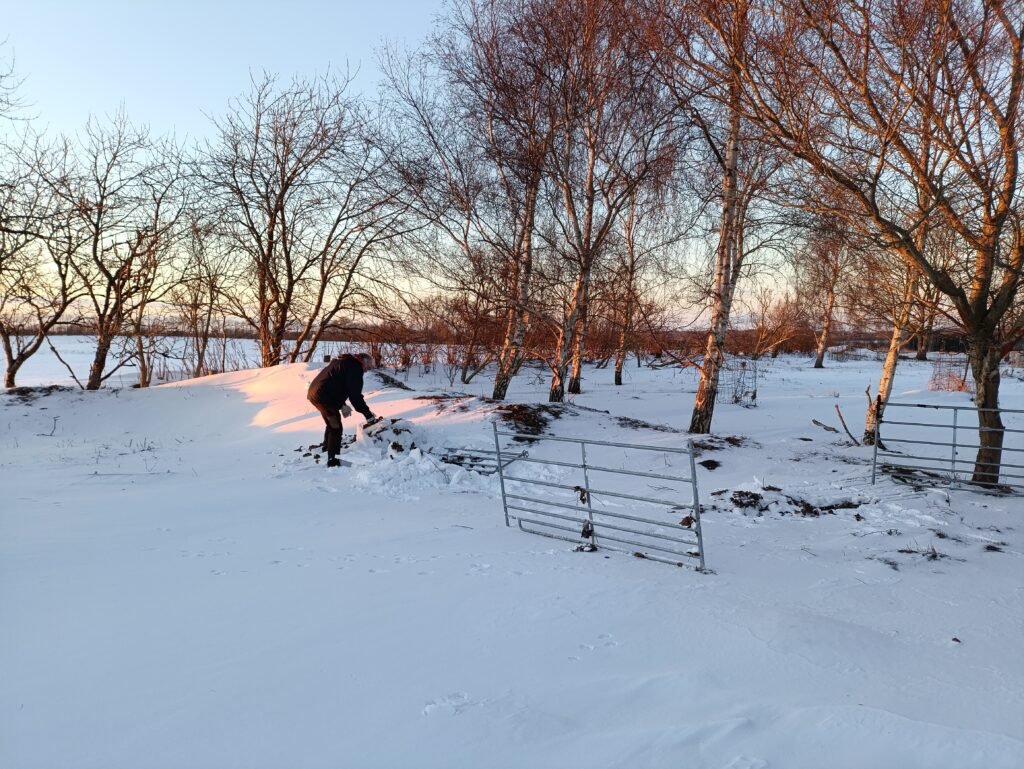
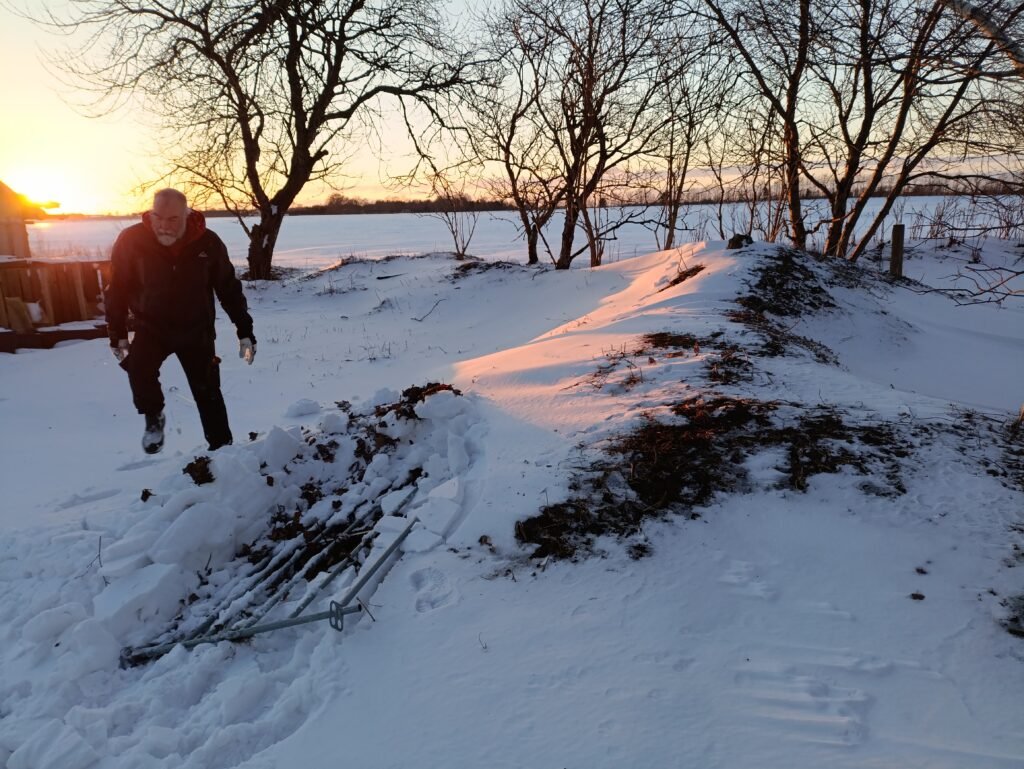
So that we wouldn't have to catch the animals in the dark, we set up a small pen yesterday using our Steckfix hurdles, where the three of them spent the night. The hurdles first had to be searched for in the snow because we hadn't put them away properly.

Snowdrifts deposited large amounts of snow on our access road again during the night. The livestock transport truck got stuck shortly after turning off the main road onto our country lane and could only be pulled out with a tractor.
It was good that our animals were somewhat tame. We were able to put them on a leash and walked 500 meters with them. It helped to lure the rams with a cup full of pellets.

The transport to the slaughterhouse took just under an hour. We can already pick up the pelts this afternoon. A good friend of ours is doing that for us because we are completely snowed in again. In some places along the way, there are 70 cm of snow. We are really glad that many people here are very helpful.

We are considering whether to slaughter the animals by December at the latest in the future, because our equipment is not suited to the current weather conditions.

15/2/26

The snowdrifts are causing us a lot of trouble. We kept getting stuck with the wheelbarrow while transporting feed, water, and batteries for the power supply.

img 20260213 091443

Luckily we have the ATV, which makes it across the field so far.

Collecting the fence is not easy either when it is deeply covered in snow.

Some daring goats try to cross the snowfields, while the sheep avoid the deep snow even in the fenced areas. Apparently, they stop searching for something edible when the snow depth reaches 20–30 cm. Perhaps we have simply been providing too much supplemental feed.

13/2/26

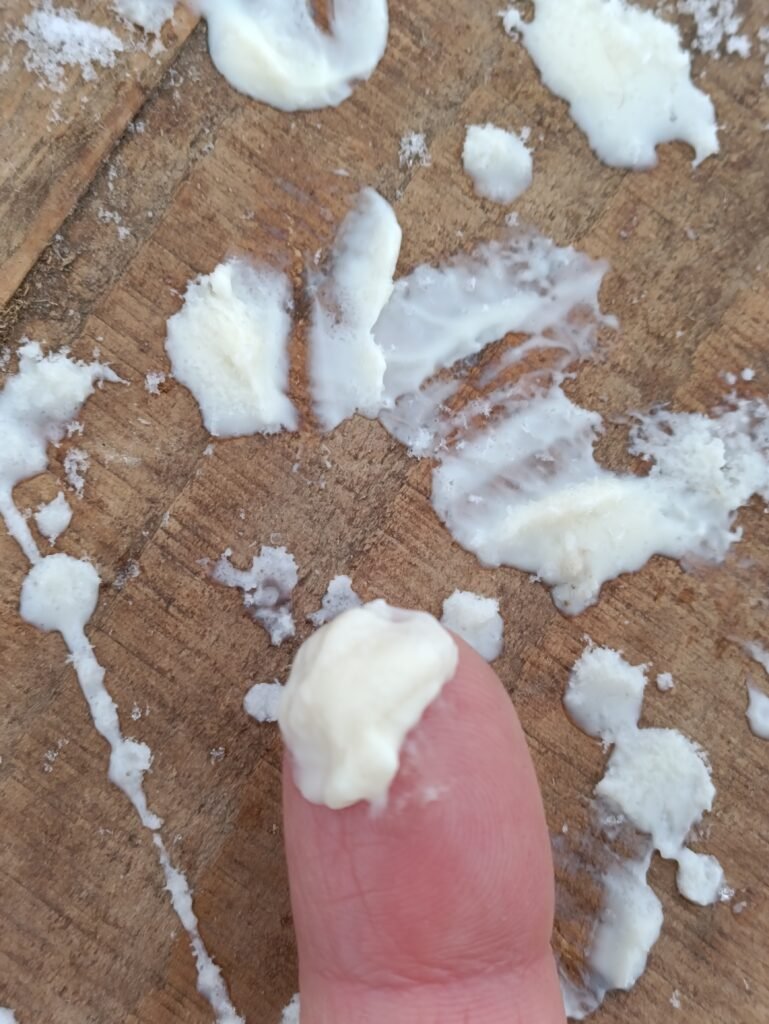
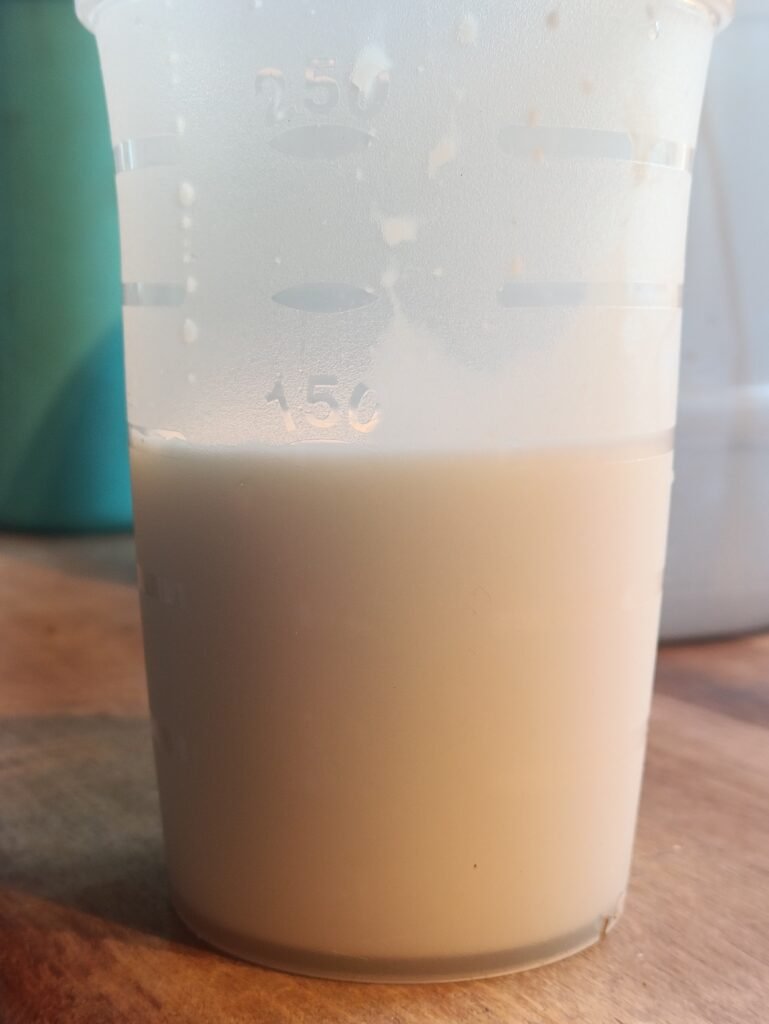
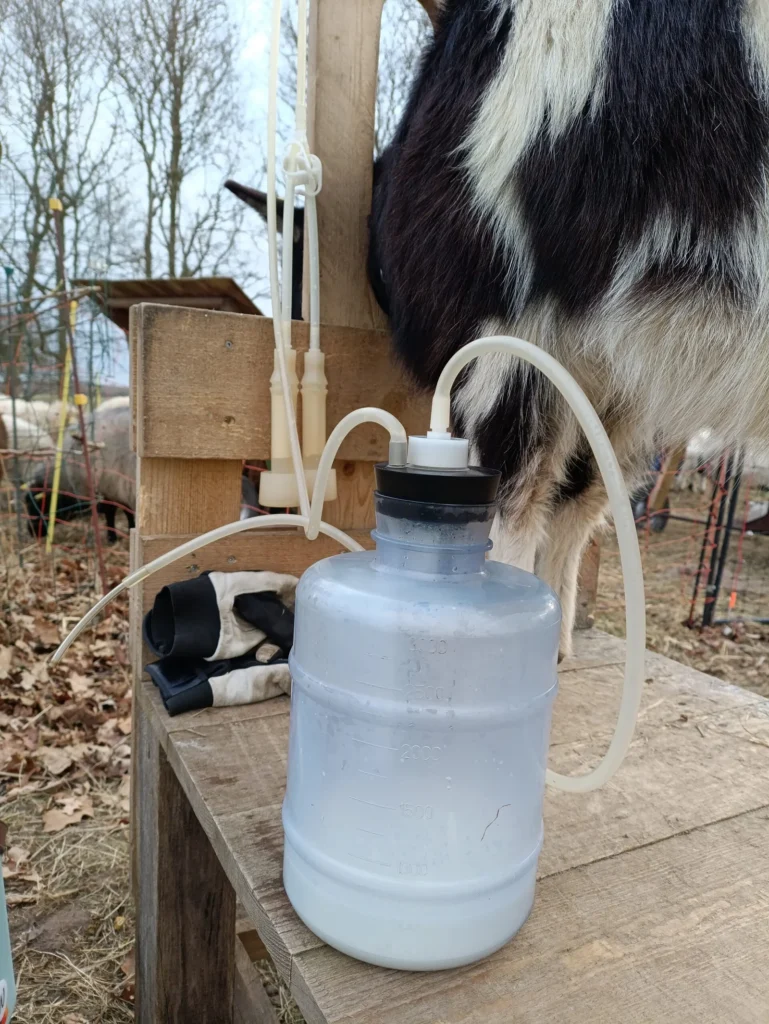
Yesterday was the last time I milked. Actually, I had planned to stop five days later. The first two to three streams are not milked into the bottle, as too many germs can collect in them. You can also see the texture of the milk. With Bulette, yesterday a large part of it was a thick, cream-like substance. The udder was also significantly smaller. 

With Anna, I milked with the machine for another minute, but only 150 ml came out. The udder wasn't large either. Therefore, I decided not to intervene any further. I think Anna and Bulette will manage to stop milk production. Let's hope that both are pregnant and we'll get kids in about two months.

Anna's milk also has a much thicker consistency. Apparently, the process in which fluid is reabsorbed in the udder has already begun. In the process, the proportion of antibodies is said to increase. I will not use the milk anymore for that reason.

milk

The penultimate time I had milked was four days ago. The milk was quite thick even back then. Maybe I could have stopped at that point already.

12/2/26

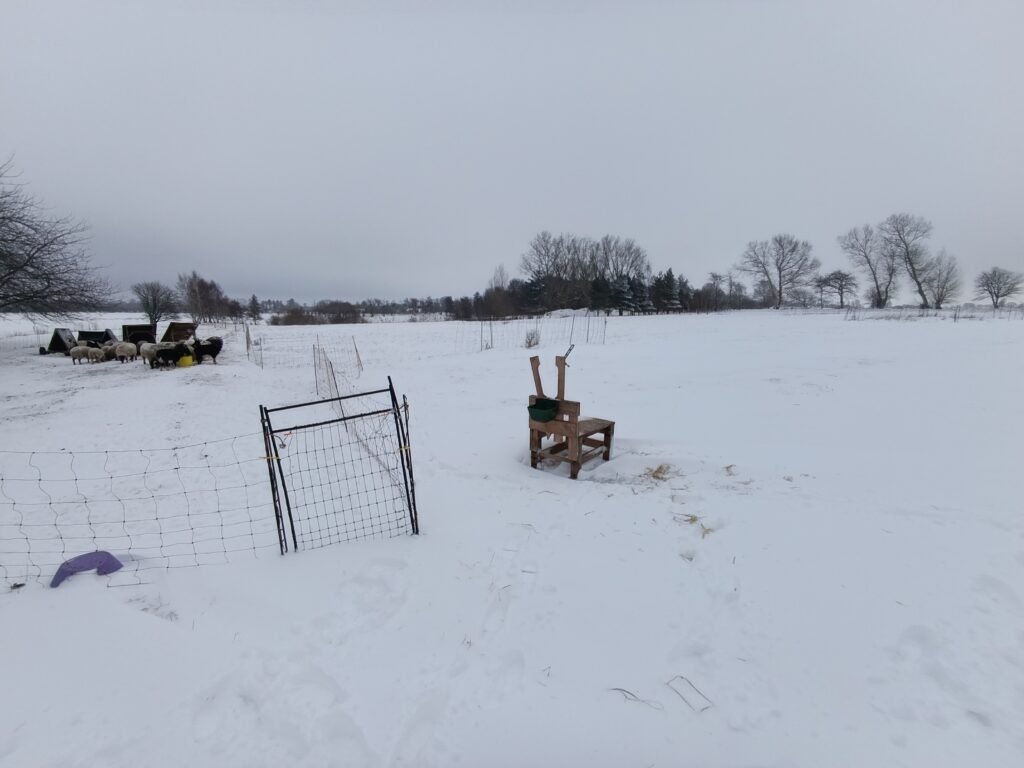
While the world outside is covered in snow, we are trying to set up a monitoring system. We want to be able to better track what is changing as a result of grazing based on holistic management principles. Unfortunately, in recent years we haven't paid attention to making sure the photos we took are comparable.

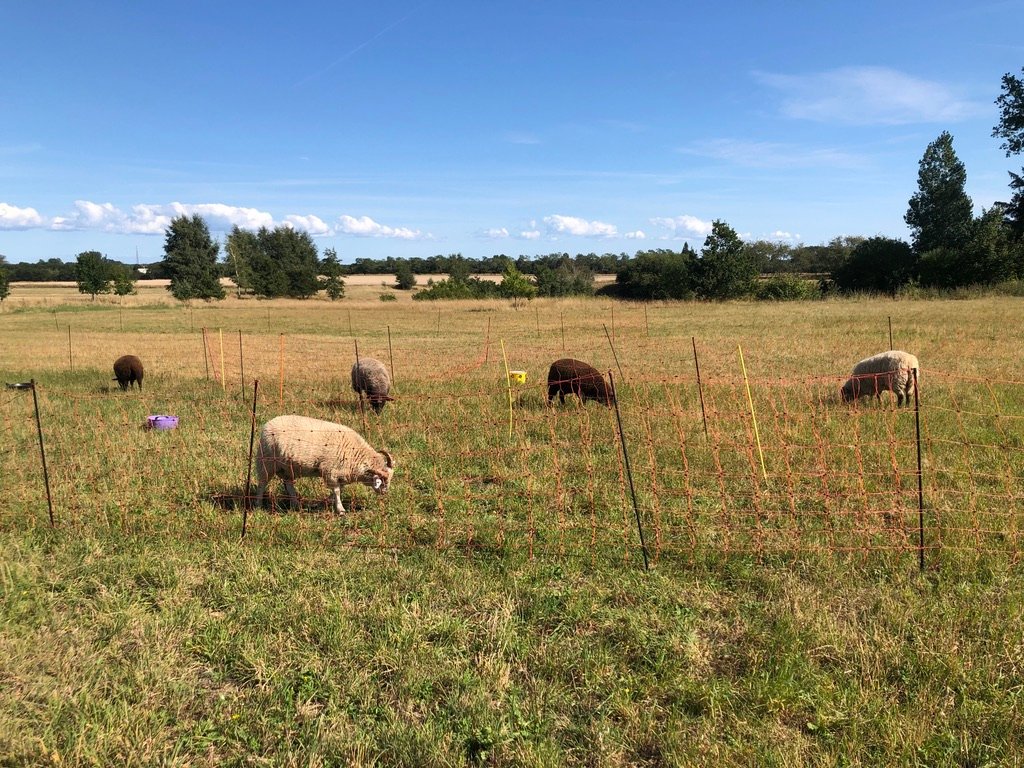
In October 2020, we found our farm and took a few pictures even before buying it.
The large field had been lying fallow for some time and was becoming overgrown.

202020222025

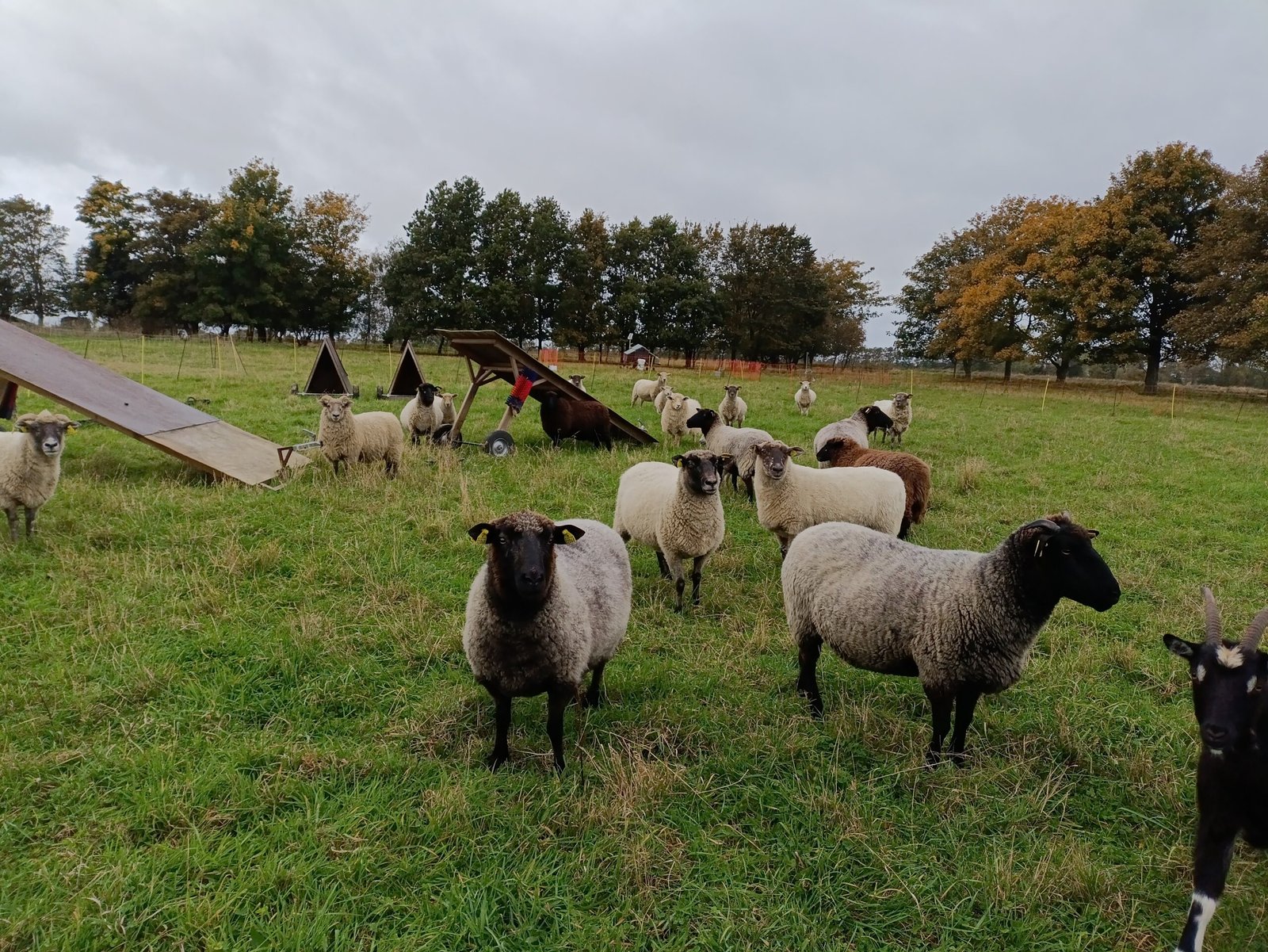
In 2021, we had a farmer mow the field once. After that, we mowed the grass one to two times a year with our newly purchased flail mower. In addition, grazing of our land started in July 2021, initially with three sheep. Meanwhile, we have 27 animals in the herd (21 sheep and 6 goats) and, separately, three rams that are taking their final journey this weekend.

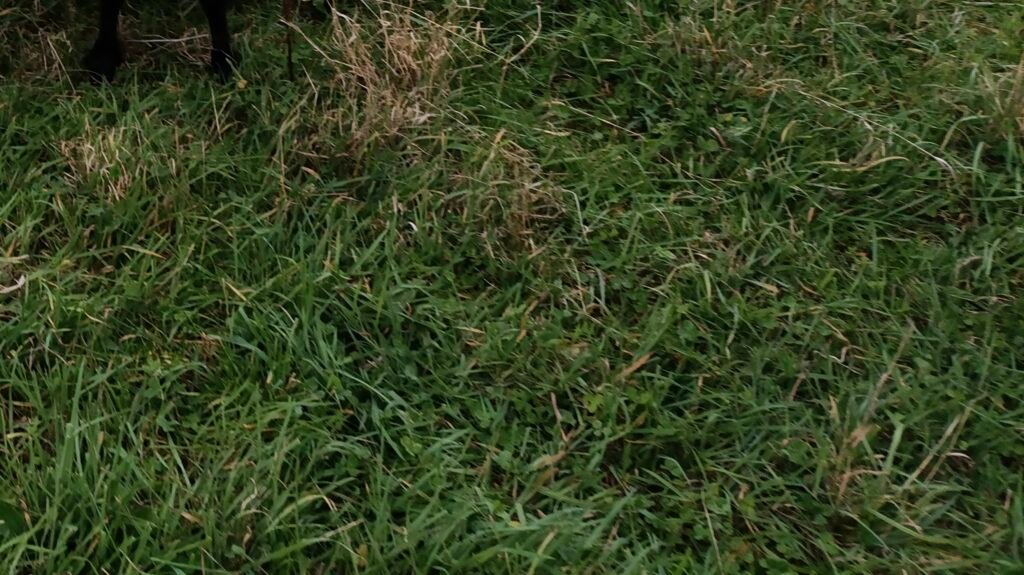
With some goodwill, one can see that the grass cover has become slightly denser from 2022 to 2025. When enlarging the image from 2025, the coverage of the ground with clover between the grasses is visible.

11/2/26

After it snowed last week, there is still a continuous layer of snow outside. Especially our four Danish Landrace chickens were initially not thrilled and immediately turned back on the chicken ladder in the morning to head back into the coop.

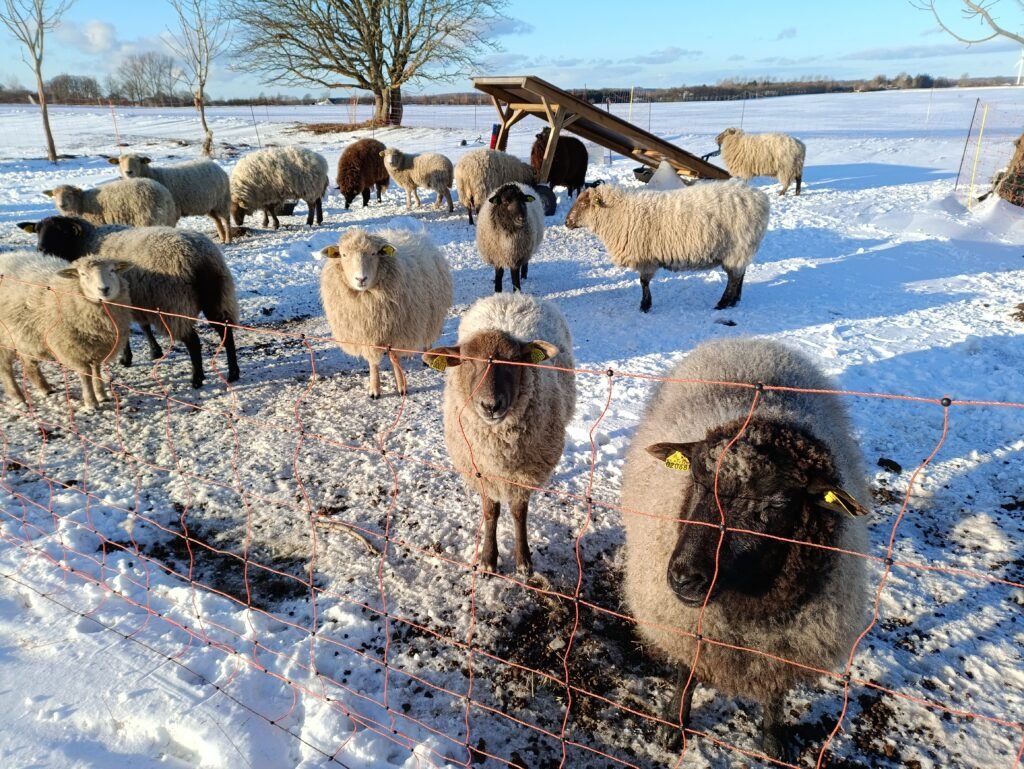
The temperatures have been hovering around freezing for the past few days. Johnny managed to hammer the fence posts into the ground so that we could move the sheep and goats. While the yield isn't quite as high due to the layer of snow, at least the area isn't too full of manure.

animals in the snow

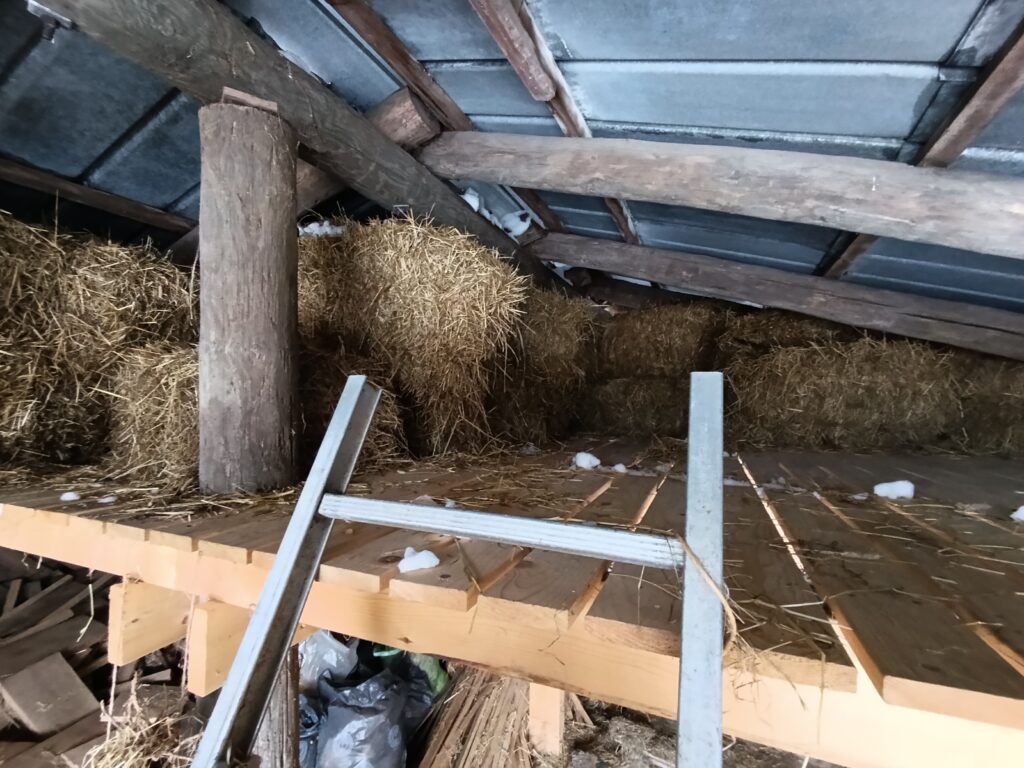
We can also save some hay. The last winters weren't that cold, so we didn't need much. This year, there aren't as many bales left. 

hayloft

We hope the remaining bales will last until the grass grows again. Otherwise, we will have to buy more. We prefer the smaller hay bales because we don't have any equipment to handle them.

Small hay bales are called Morten Korch bales in Denmark. Sometimes they are already sold out in the spring and we have to resort to the large round bales.

3/2/26

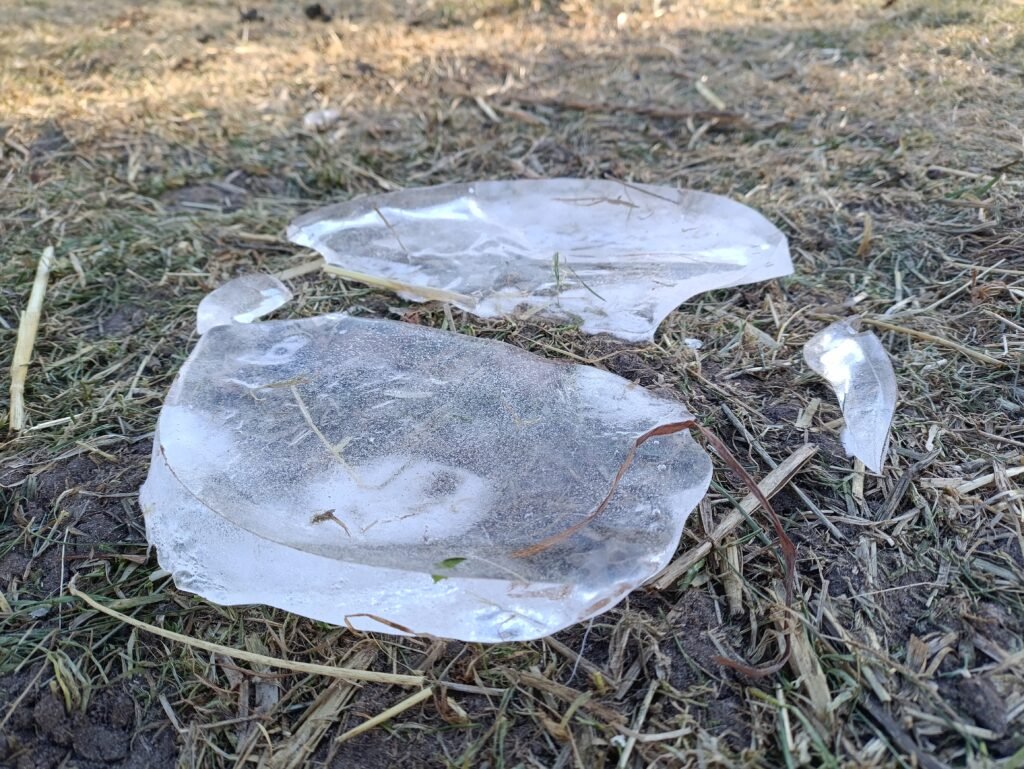
After it was already very frosty at the beginning of January, a new frost period began around January 19, 26, during which there were hardly any temperatures above freezing. At least since January 20, 26, a piece of ice from the drinking water bucket has been lying on the pasture and has not thawed despite occasional sunshine. 

ice from drinking water bucket

For the past three days we have had temperatures continuously below freezing, coupled with a blowing wind. A change in the weather is not in sight. Already the day before yesterday we were unable to set up any fence because the ground is frozen so hard. Fortunately, we had already fenced off a few pasture areas in advance, so the animals can move today. But we don't have any more in reserve. That means that at the latest in three days we will have to supplement feed significantly. Perhaps we will also manage to get a few fence posts into the ground with a hammer without them bending.

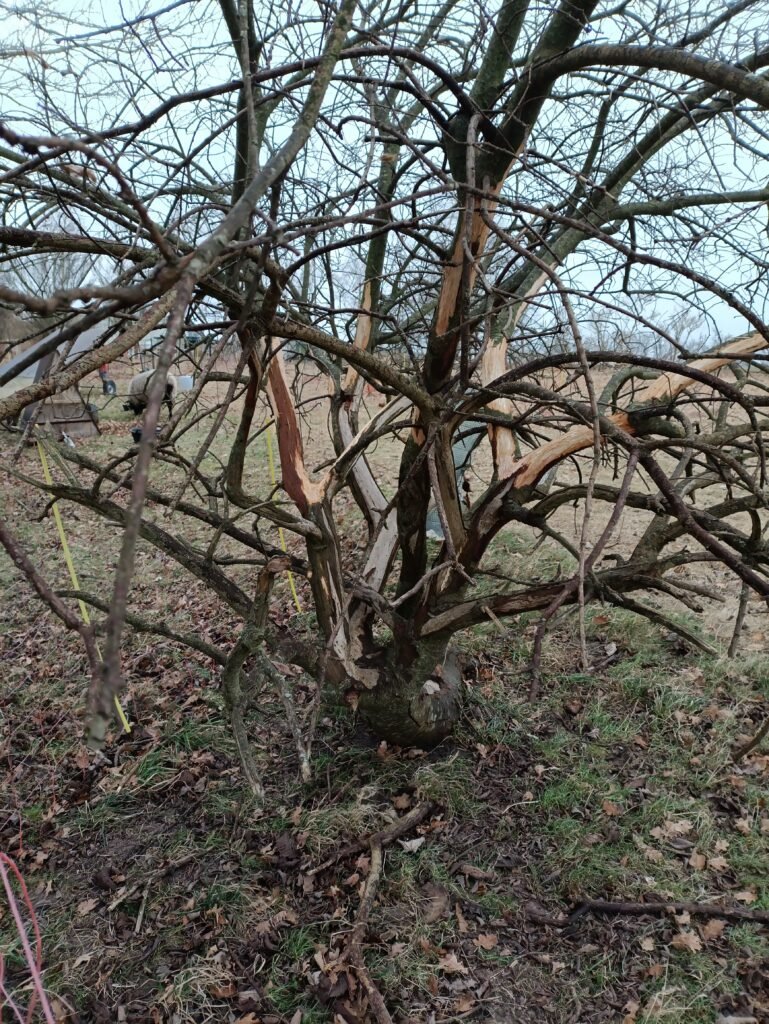
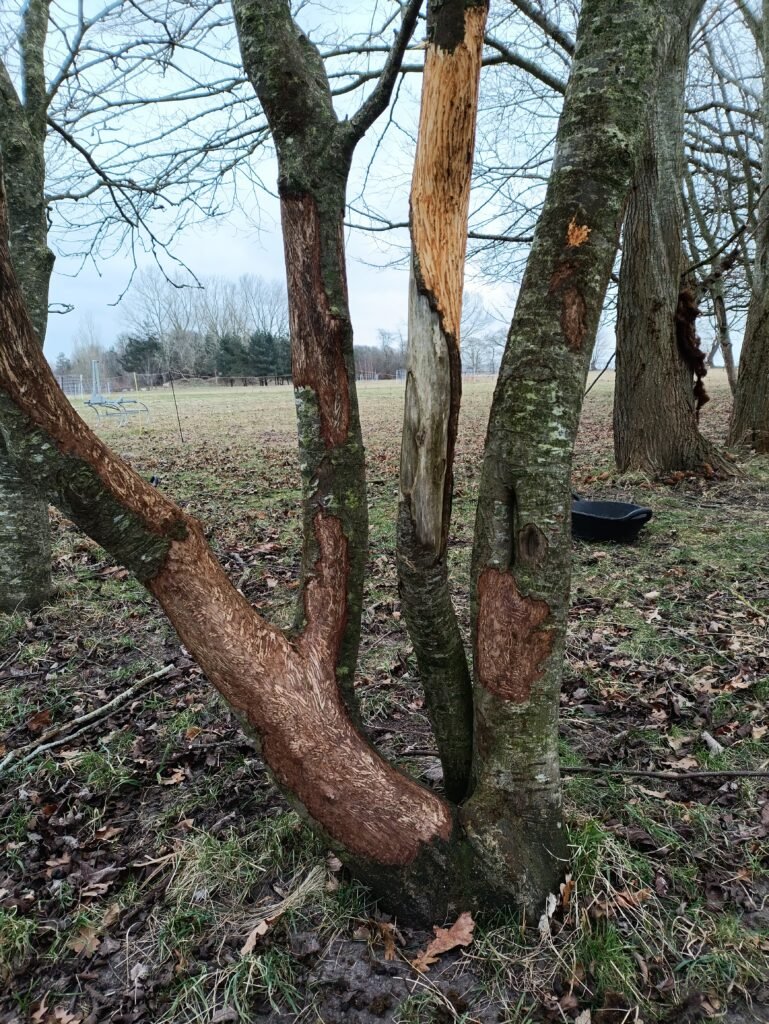
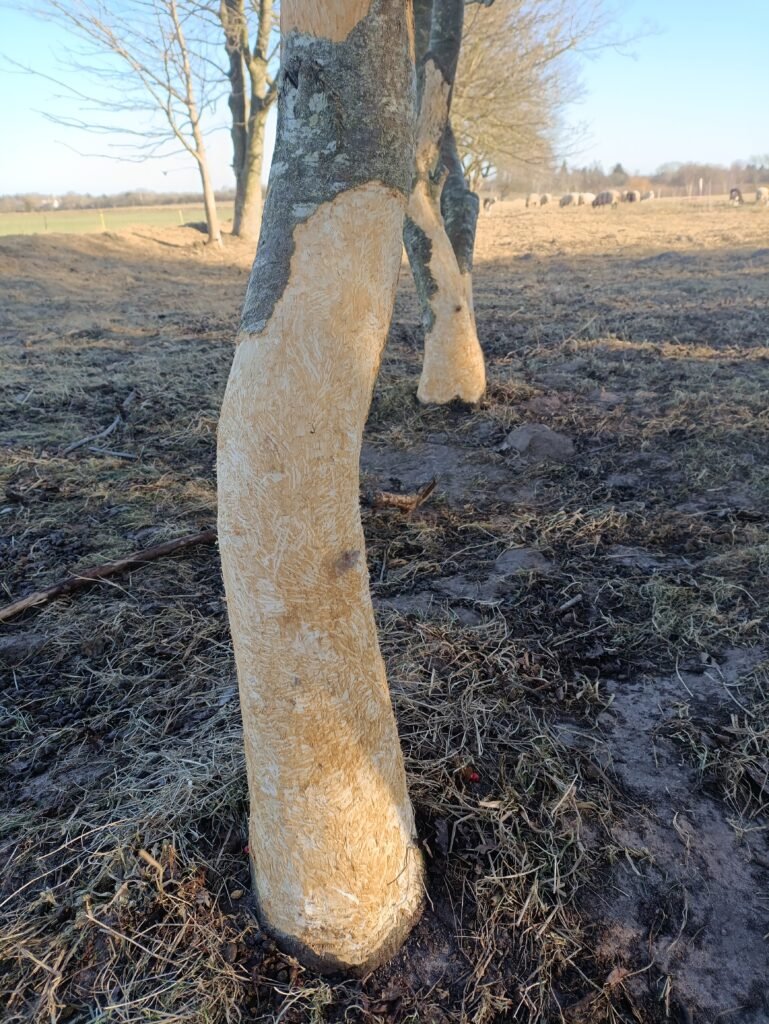
Looking for something to eat, the goats in particular, but also individual sheep, attack the trees.

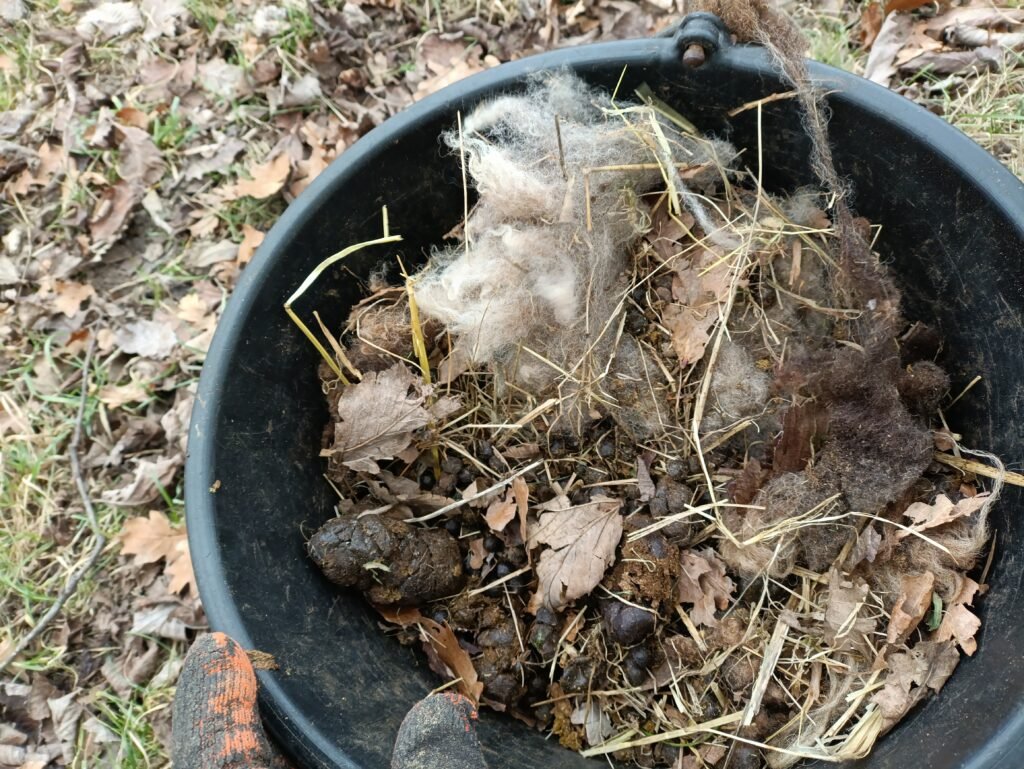
I rub individual trees with sheep dung. To do this, I pick up the dung along with the parts of raw wool from shearing that are not suitable for spinning. This is supposed to keep the animals from stripping the bark. Previously, that worked quite well too. At the moment, however, the frozen dung does not seem to have the same deterrent effect, and the animals continue to feed happily.

sheep droppings and raw wool

Some trees were almost completely stripped of their bark this morning. It remains to be seen whether the affected trees will survive.

img 20260203 135127

To treat the trees in the new section, I first let the collected dung thaw in our boiler room and then mixed it with a little water. If that doesn't help either, the trees will probably have to be completely removed from grazing in the winter.

30/1/26

The drying off of the goats did not work as well as I had imagined. After omitting the evening milking, the milk production of our two dairy goats dropped from a total of 750 ml daily to 700 ml. There the milk yield stagnated.

img 20260131 102829 scaled

My second step to reduce milk production was to milk only with the machine and not to assist by hand. As a result, the milk volume dropped to about 600 ml. At the moment, I am only milking for 1 minute per goat with the machine, and there is a total of about 500 ml of milk for both goats together.

As a final step, I will no longer milk every day and will increase the time intervals between milkings. The supplemental pellets (feed supplement) given during milking are also being reduced effective immediately. At the latest in two weeks, I will stop milking altogether.

Scroll to Top