4/5/26

Almost a month has gone by already. A lot has happened on the farm and in my personal life...

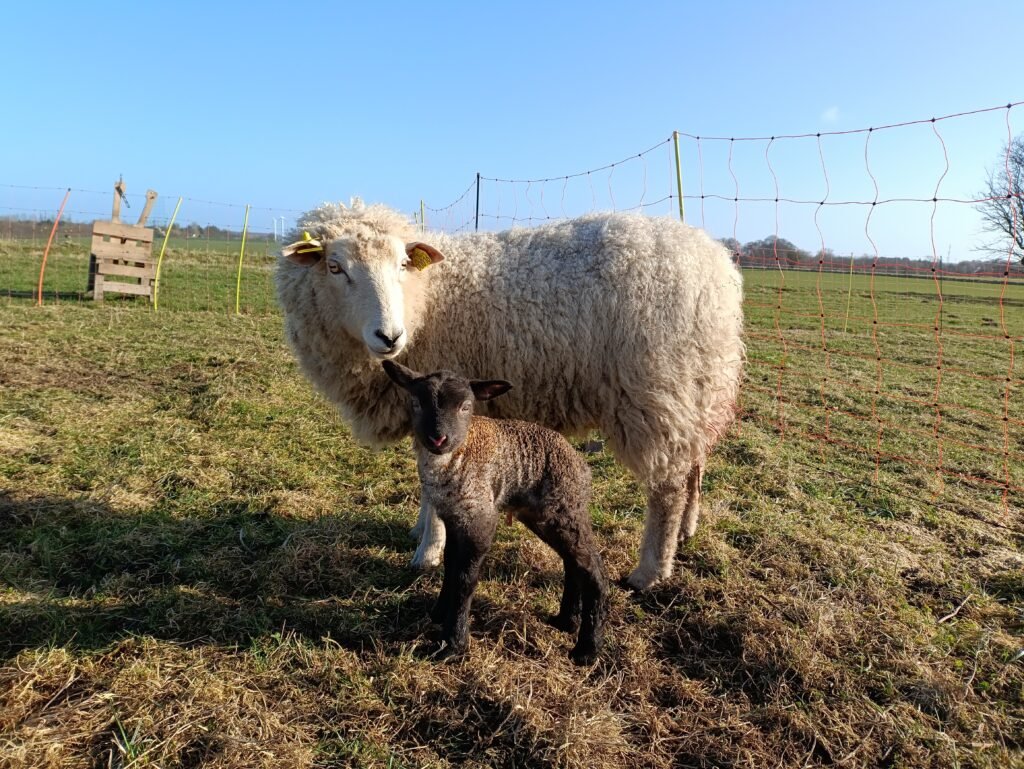
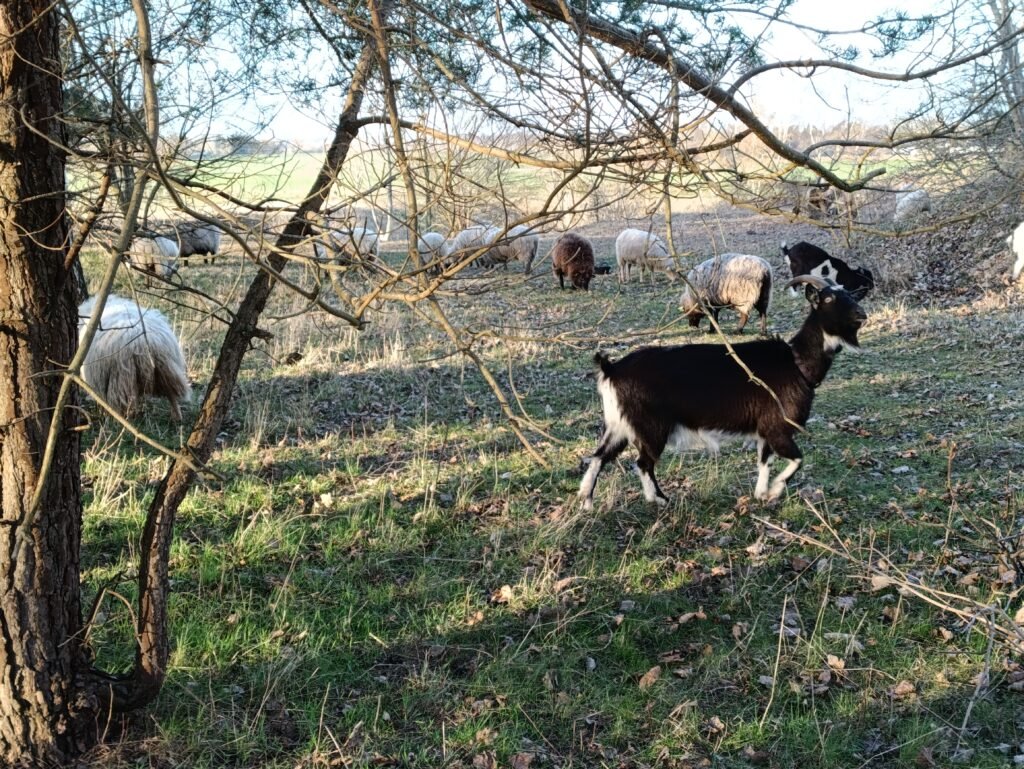
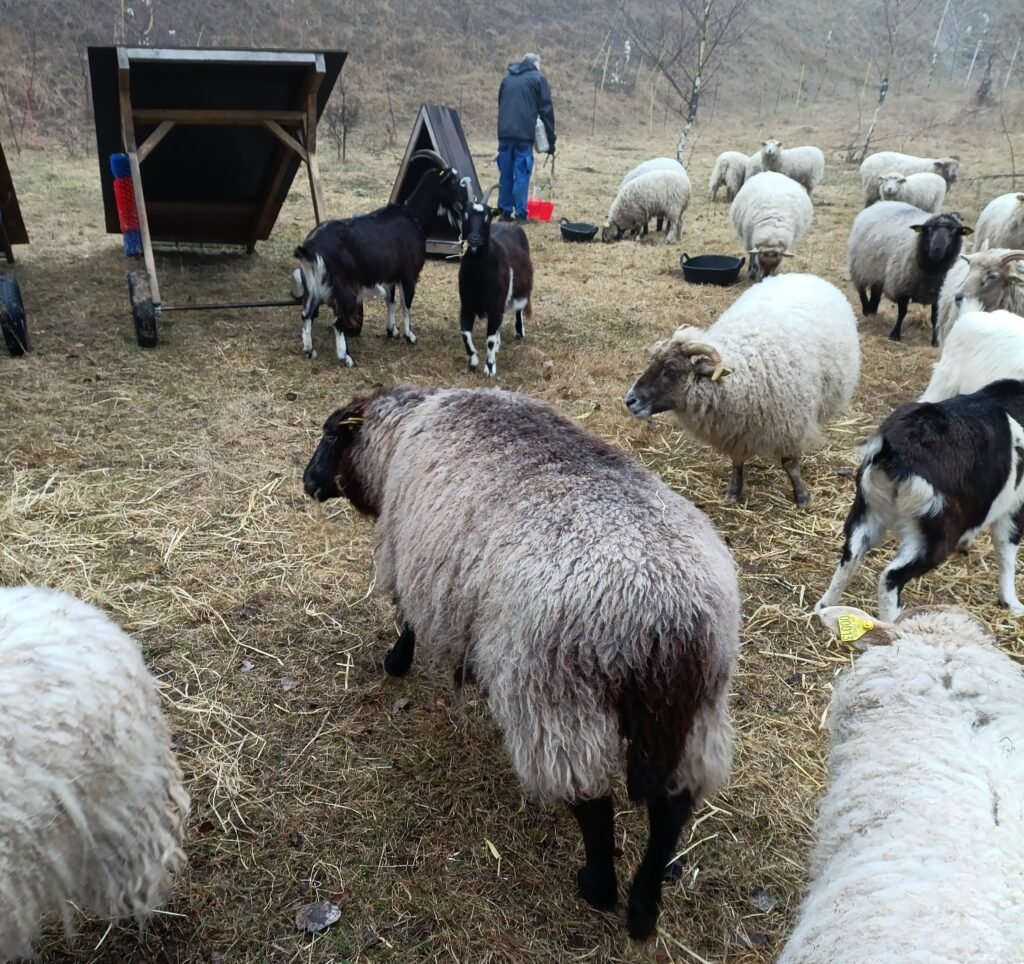
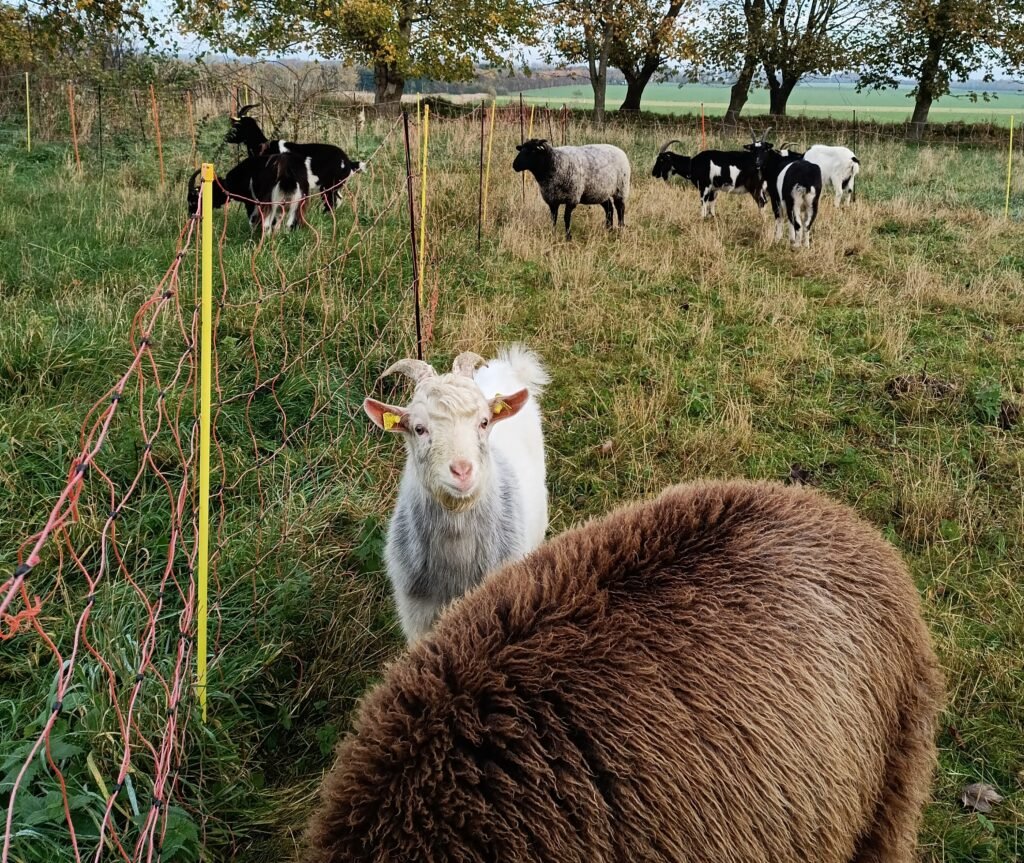
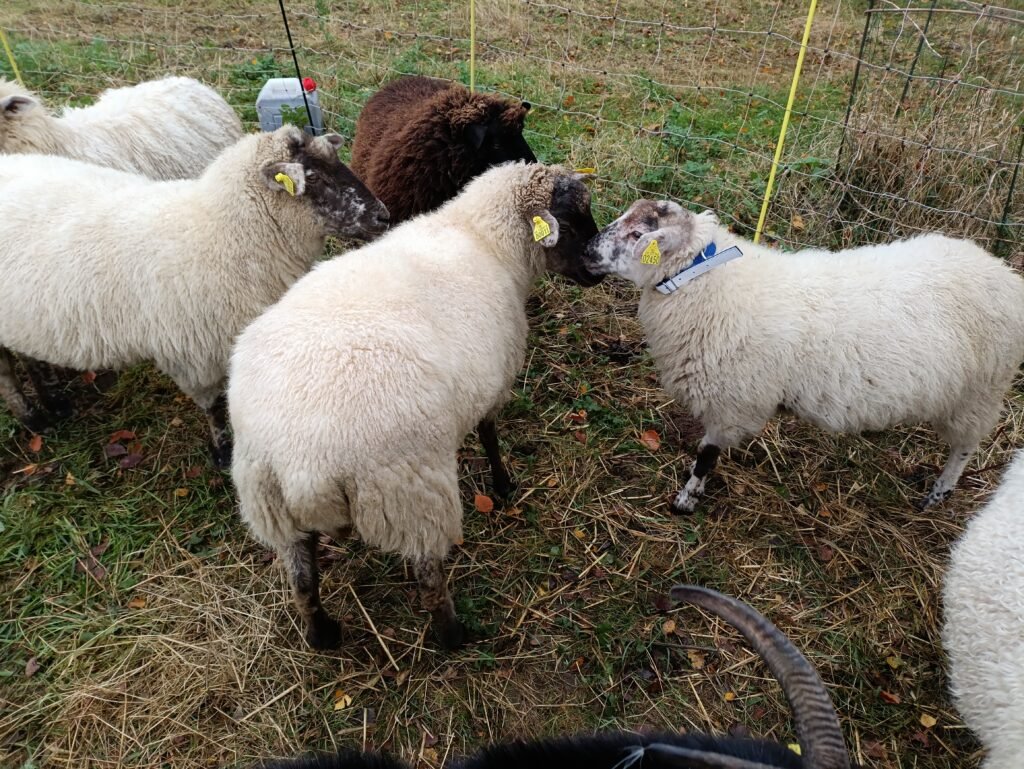
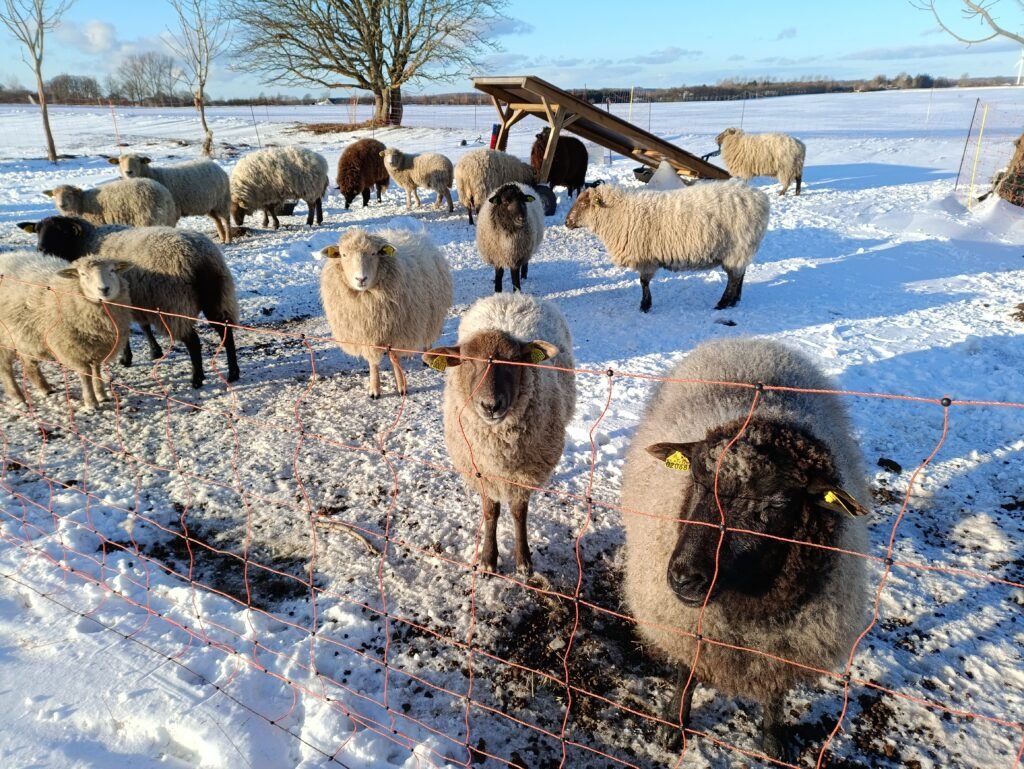
Fortunately, Mikro finally started drinking from the mother after all. At first, only when we held the mother down to milk her. For about two weeks now, he has been drinking all by himself. However, he is still a very trusting lamb and is not afraid of us. The other lambs run away when we approach them. Meanwhile, we have 19 lambs and 8 goat kids that play happily together.


One of our youngest lambs is still having trouble keeping up with the others. Its front legs buckle backward at the fetlock joint, causing the hooves to point upward.

We tried unsuccessfully to find a nearby veterinarian (our former vet is no longer in practice). The nearest clinic that also treats livestock is an hour's drive away. Our research into various reasons for the malformation revealed that the lamb may have a selenium deficiency, shortened tendons, or was cramped in the mother's womb. In fact, there was also a twin in there, which was unfortunately stillborn.
Since only selenium was available as a dietary supplement from the pharmacy on short notice, we got it and crushed half a tablet of it (50 µg selenium) with a mortar and gave it in a bottle with some powdered milk. In addition, we applied comfrey ointment to both front legs up to below the carpal joint, wrapped a compress and a bandage around each, and secured them on the outside with tape.
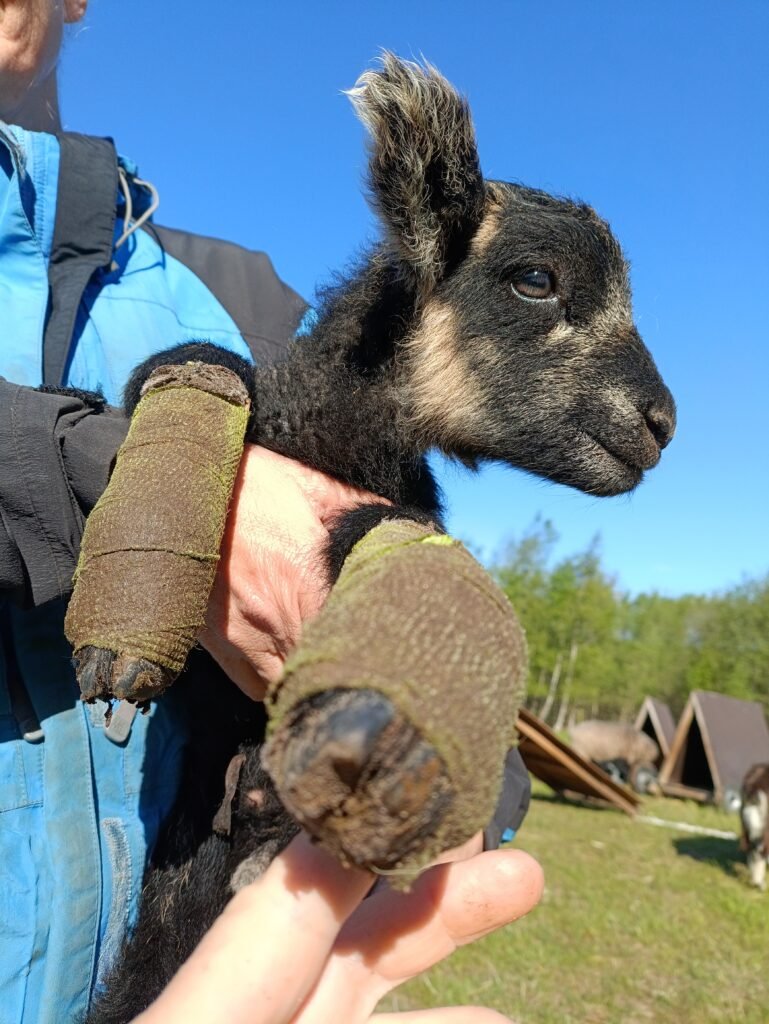
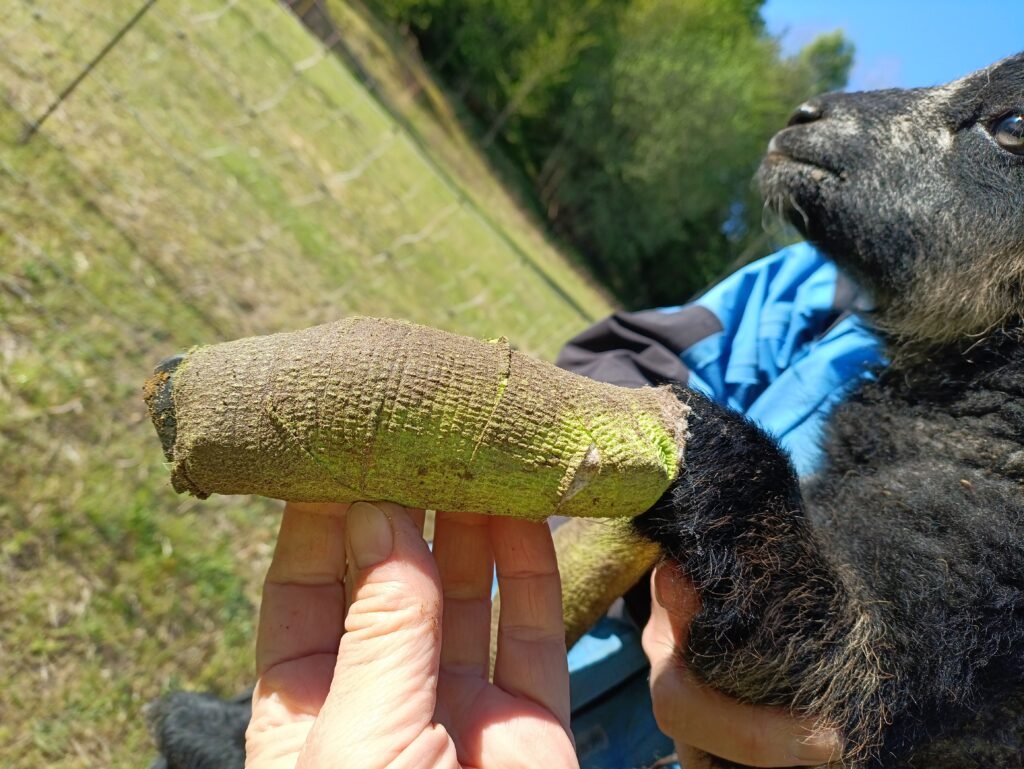
It looks like the little lamb isn't stumbling as much now. In any case, it's hopping along cheerfully.
10/4/26

Actually, we wanted to write something nice about our 5th anniversary, but then things turned out differently.
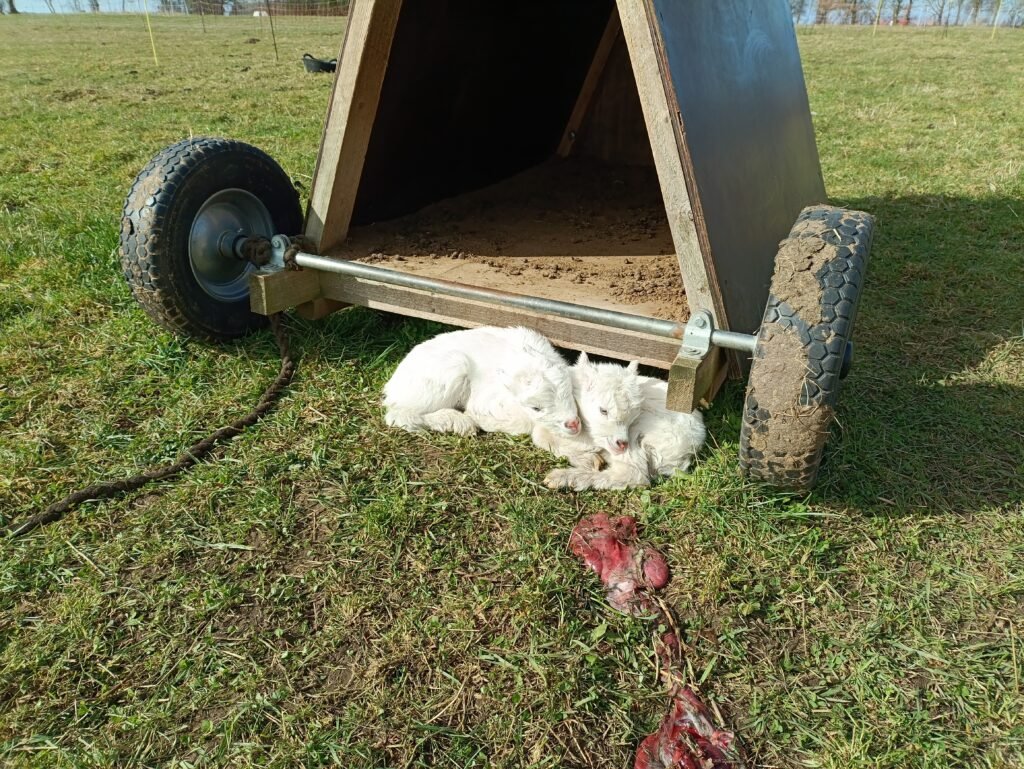
When we arrived at the pasture on Easter Saturday, we found a stillborn lamb and another lamb that was barely showing any signs of life. We had just opened the gate to the new pasture, and the animals had rushed toward the fresh grass when we discovered the two of them.

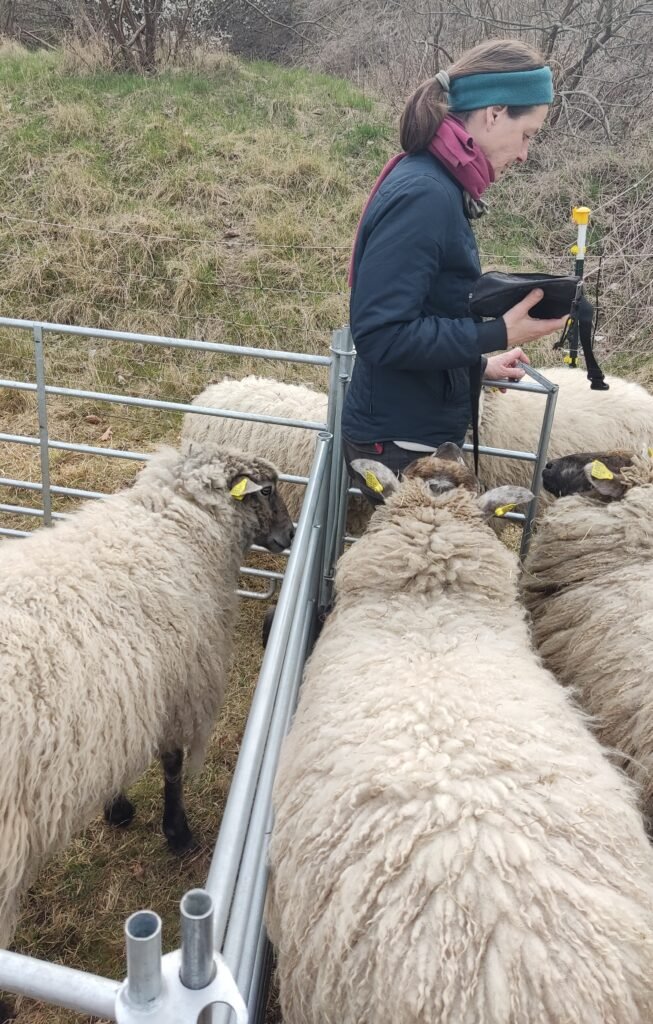
The ewe had also left the live lamb behind. Apparently, she had already given up on it. The animal was so weak that it could barely move its head. We held it right in front of the mother's nose and she recognized it. Afterward, we set up a small mother-infant pen with hurdles. The mother followed the little one, which we carried inside.

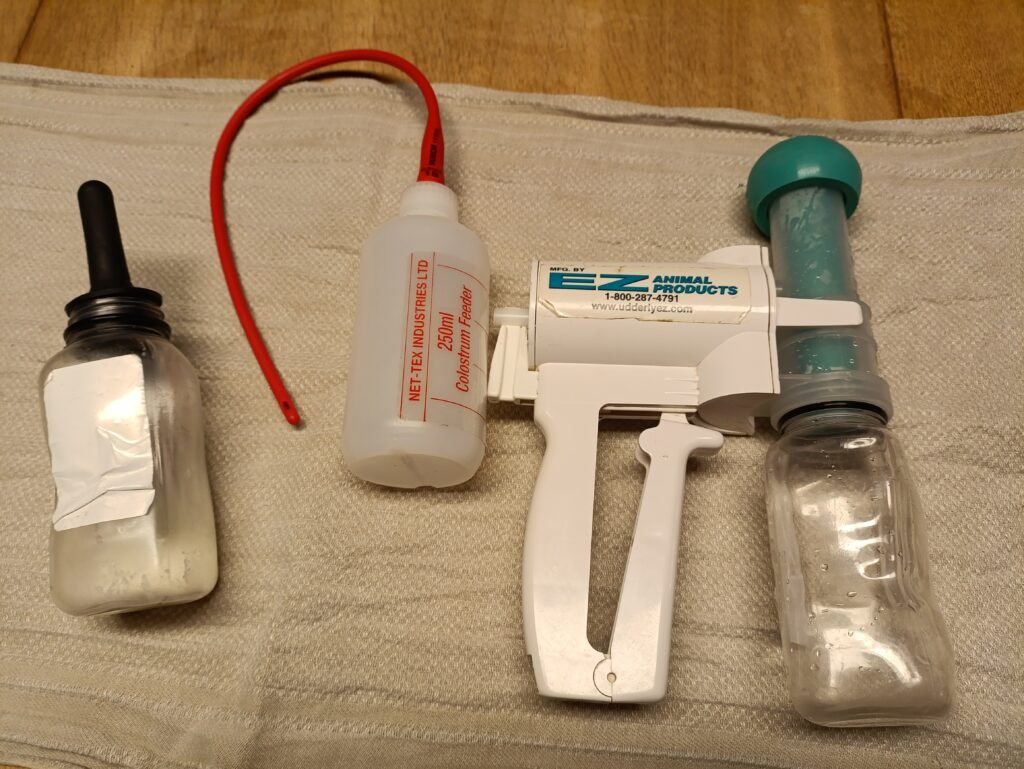
Even though the mother made every effort to lick the lamb clean and motivate it to drink, the lamb was far too weak. We tried to create some warmth using straw and also tried to rub the lamb dry with straw. Suddenly, the birth process started again. Unfortunately, the third of the triplets was also stillborn. Since the living lamb was unable to stand, we pumped milk from the ewe and tried to feed the lamb with a bottle.

But even the suction was too much for the little one. It already felt chilled. So we took it inside and warmed it up with a hair dryer while we continued to rub it dry with old towels. Luckily, we’d been given a feeding tube by a former sheep farmer.

With this we introduced the breast milk or colostrum through the esophagus. From then on things were looking up. The lamb could hold its head better, the suckling reflex set in, and the body temperature felt like it had risen. The mother accepted it right back when we brought it back. In the evening it even got on its feet. 

Unfortunately, the mother was in very poor health for the next few days. She barely ate and had severe diarrhea. Unfortunately, the lamb isn’t able to nurse directly from its mother. Every day, we express two small bottles of milk from the mother and feed the little one. Even today, six days later, it’s still much weaker than most other lambs are after just one day. The mother’s milk production seems to be slowly decreasing. We’ll probably have to start supplementing with formula soon.

img 20260414 212847

30/3/26

Lambing season has begun. The first lambs were born four days ago, followed by some goats two days ago, and another lamb yesterday. It’s good to know that both the breeding ram and the breeding billy were fertile. The first lambs were born just 145 days after we let the ram join the ewes—that was quick. We’re expecting about 30 more births. At first, there’s always great joy when a live newborn is spotted. Then the worry sets in—will it drink properly from its mother so it gets its dose of colostrum?.

Since we've had problems in the past with both intervening too late and too early, it's difficult to decide when we need to provide support.

The newcomers had all already left the womb when we spotted them. The lambs were already on their feet. With the first two from our sheep Nelli, it quickly looked as though they were drinking. You can tell this, among other things, by the jerky movements at the udder and the wagging tail. Sometimes, however, the tail also wags when the infants are not „docked.“ If the lambs' bellies feel well-filled, and at the latest when orange-colored feces appear, these are also good signs.

The mother sheep has taken very good care of the two of them, encouraging them to drink and keeping others from the flock away. By now, the two of them are running so fast across the pasture that we can no longer catch them.

The two kids from our goat Splitti apparently had been born just shortly before our arrival, at least the placenta was lying right next to them. The smaller of the two seemed very weak, so we were a bit worried.

gedekid

Mother goat Splitti was quickly back on her feet and even outside the fence, so it wasn't entirely easy to observe how well she was taking care of her kids.

We spent quite a while in the pasture until we were relatively sure that the two of them had had something to drink.

In the evening, we put the little goats on a bed of straw in the small shed so they wouldn't get too cold.

We had not seen the lamb that was born yesterday morning by our sheep Rudolfine drink until the afternoon.
However, it appeared quite mobile, so we only intervened towards evening. 

comes with lamb

Actually, the little ones are supposed to drink colostrum within the first six hours. We set up a small enclosure into which we lured the ewe with the help of the lamb. Then we checked with clean hands to see if milk was coming out of the udder. Since the lamb is quite large relative to the mother, it might not have been so easy to find the teat. We sat the mother on her rump and guided the lamb's snout directly to the udder and squirted milk on it. After that, we had the impression that it drank a little bit on its own. It is not certain whether the intervention was necessary. But since we have already lost a weakened lamb, we do not want to wait too long.

This morning all five seemed active. Now we can relax a bit until the next births, as long as the newborns don't suddenly change their behavior and become lethargic.

18/3/26

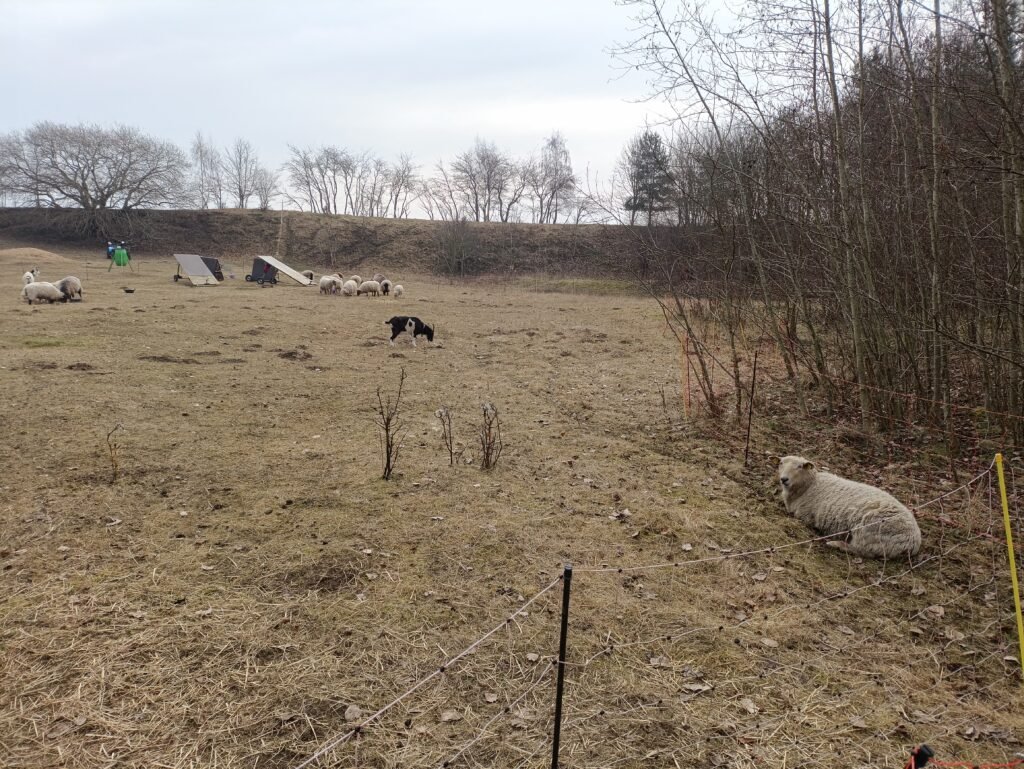
Slowly spring is coming. Two days ago, the sheep and goats completely left the gravel pit and came to a patch of land where a few fresh, green grasses were growing. After being moved, the animals were completely calm there and appeared to graze very contentedly.

By now the tender grasses have been eaten up. Apparently the animals have acquired a taste for it. Today the sheep and goat broke out of their enclosure and feasted in the large field on what was actually supposed to be available for later.

10/3/26

Slowly, the first signs are appearing that our sheep and goats are pregnant. This is especially difficult to tell with the sheep.
Many already look very rounded, but this can also be due to their thick fur.  

Chocolate
Schoki in March 2026

Last year Schnauzi, our oldest lamb from the year before that, had grown very wide, but did not give birth to a lamb. 

Schnauzi
Schnauzi in March 2025

In addition, the animals drink significantly more, even though the temperatures this year have not exceeded 14°C so far.
Today we even had frost again. While only 10-20 liters were drunk during the winter months, 60 liters are currently being consumed.

Another sign that may indicate an impending birth is that sheep isolate themselves from the flock.
However, this can also happen for other reasons.

Schlacksi
Schlacksi is taking some time off

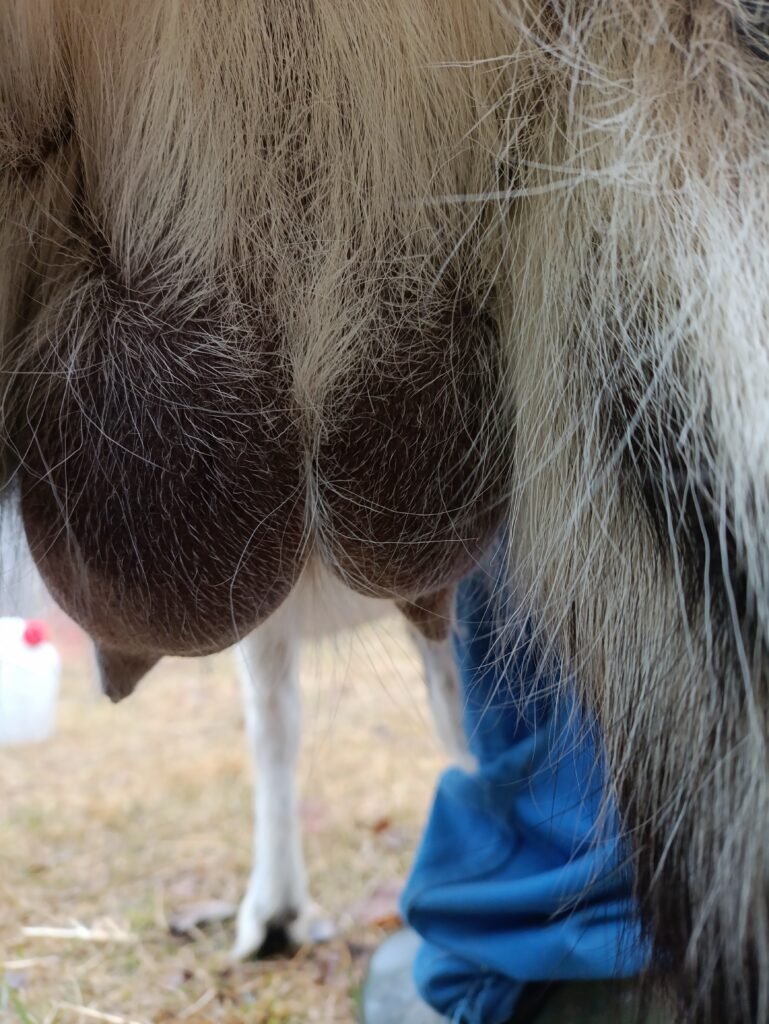
In the case of Splitti, one of our two goats who have been put with a buck for the first time since reaching sexual maturity, you can now clearly see that her udder has enlarged. In this case, we are quite sure that she is pregnant. 

There is also the option of confirming pregnancy with an ultrasound examination. However, we have never had this done and fortunately have always had rams or bucks that did their job well. This year we weren't quite sure if everything would go well again because both gentlemen are quite small. But apparently it worked out anyway.

21/2/26

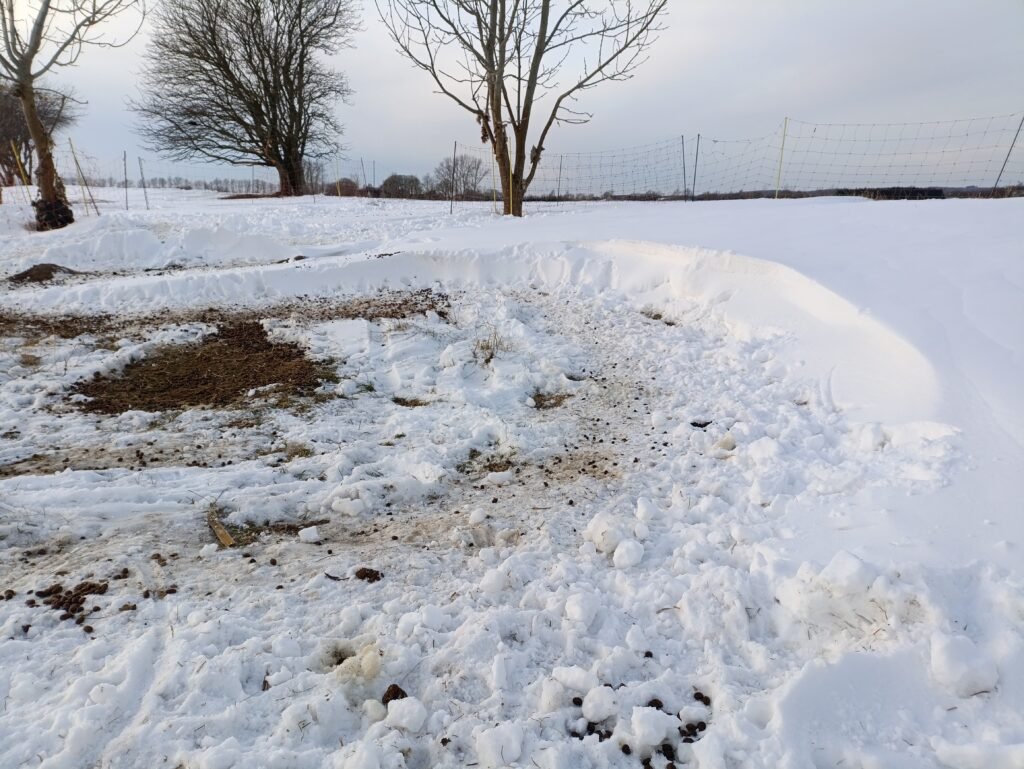
Until recently, the world was completely white. After being moved, the sheep set upon the few blades of grass. In part, they also used their hooves to scrape away a bit of the snow.

The goats ventured into the deep snow because a few blackberry shoots were too tempting to resist.

The less daring goats set upon the branches of the birches. Unfortunately, they later set upon the bark again. The sheep also want to get a share of the branches and try to profit from the goats' actions.

Last night, a thaw set in and today the world looks completely different. There are no trees on the current plot that we need to worry about, but due to the meltwater, the ground is very wet and there is a risk that grazing will cause more severe hoof damage and weaken the vegetation. Therefore, we will move the animals faster than originally planned.

img 20260221 150346 scaled

16/2/26

This morning at 7 o'clock, three rams were picked up for slaughter. That is always a sad day because you get quite close to the animals through daily interaction.

ram

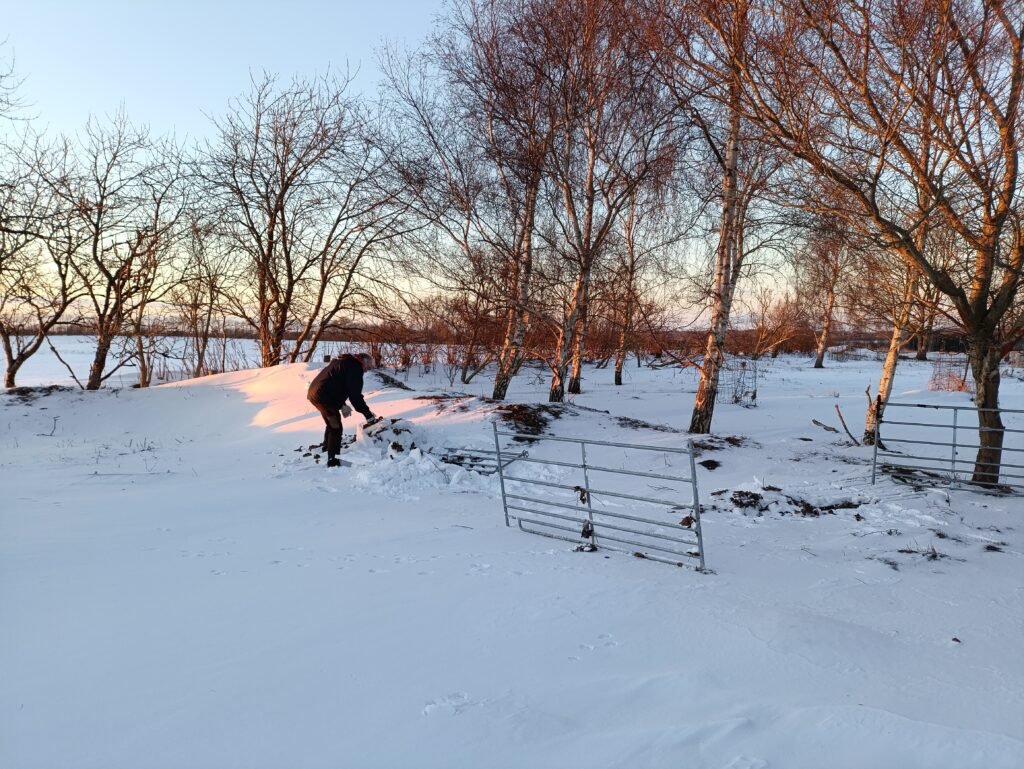
So that we wouldn't have to catch the animals in the dark, we set up a small pen yesterday using our Steckfix hurdles, where the three of them spent the night. The hurdles first had to be searched for in the snow because we hadn't put them away properly.

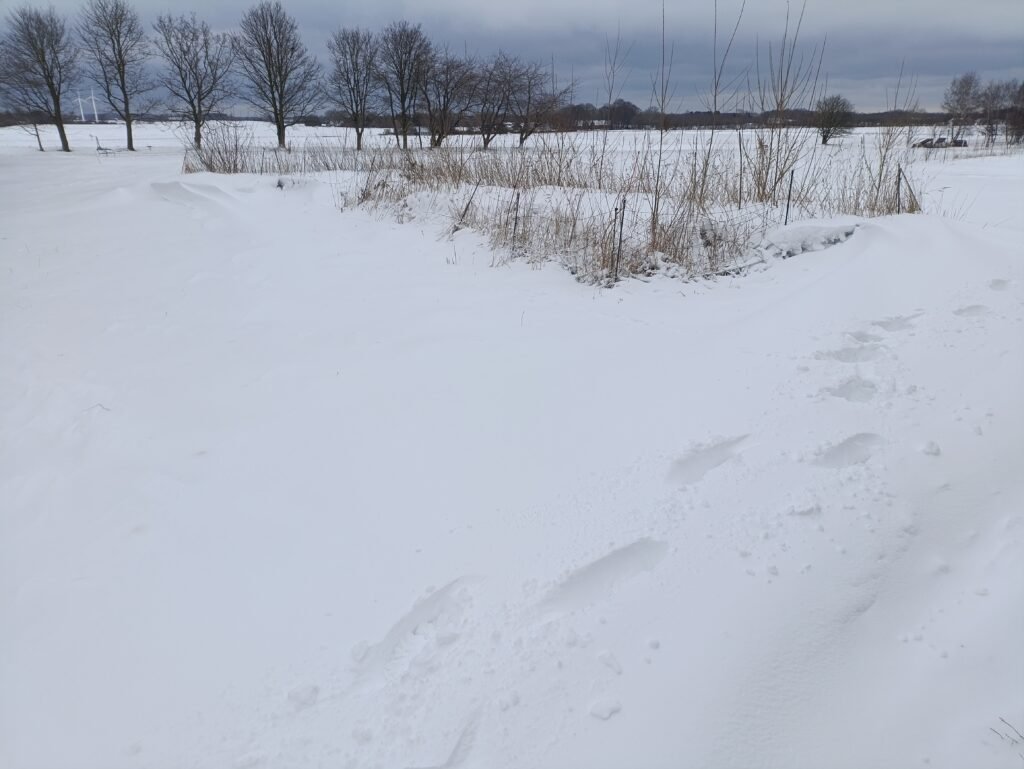
Snowdrifts deposited large amounts of snow on our access road again during the night. The livestock transport truck got stuck shortly after turning off the main road onto our country lane and could only be pulled out with a tractor.
It was good that our animals were somewhat tame. We were able to put them on a leash and walked 500 meters with them. It helped to lure the rams with a cup full of pellets.

The transport to the slaughterhouse took just under an hour. We can already pick up the pelts this afternoon. A good friend of ours is doing that for us because we are completely snowed in again. In some places along the way, there are 70 cm of snow. We are really glad that many people here are very helpful.

We are considering whether to slaughter the animals by December at the latest in the future, because our equipment is not suited to the current weather conditions.

15/2/26

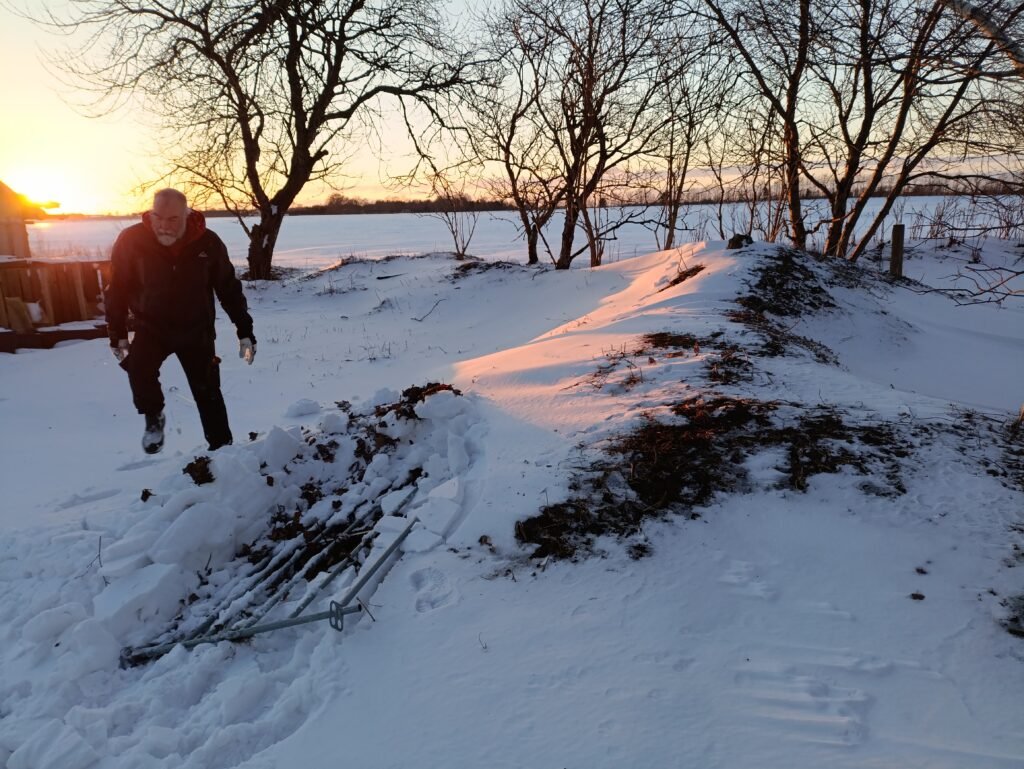
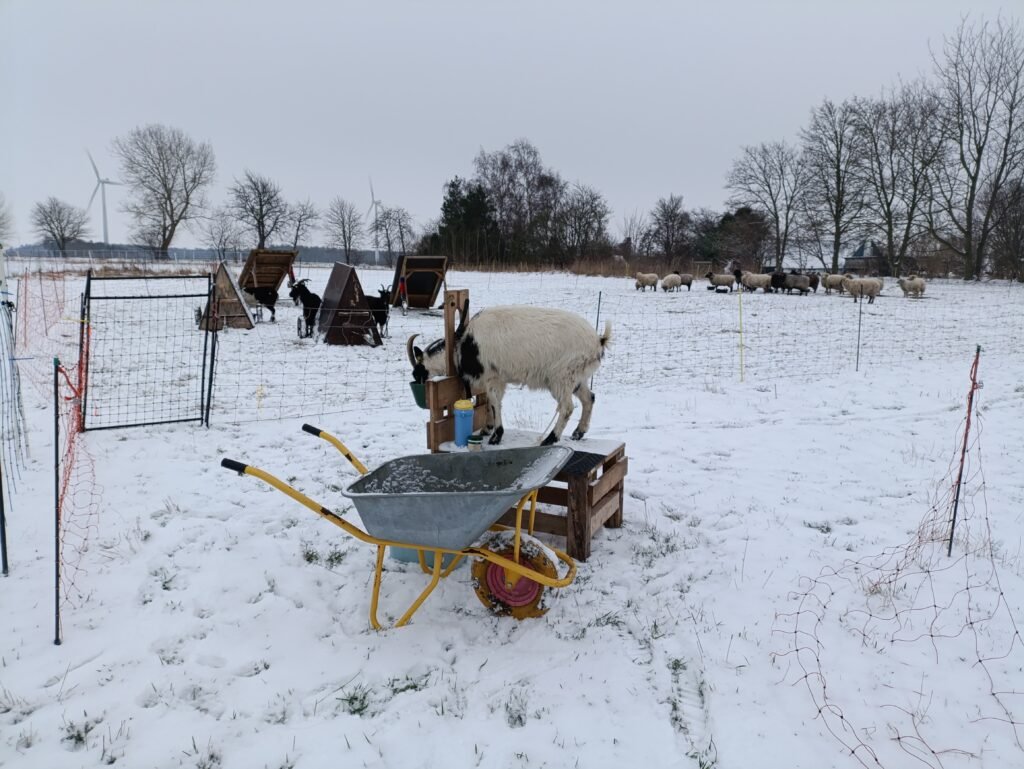
The snowdrifts are causing us a lot of trouble. We kept getting stuck with the wheelbarrow while transporting feed, water, and batteries for the power supply.

img 20260213 091443

Luckily we have the ATV, which makes it across the field so far.

Collecting the fence is not easy either when it is deeply covered in snow.

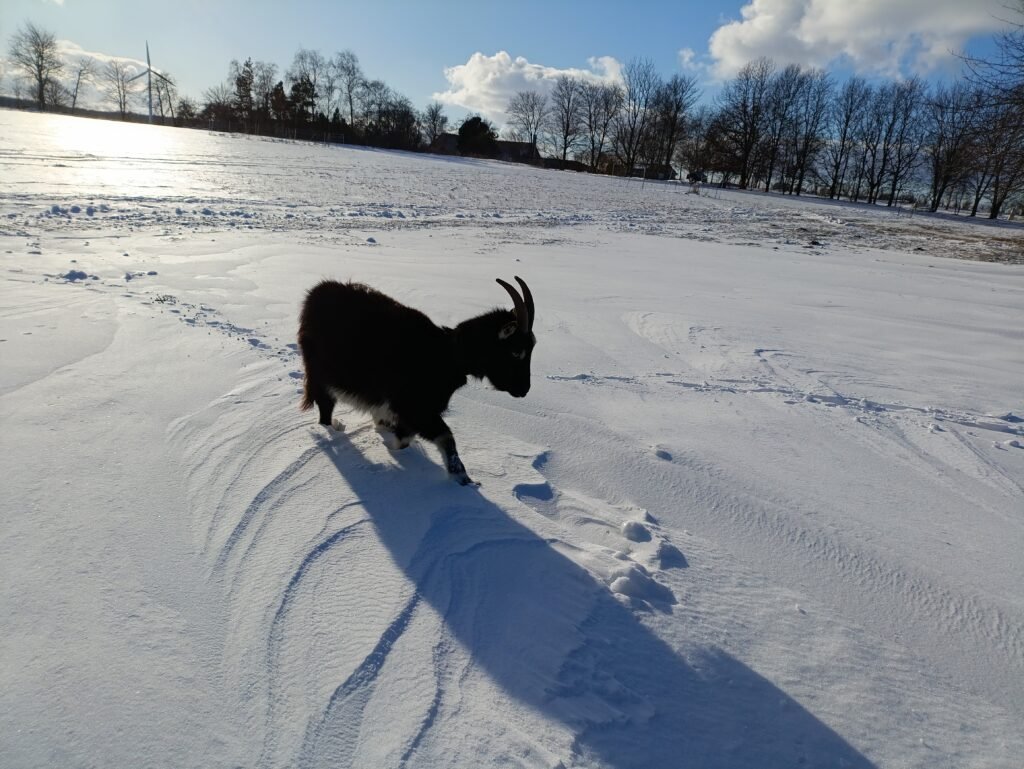
Some daring goats try to cross the snowfields, while the sheep avoid the deep snow even in the fenced areas. Apparently, they stop searching for something edible when the snow depth reaches 20–30 cm. Perhaps we have simply been providing too much supplemental feed.

16/1/26

We also milk in winter. The goats have been milked continuously twice a day since May 2024 (which is 20 months). Recently, however, it has hardly been worth milking in the evening anymore. There wasn't more than a quarter of a liter. In the morning we get about half a liter.

bulette

Today I skipped the evening milking for the first time and am now only milking in the morning. The milk production in the udder should slowly decrease. If all goes well, I can stop milking completely at the beginning of February. We hope that Anna and Bulette, our two dairy goats, are pregnant, so they should be given at least two months to recover a bit and regain their strength.

anna

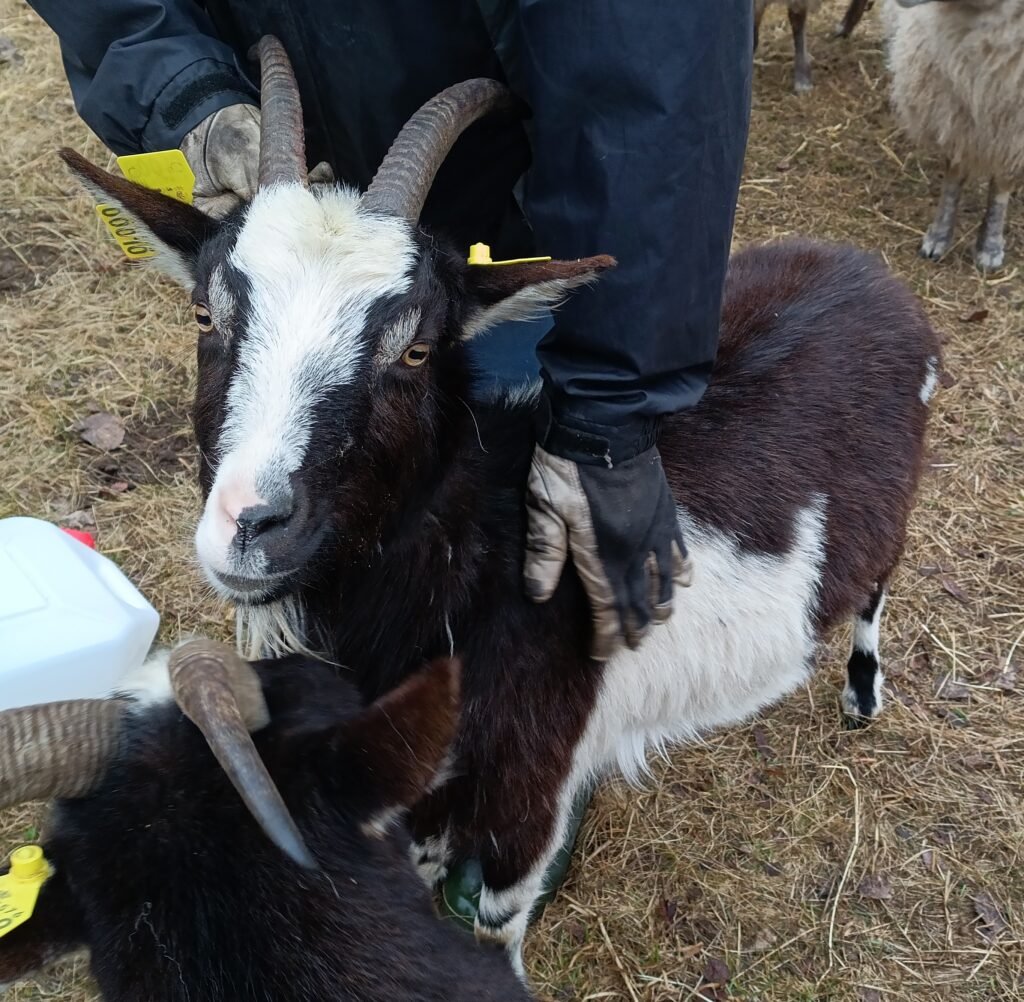
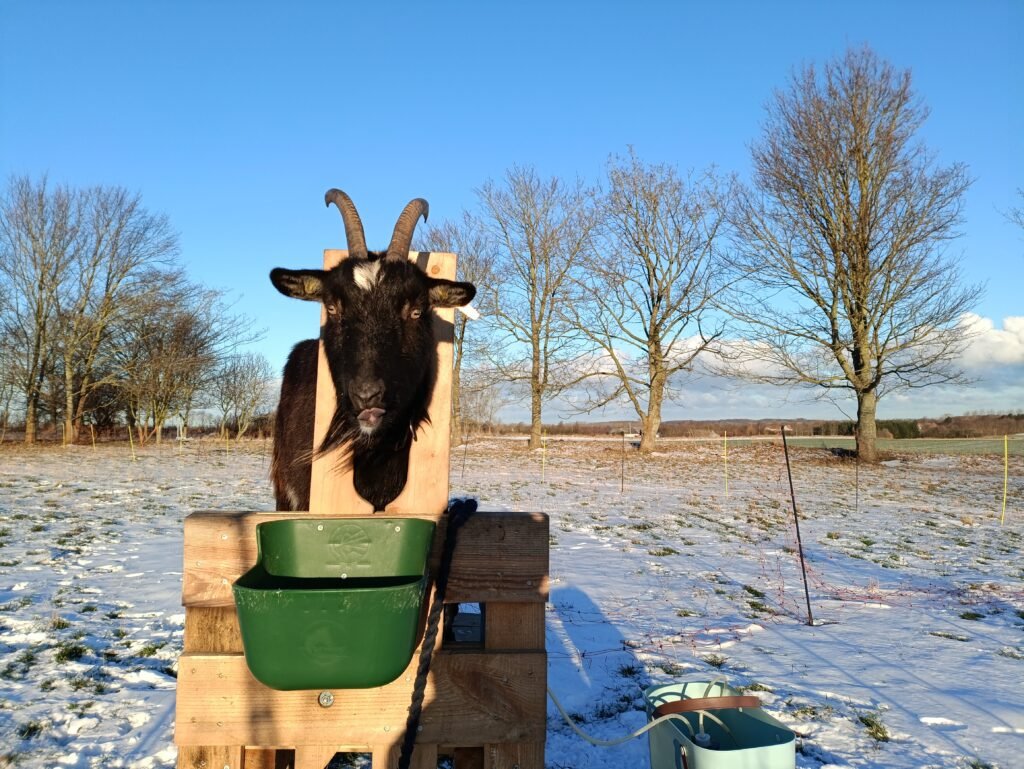
The goats are Danish Landrace goats and are so hardy that they can be kept outdoors all year round. However, they do not like rain and strong winds very much, and in such weather they hide in the small shelters that we try to position according to the wind direction. The goats also need hay and straw to keep themselves warm. On very cold days, they shiver all over when we bring the food.

Ertebølle sheep

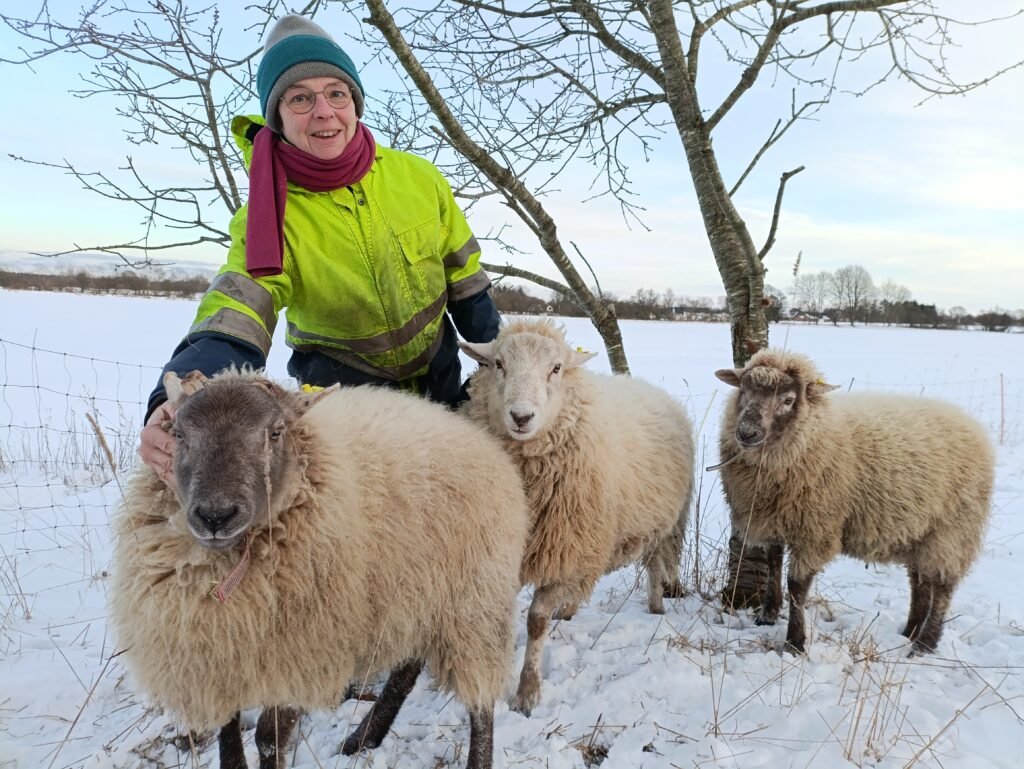
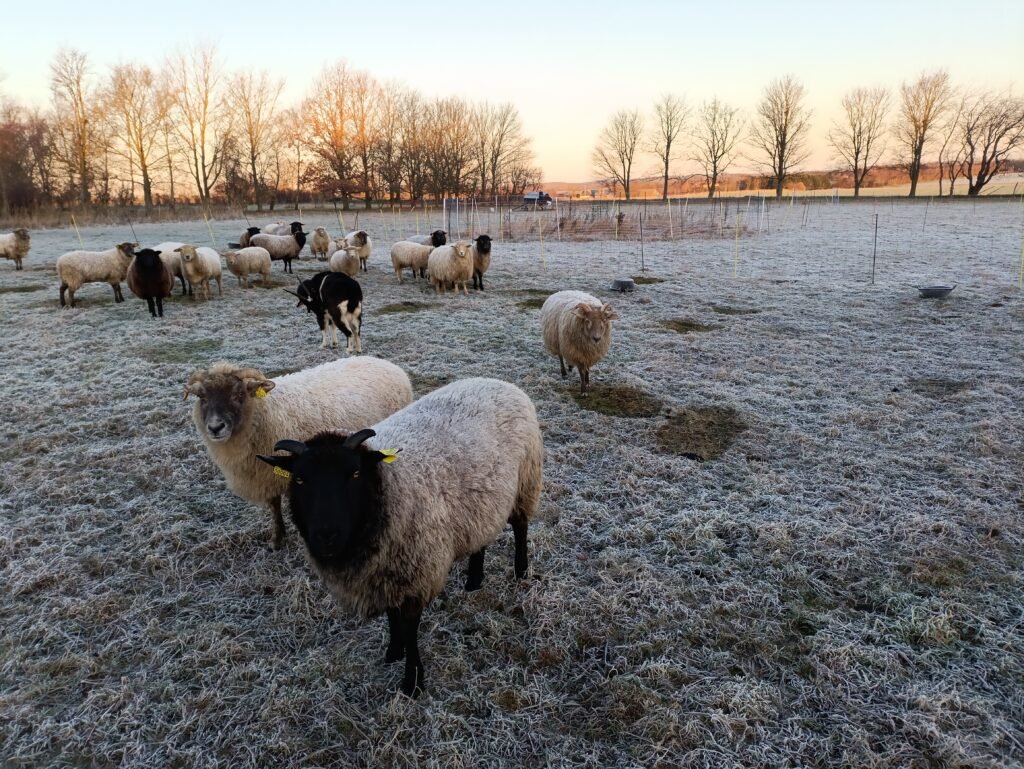
The Ertebølle sheep are even hardier than the goats. In freezing weather, they lay scattered across the pasture at night and thawed the frozen grass cover slightly. Four years ago, we had a severe storm and drove the sheep into the open barn. However, they did not like that at all and quickly wanted to go back to their cold pasture.

Scroll to Top