16/2/26

This morning at 7 o'clock, three rams were picked up for slaughter. That is always a sad day because you get quite close to the animals through daily interaction.
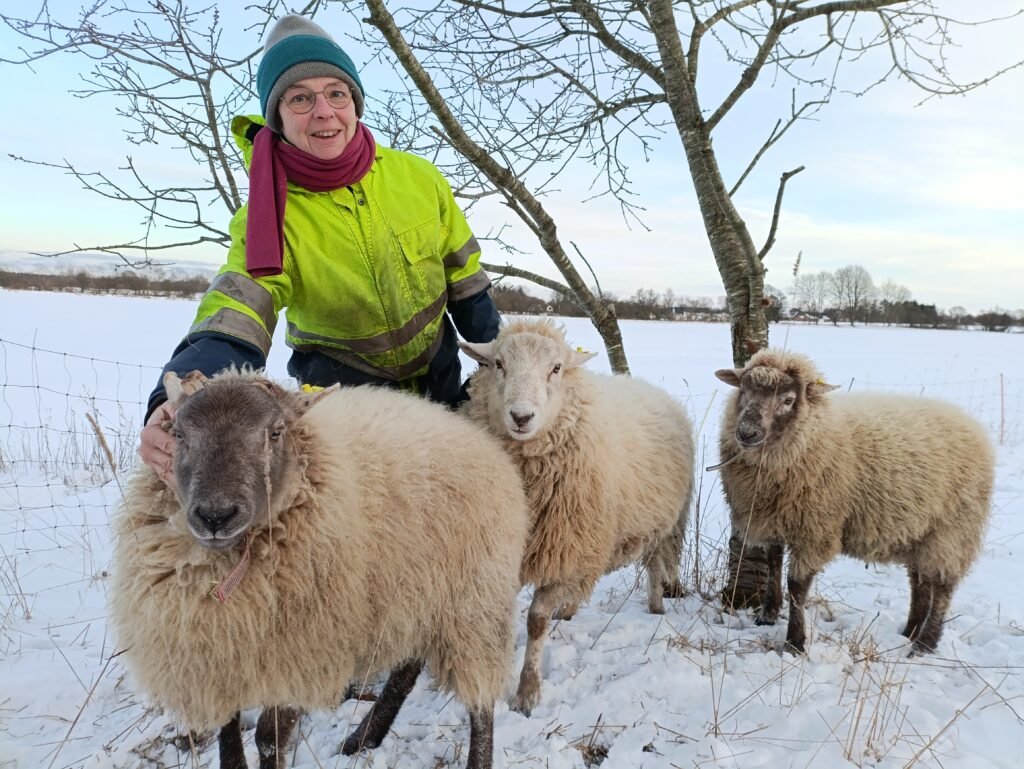
ram

So that we wouldn't have to catch the animals in the dark, we set up a small pen yesterday using our Steckfix hurdles, where the three of them spent the night. The hurdles first had to be searched for in the snow because we hadn't put them away properly.
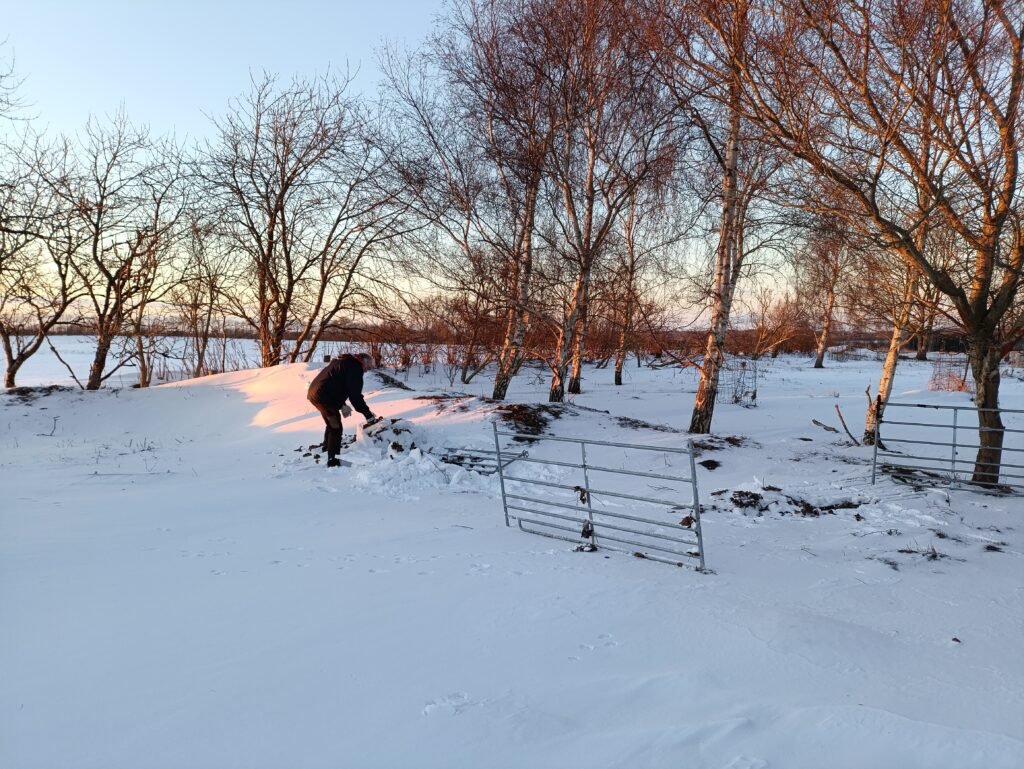
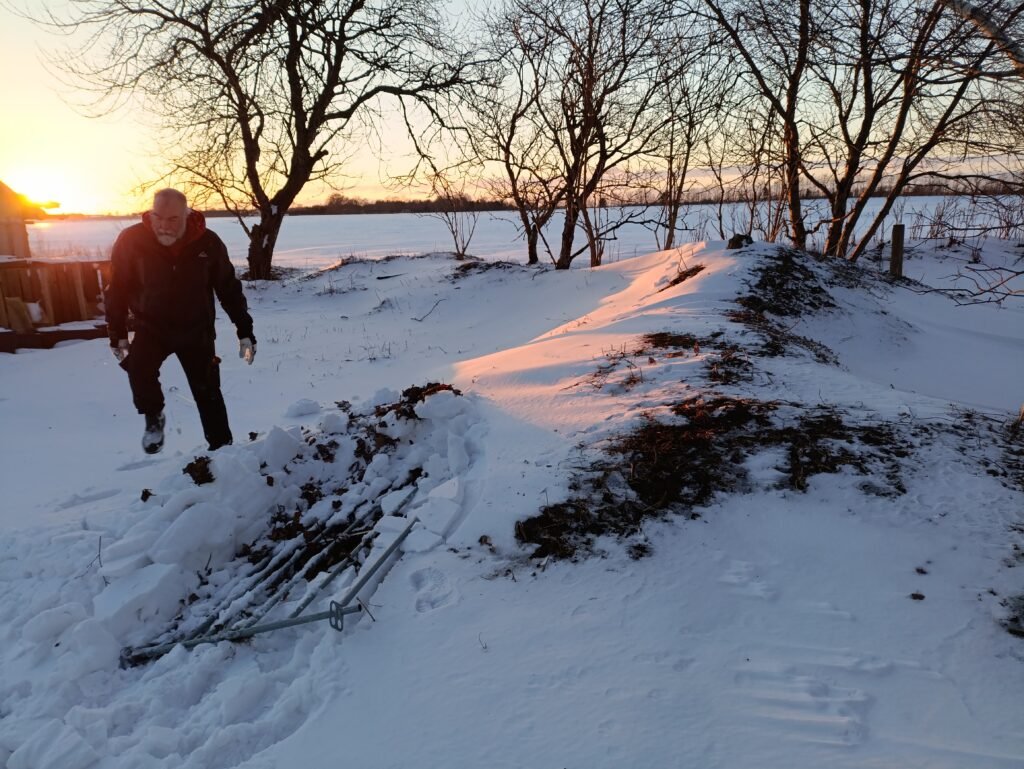
Snowdrifts deposited large amounts of snow on our access road again during the night. The livestock transport truck got stuck shortly after turning off the main road onto our country lane and could only be pulled out with a tractor.
It was good that our animals were somewhat tame. We were able to put them on a leash and walked 500 meters with them. It helped to lure the rams with a cup full of pellets.

The transport to the slaughterhouse took just under an hour. We can already pick up the pelts this afternoon. A good friend of ours is doing that for us because we are completely snowed in again. In some places along the way, there are 70 cm of snow. We are really glad that many people here are very helpful.

We are considering whether to slaughter the animals by December at the latest in the future, because our equipment is not suited to the current weather conditions.
15/2/26

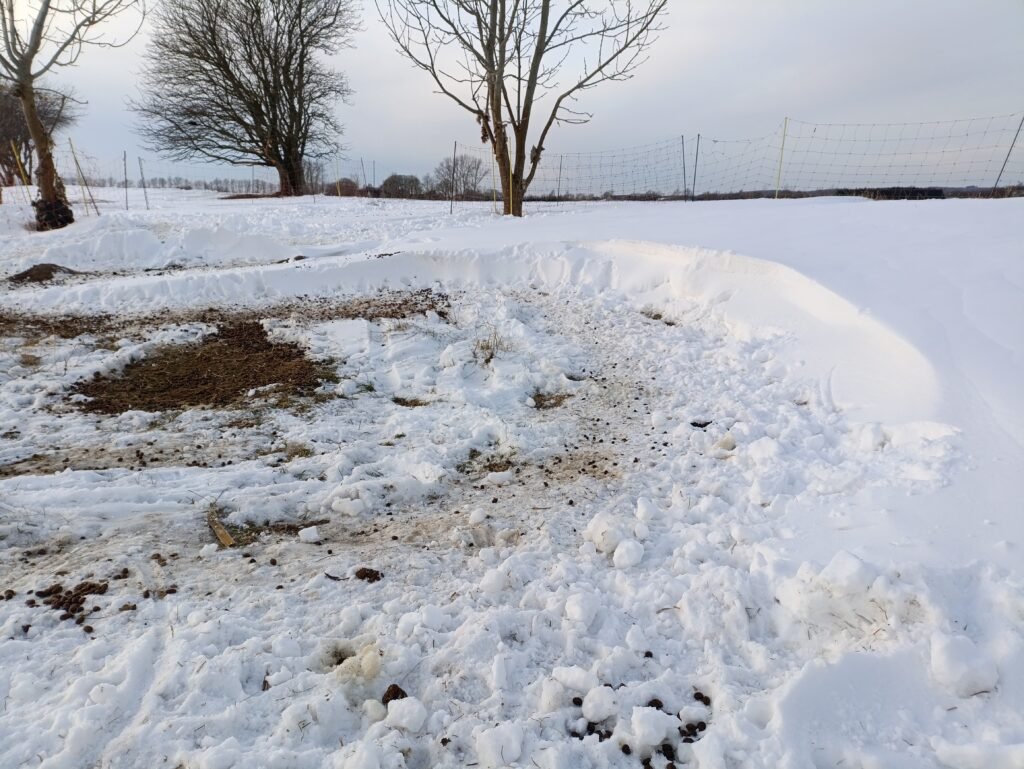
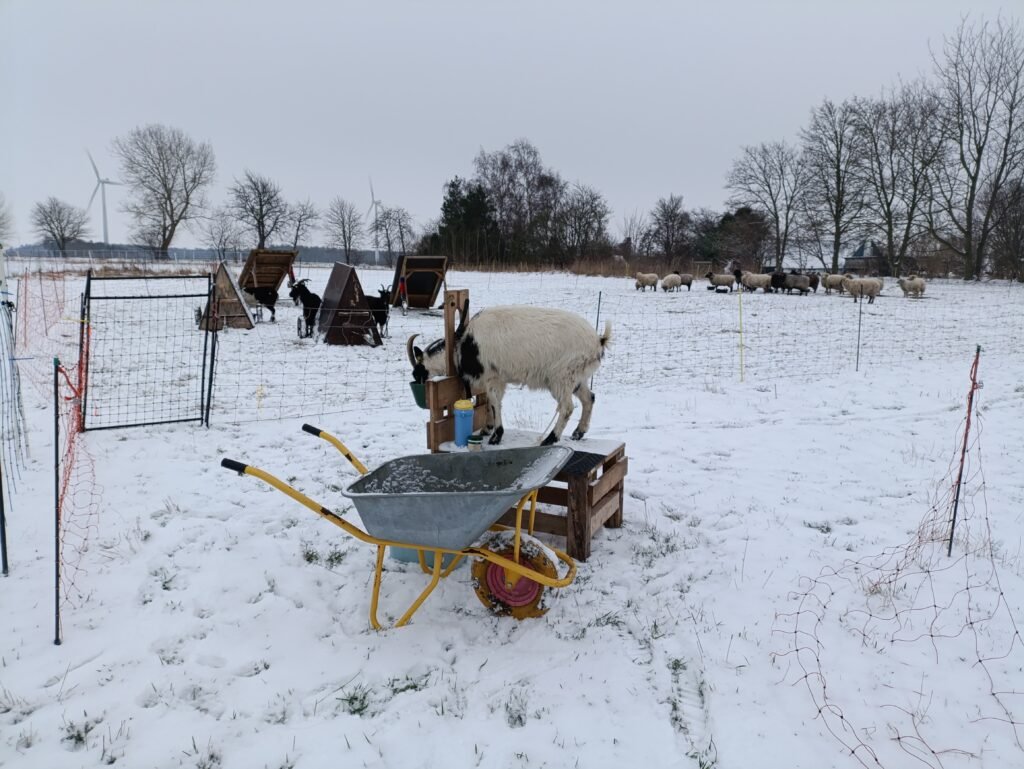
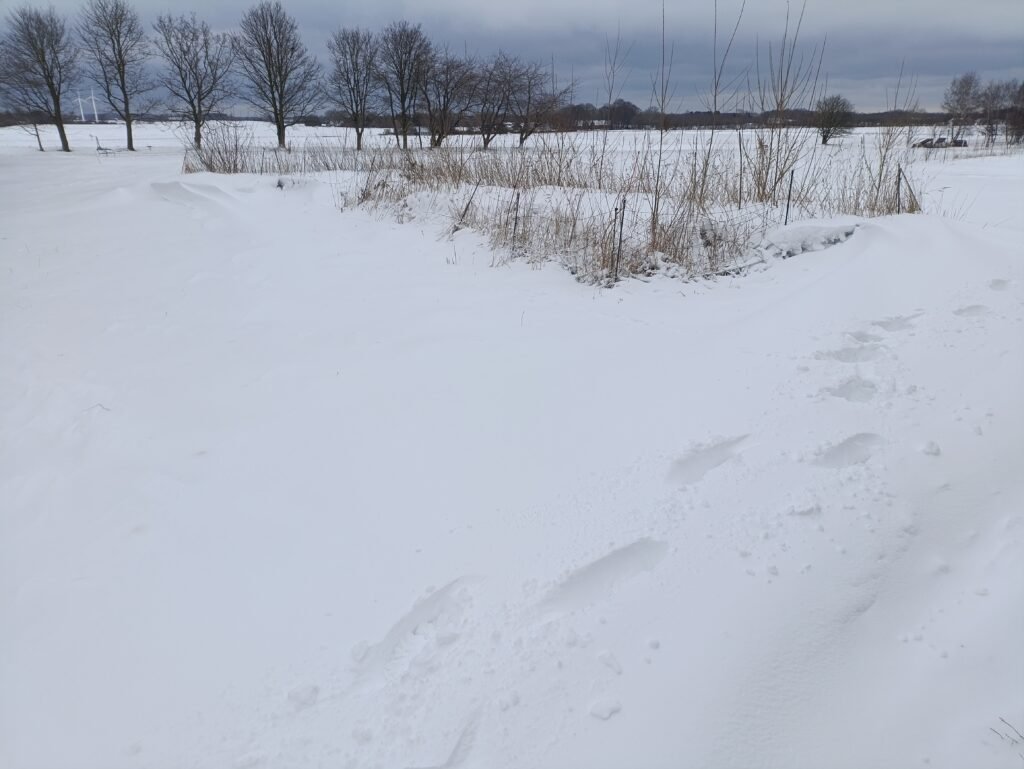
The snowdrifts are causing us a lot of trouble. We kept getting stuck with the wheelbarrow while transporting feed, water, and batteries for the power supply.

img 20260213 091443

Luckily we have the ATV, which makes it across the field so far.

Collecting the fence is not easy either when it is deeply covered in snow.

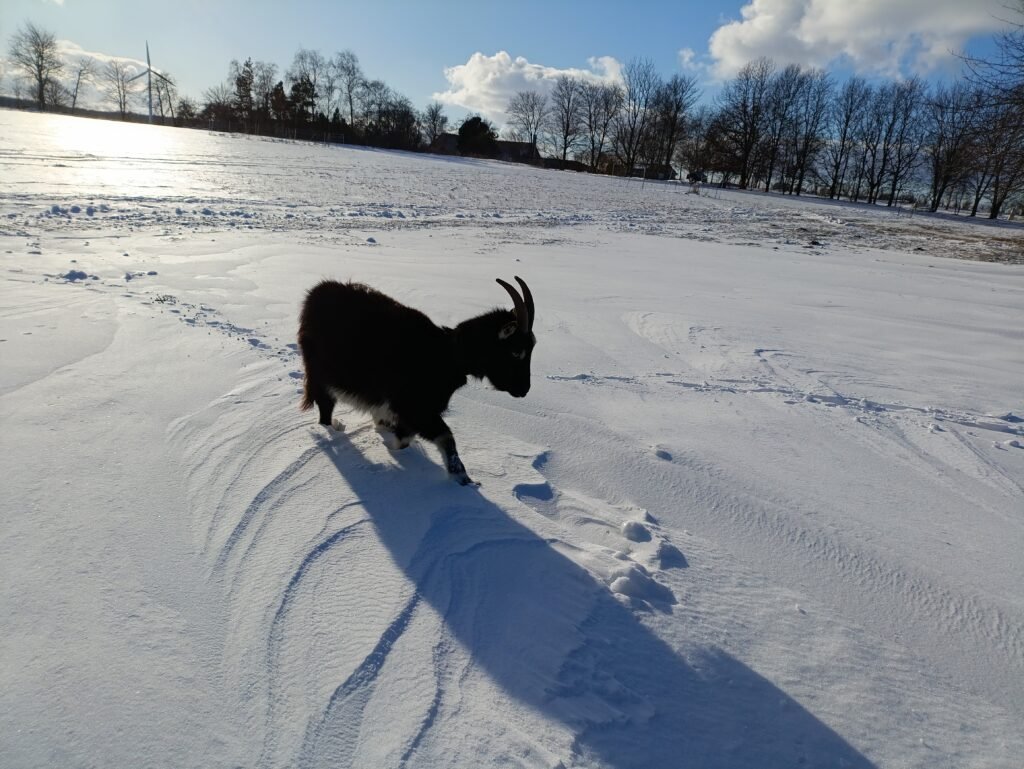
Some daring goats try to cross the snowfields, while the sheep avoid the deep snow even in the fenced areas. Apparently, they stop searching for something edible when the snow depth reaches 20–30 cm. Perhaps we have simply been providing too much supplemental feed.

13/2/26

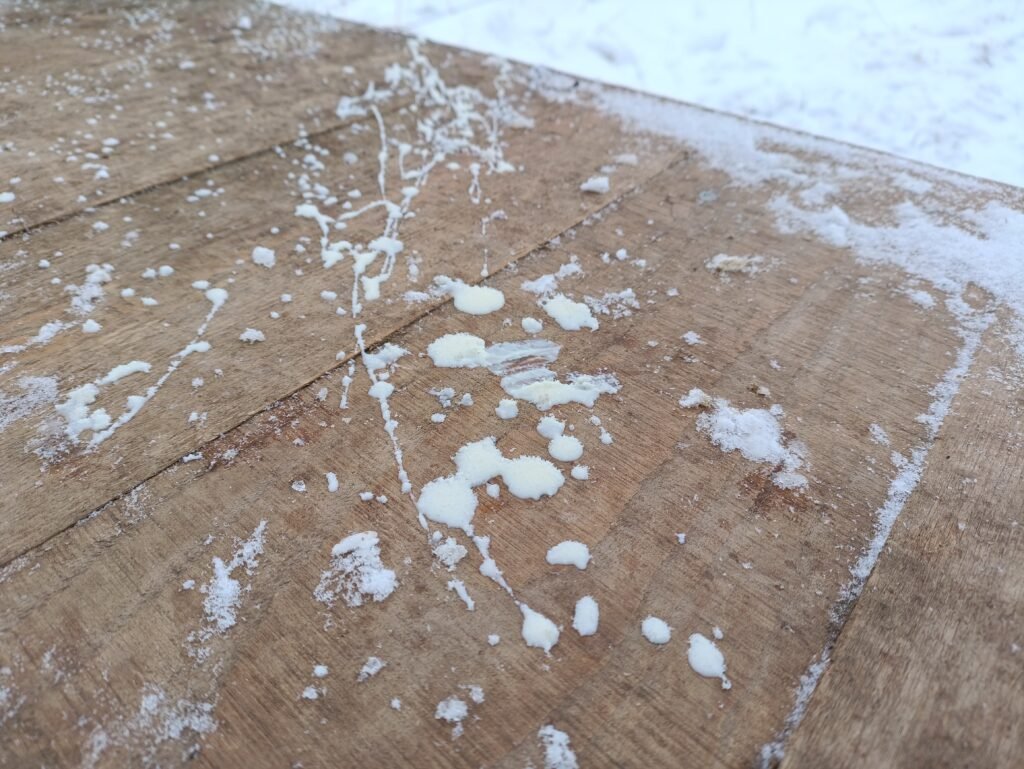
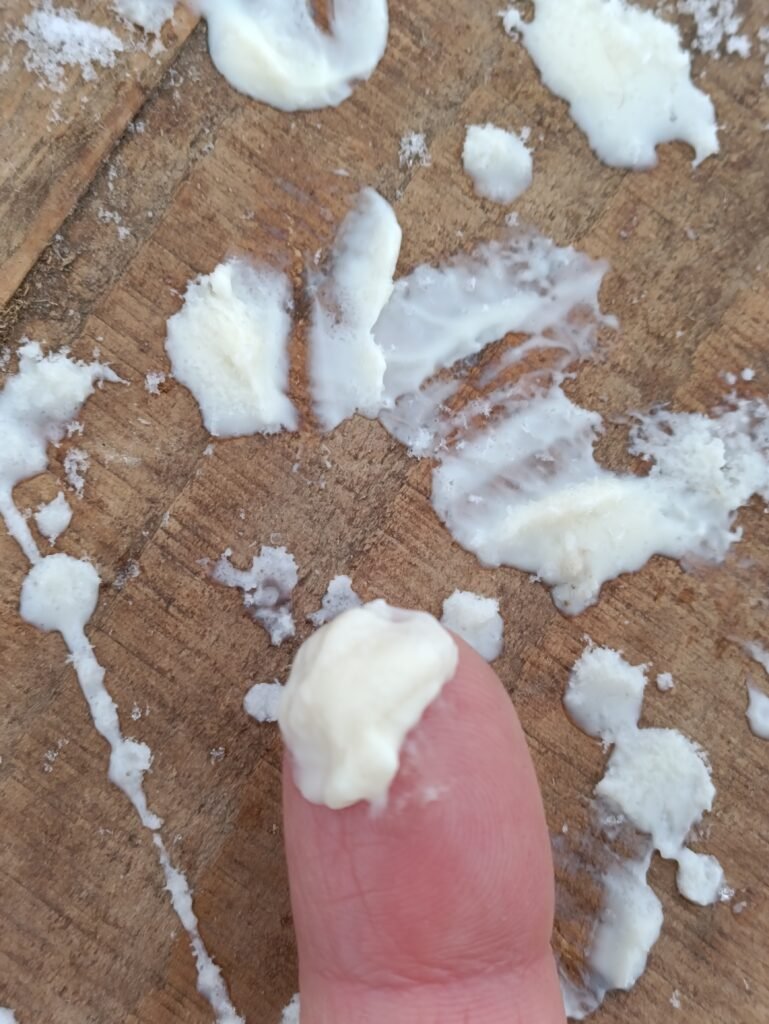
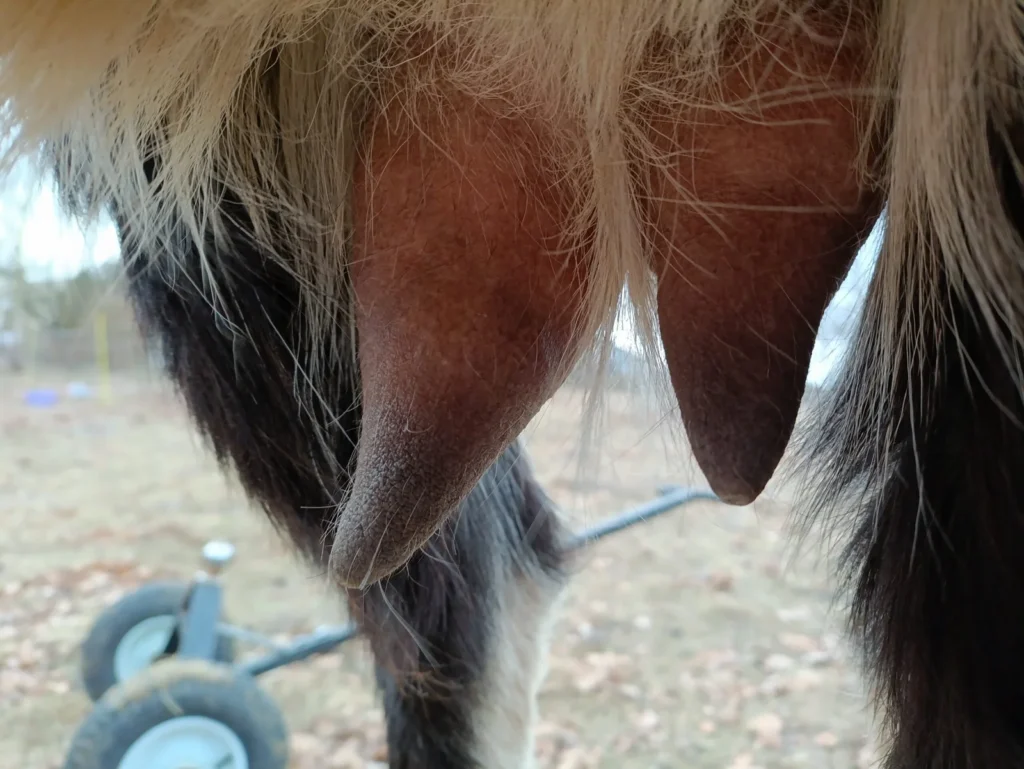
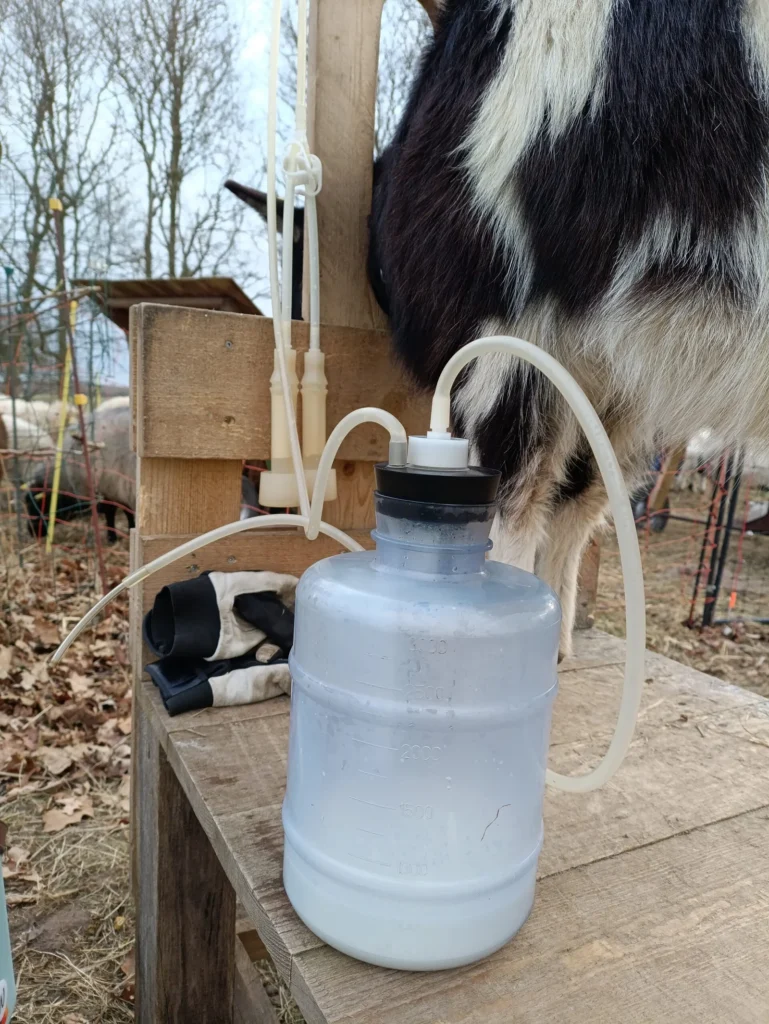
Gestern habe ich zum letzten Mal gemolken. Eigentlich hatte ich vor, erst fünf Tage später aufzuhören. Die ersten zwei bis drei Strahlen melken wir nicht in die Flasche, da sich in denen zu viele Keime sammeln können. Außerdem kann man die Beschaffenheit der Milch sehen. Bei Bulette kam gestern zu großen Teilen eine dicke, sahneartige Substanz heraus. Das Euter war auch deutlich kleiner. 

Bei Anna habe ich noch eine Minute mit der Maschine gemolken, es kamen aber nur 150 ml. Das Euter war ebenfalls nicht groß. Deswegen habe ich beschlossen, nicht weiter einzugreifen. Ich denke, Anna und Bulette schaffen es die Milchproduktion einzustellen. Bleibt zu hoffen, dass die beiden trächtig sind und wir in ca. zwei Monaten Zicklein bekommen.

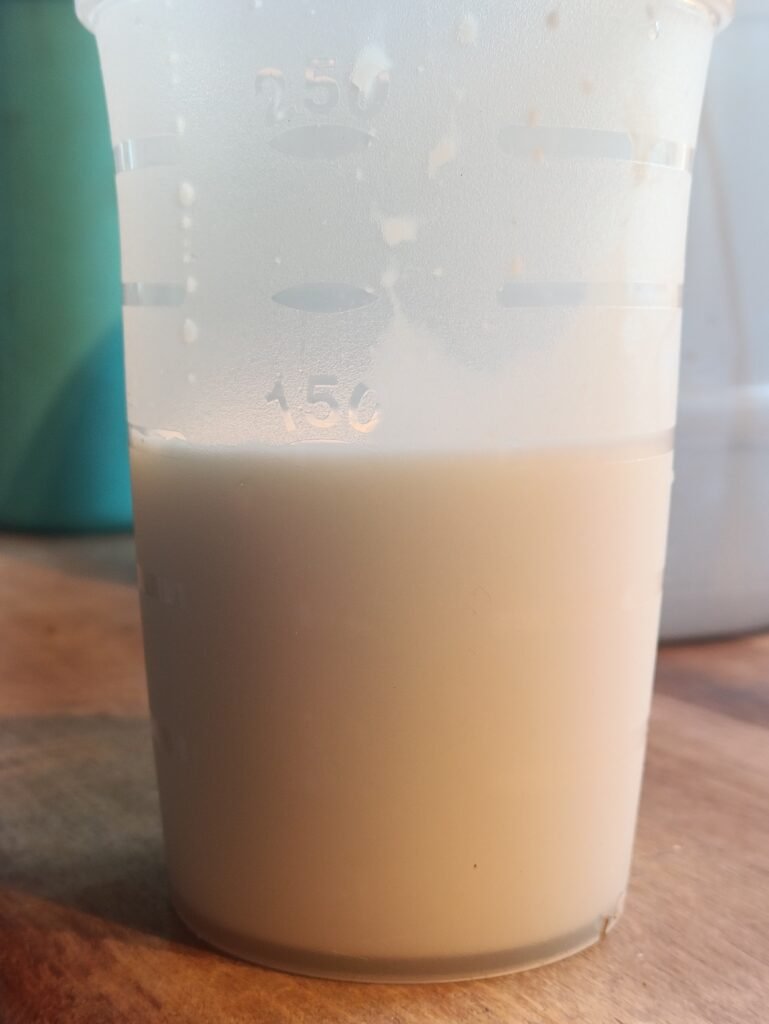
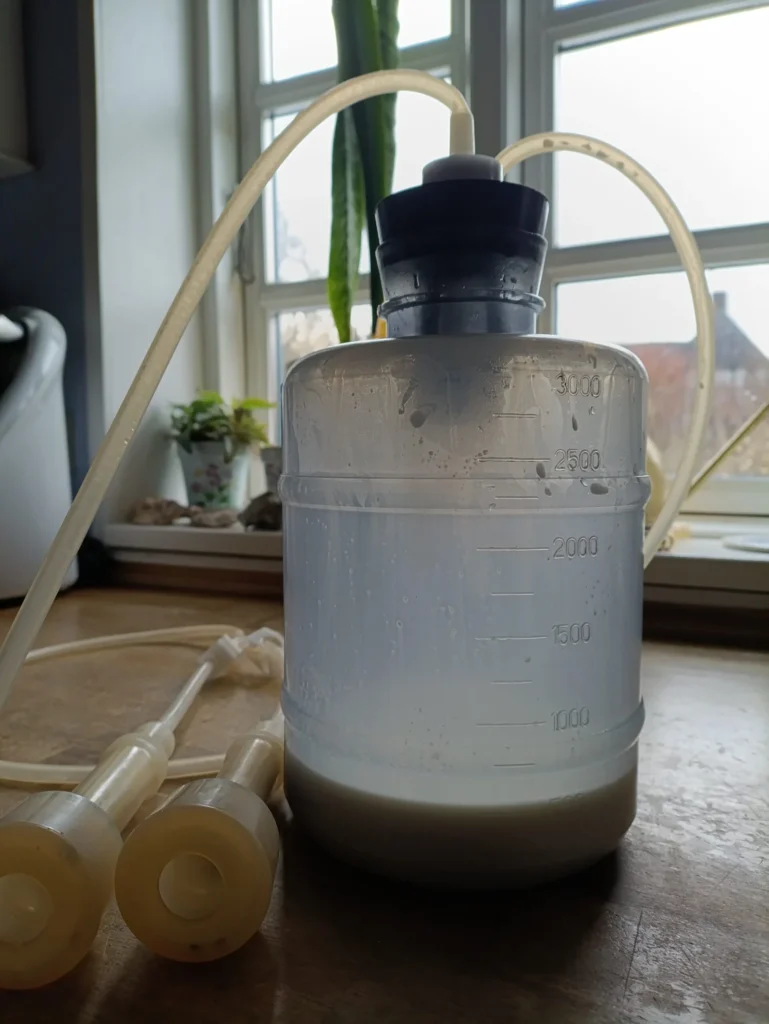
Annas Milch hat auch eine viel dickflüssigere Konsistenz. Anscheinend hat bereits der Prozess begonnen, bei dem Flüssigkeit im Euter resorbiert wird. In dem Zuge soll angeblich der Anteil von Abwehrstoffen ansteigen. Die Milch werde ich deswegen nicht mehr verwerten.

mælk

Das vorletzte Mal hatte ich vor vier Tagen gemolken. Da war die Milch auch schon recht dickflüssig. Vielleicht hätte ich schon zu diesem Zeitpunkt stoppen können.

12/2/26

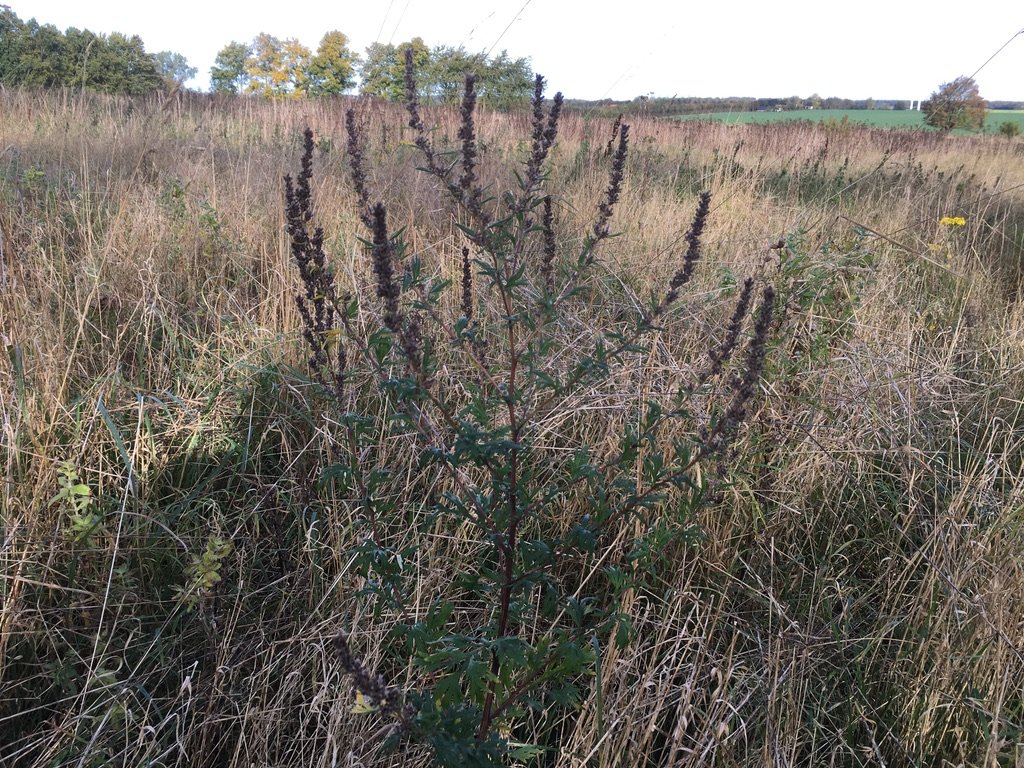
While the world outside is covered in snow, we are trying to set up a monitoring system. We want to be able to better track what is changing as a result of grazing based on holistic management principles. Unfortunately, in recent years we haven't paid attention to making sure the photos we took are comparable.

In October 2020, we found our farm and took a few pictures even before buying it.
The large field had been lying fallow for some time and was becoming overgrown.

202020222025

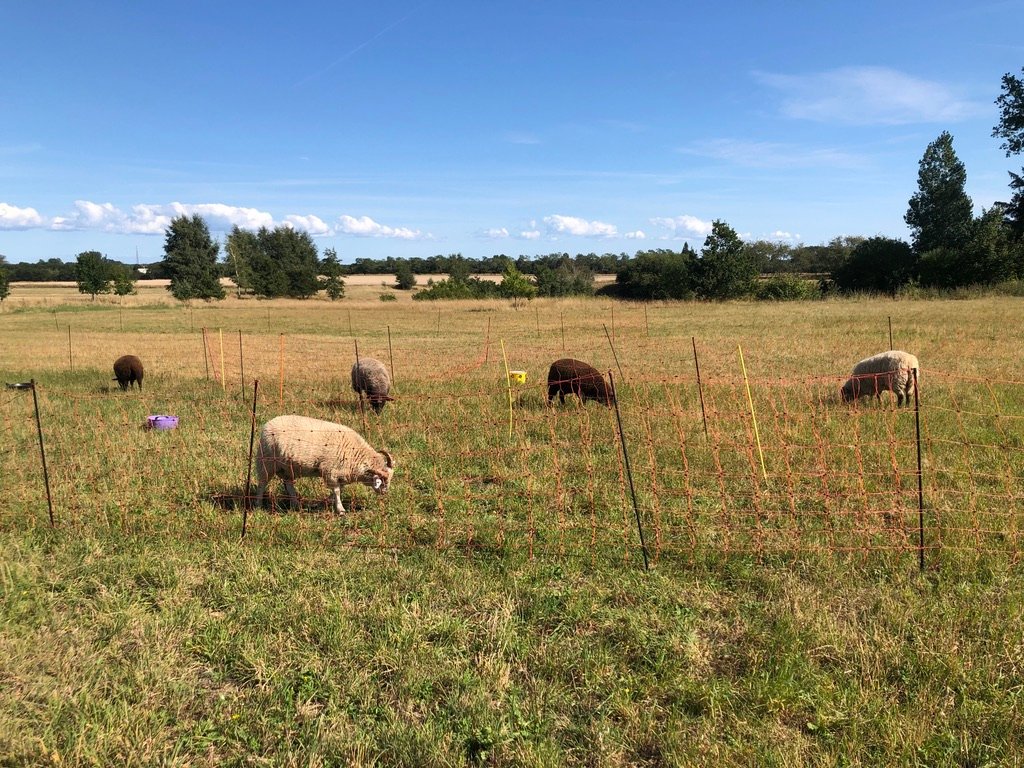
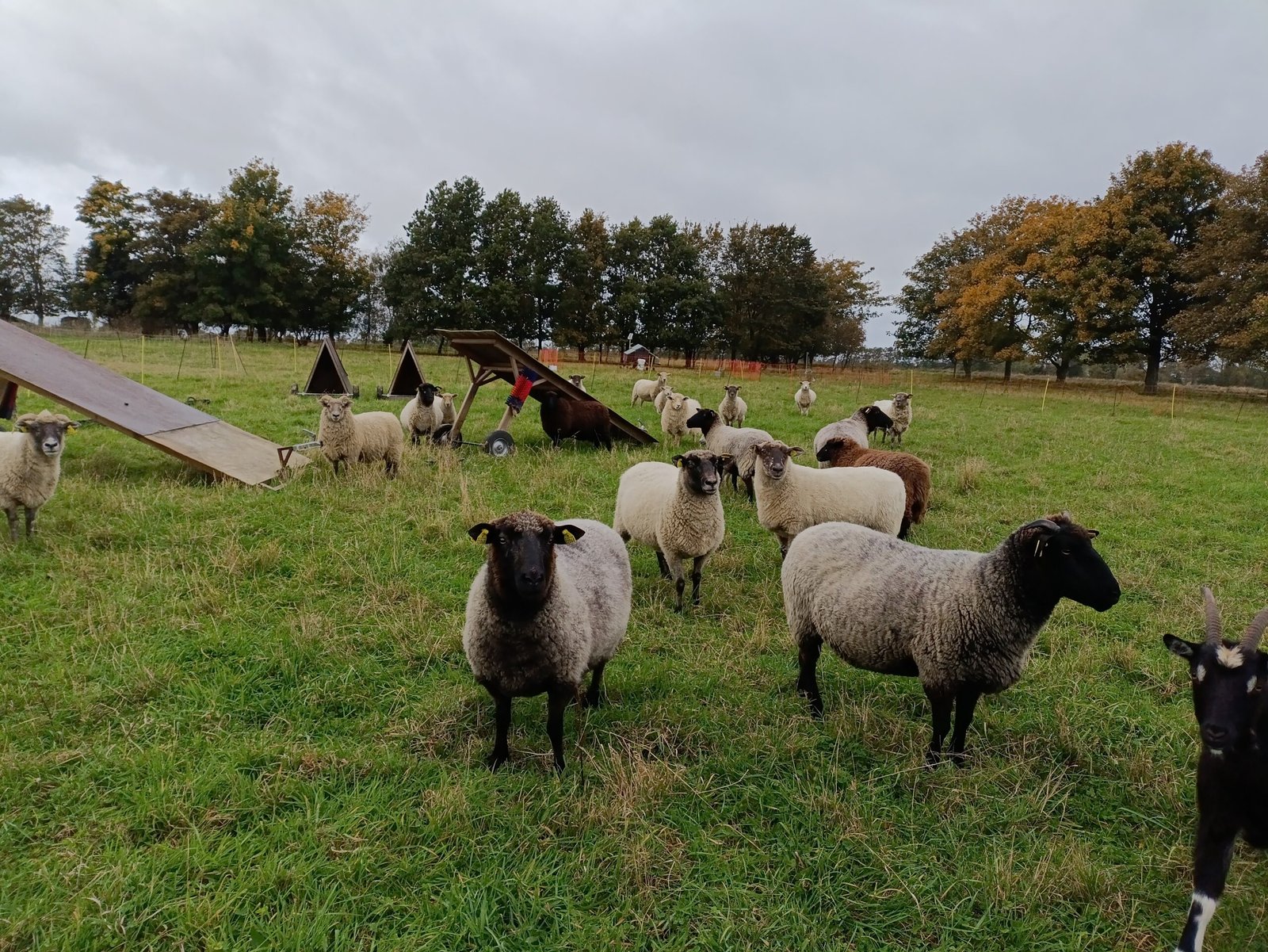
In 2021, we had a farmer mow the field once. After that, we mowed the grass one to two times a year with our newly purchased flail mower. In addition, grazing of our land started in July 2021, initially with three sheep. Meanwhile, we have 27 animals in the herd (21 sheep and 6 goats) and, separately, three rams that are taking their final journey this weekend.

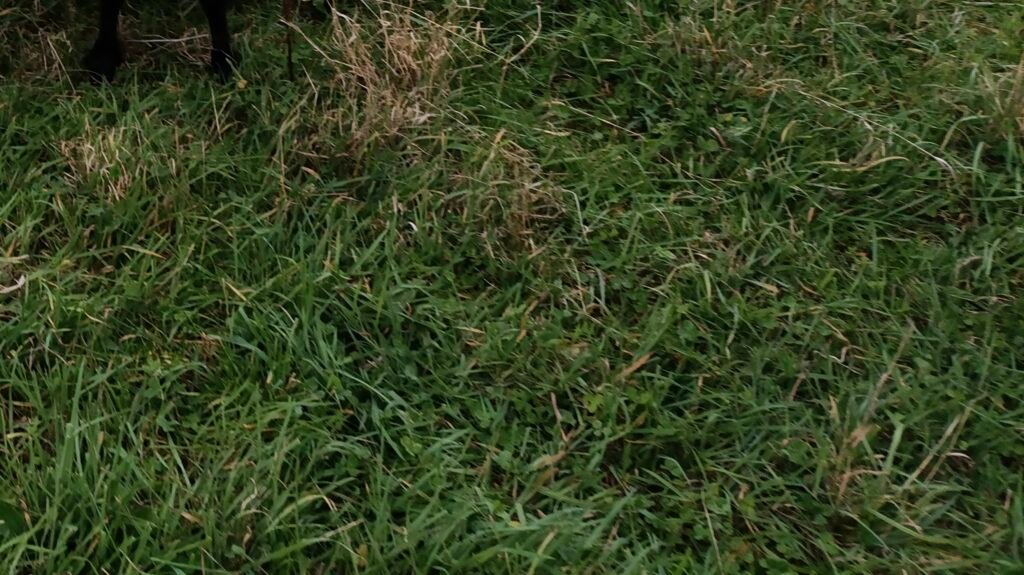
With some goodwill, one can see that the grass cover has become slightly denser from 2022 to 2025. When enlarging the image from 2025, the coverage of the ground with clover between the grasses is visible.

11/2/26

After it snowed last week, there is still a continuous layer of snow outside. Especially our four Danish Landrace chickens were initially not thrilled and immediately turned back on the chicken ladder in the morning to head back into the coop.

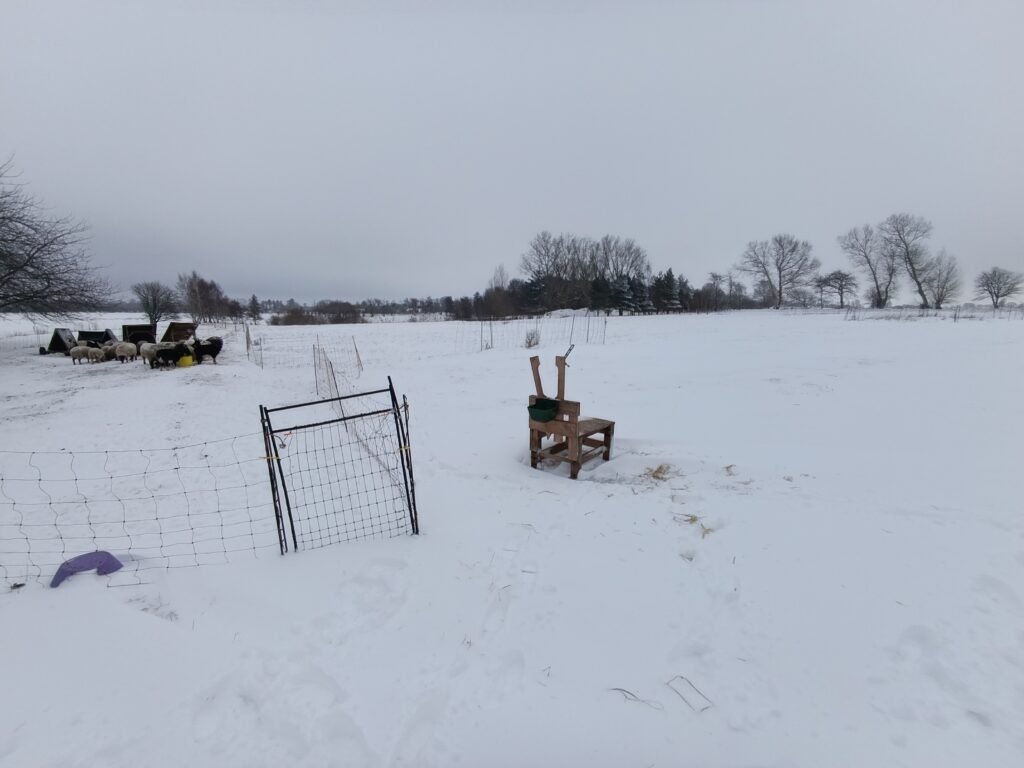
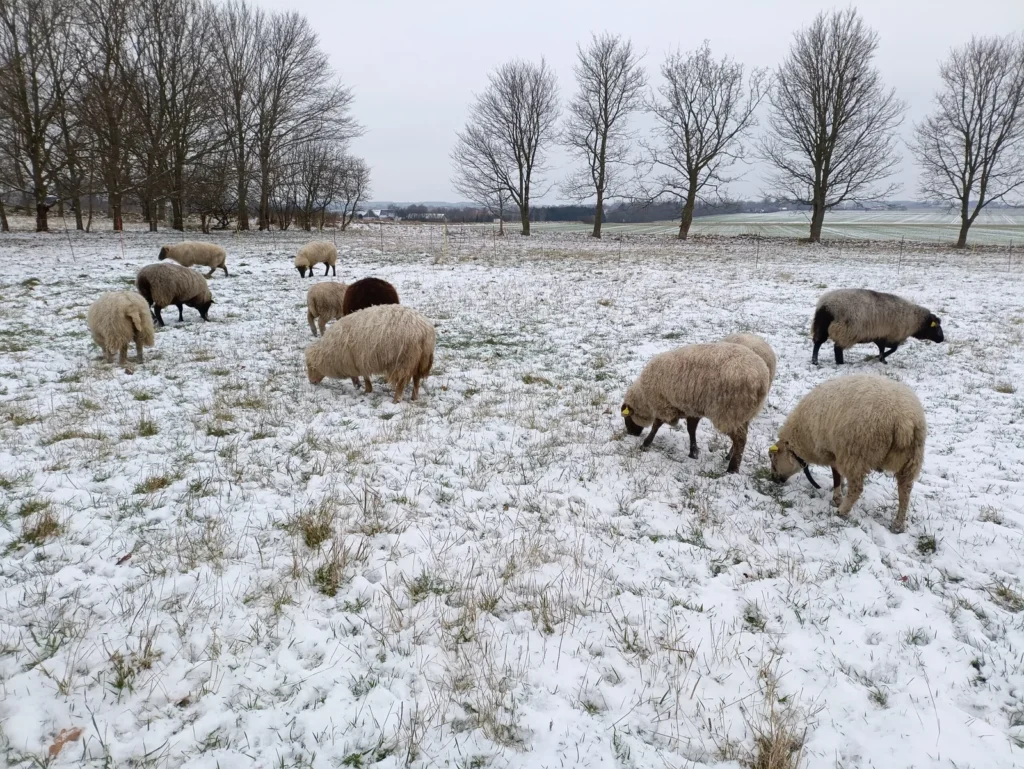
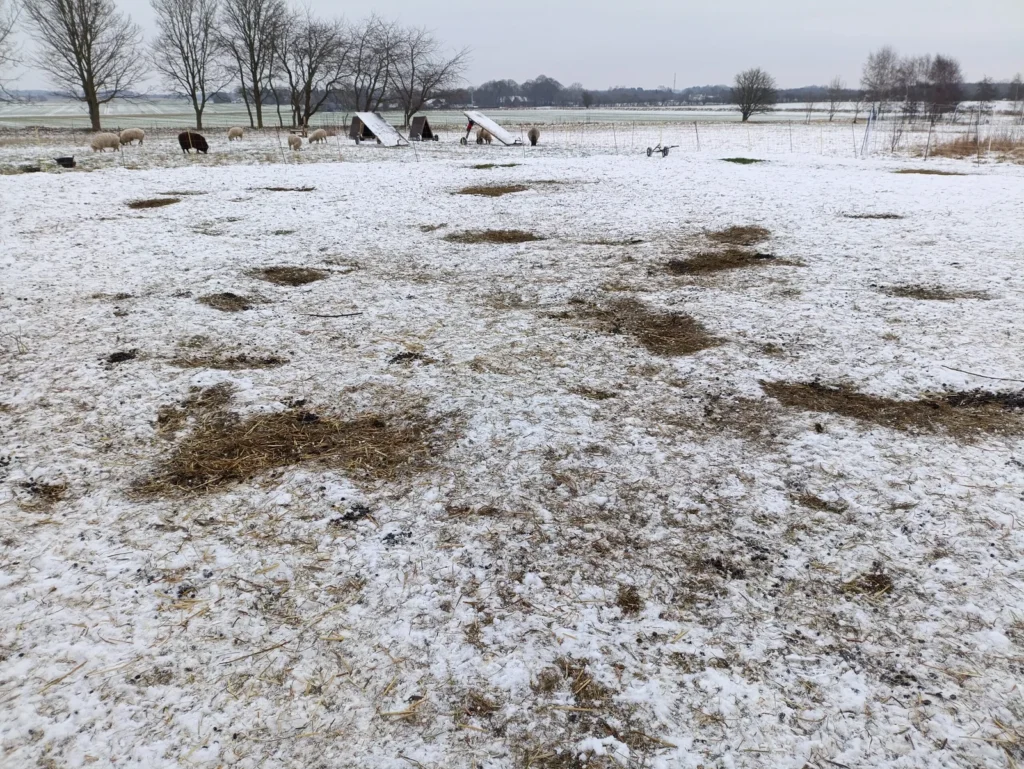
The temperatures have been hovering around freezing for the past few days. Johnny managed to hammer the fence posts into the ground so that we could move the sheep and goats. While the yield isn't quite as high due to the layer of snow, at least the area isn't too full of manure.

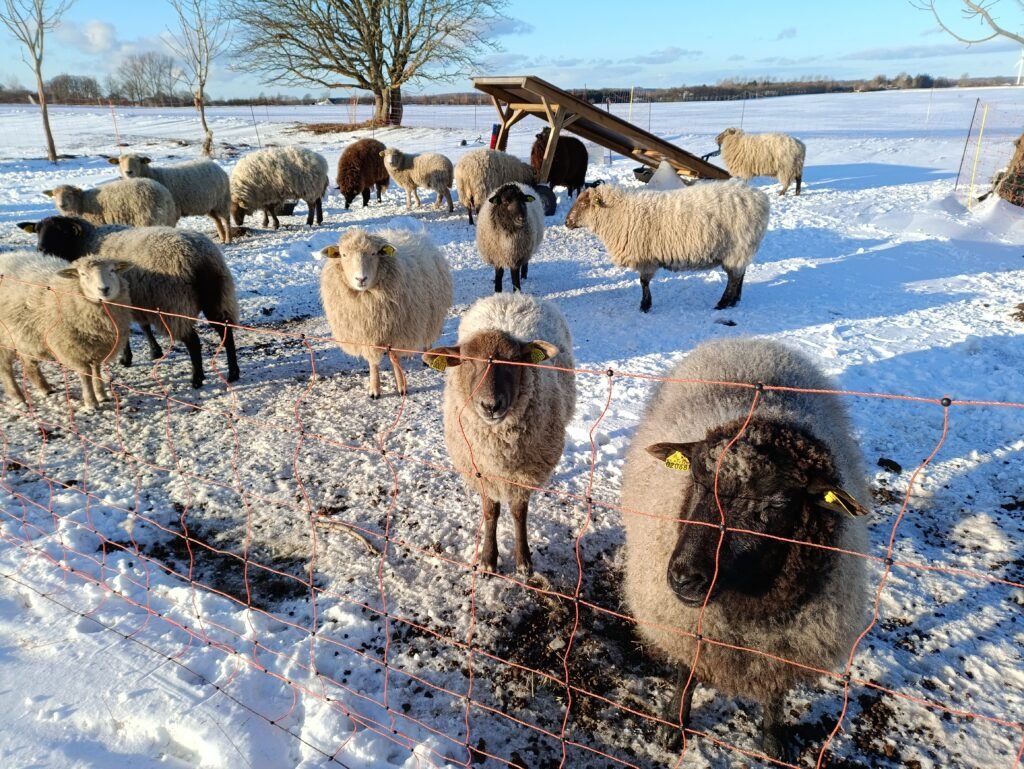
animals in the snow

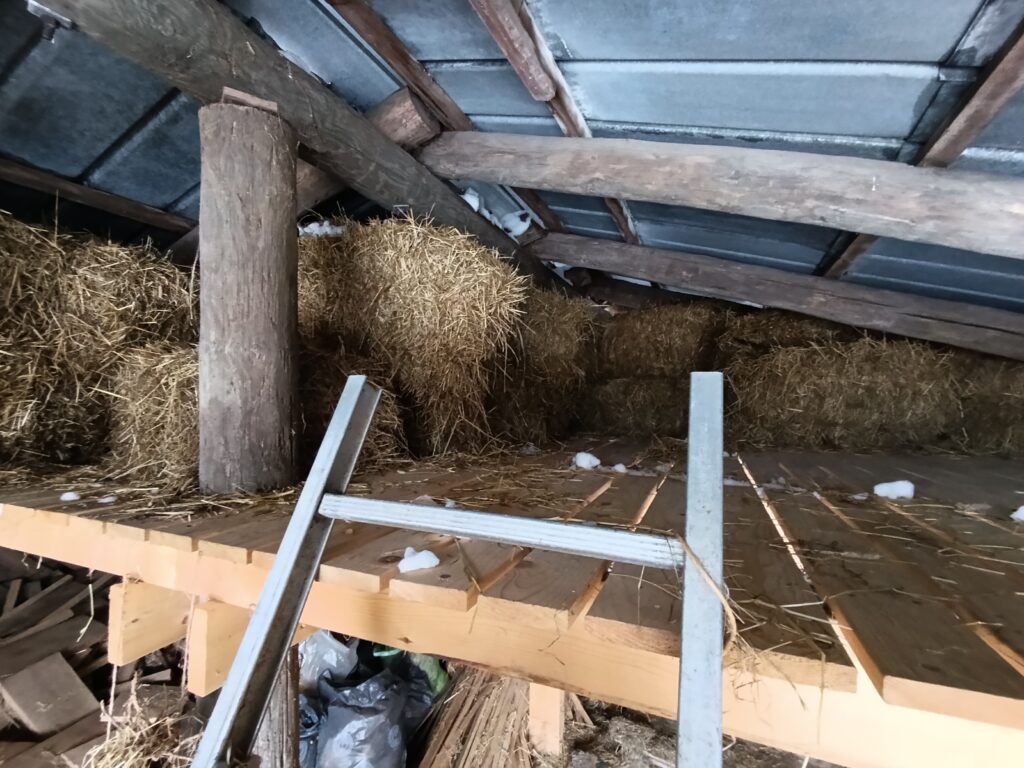
We can also save some hay. The last winters weren't that cold, so we didn't need much. This year, there aren't as many bales left. 

hayloft

We hope the remaining bales will last until the grass grows again. Otherwise, we will have to buy more. We prefer the smaller hay bales because we don't have any equipment to handle them.

Small hay bales are called Morten Korch bales in Denmark. Sometimes they are already sold out in the spring and we have to resort to the large round bales.

3/2/26

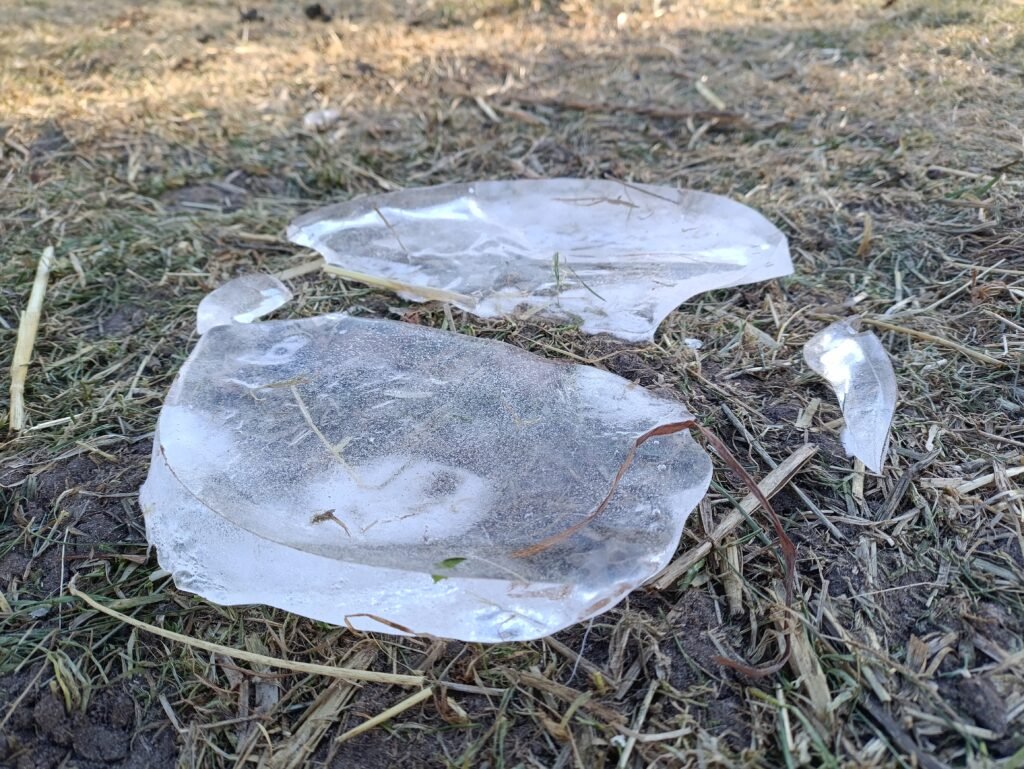
After it was already very frosty at the beginning of January, a new frost period began around January 19, 26, during which there were hardly any temperatures above freezing. At least since January 20, 26, a piece of ice from the drinking water bucket has been lying on the pasture and has not thawed despite occasional sunshine. 

ice from drinking water bucket

For the past three days we have had temperatures continuously below freezing, coupled with a blowing wind. A change in the weather is not in sight. Already the day before yesterday we were unable to set up any fence because the ground is frozen so hard. Fortunately, we had already fenced off a few pasture areas in advance, so the animals can move today. But we don't have any more in reserve. That means that at the latest in three days we will have to supplement feed significantly. Perhaps we will also manage to get a few fence posts into the ground with a hammer without them bending.

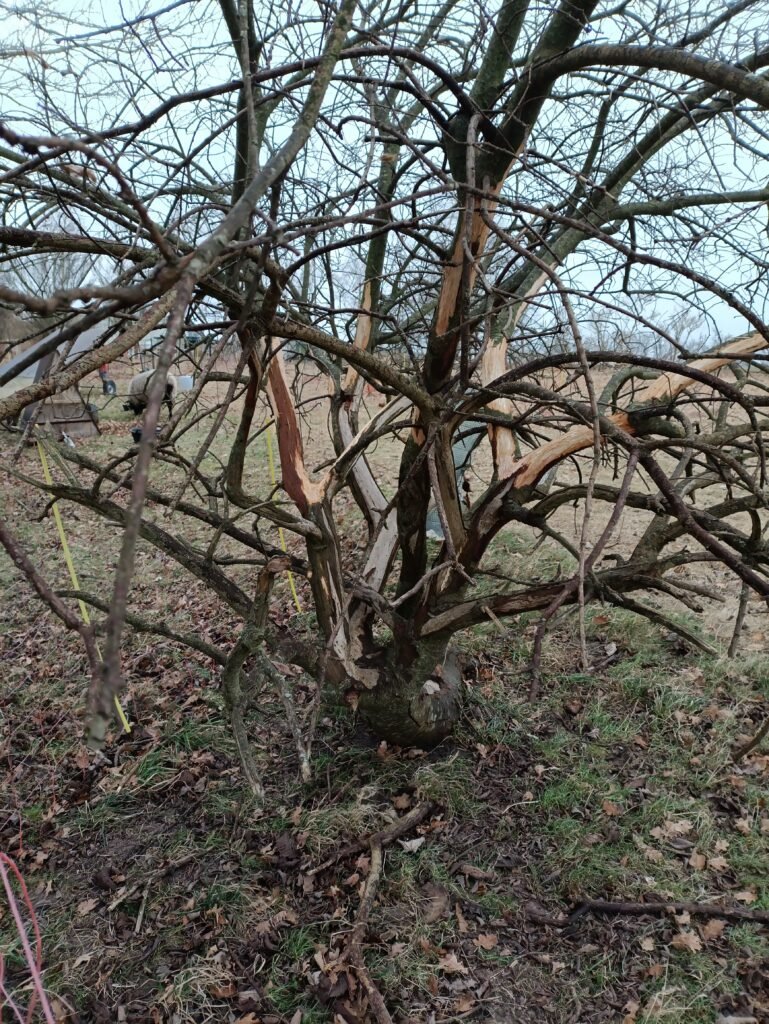
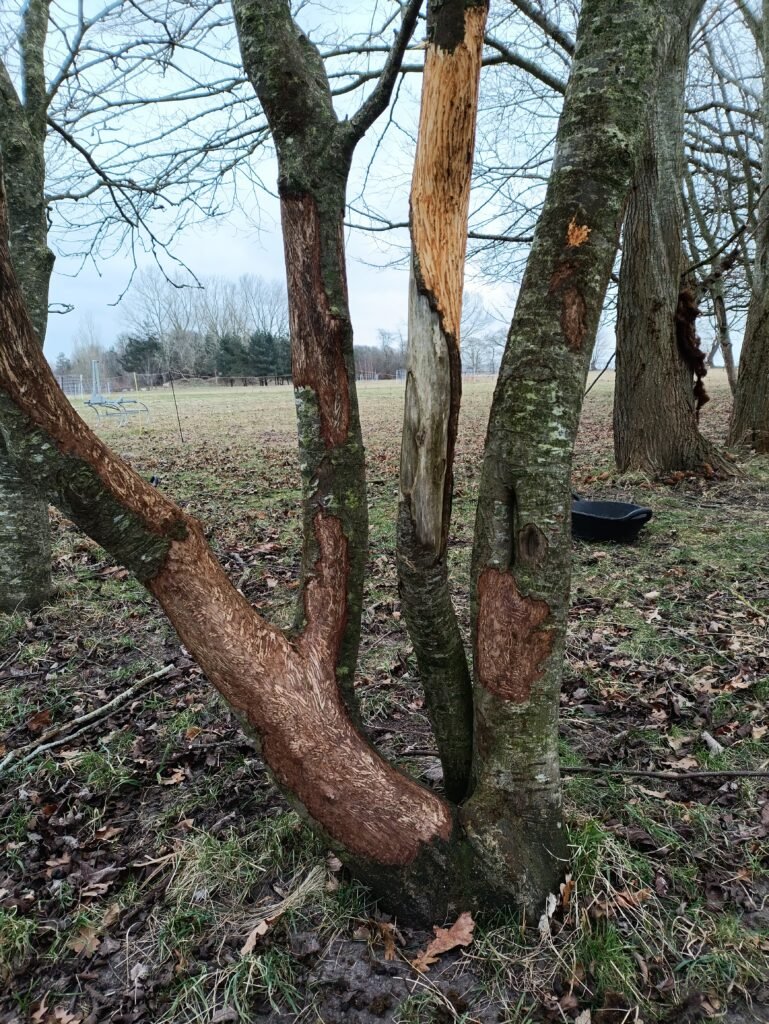
Looking for something to eat, the goats in particular, but also individual sheep, attack the trees.

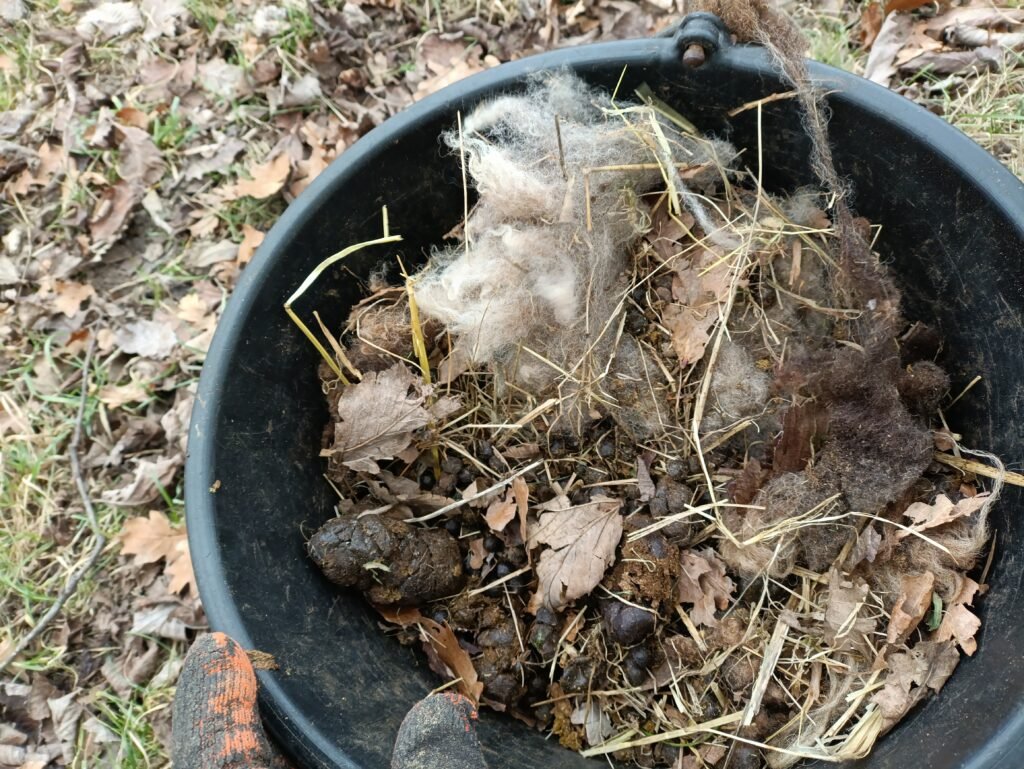
I rub individual trees with sheep dung. To do this, I pick up the dung along with the parts of raw wool from shearing that are not suitable for spinning. This is supposed to keep the animals from stripping the bark. Previously, that worked quite well too. At the moment, however, the frozen dung does not seem to have the same deterrent effect, and the animals continue to feed happily.

sheep droppings and raw wool

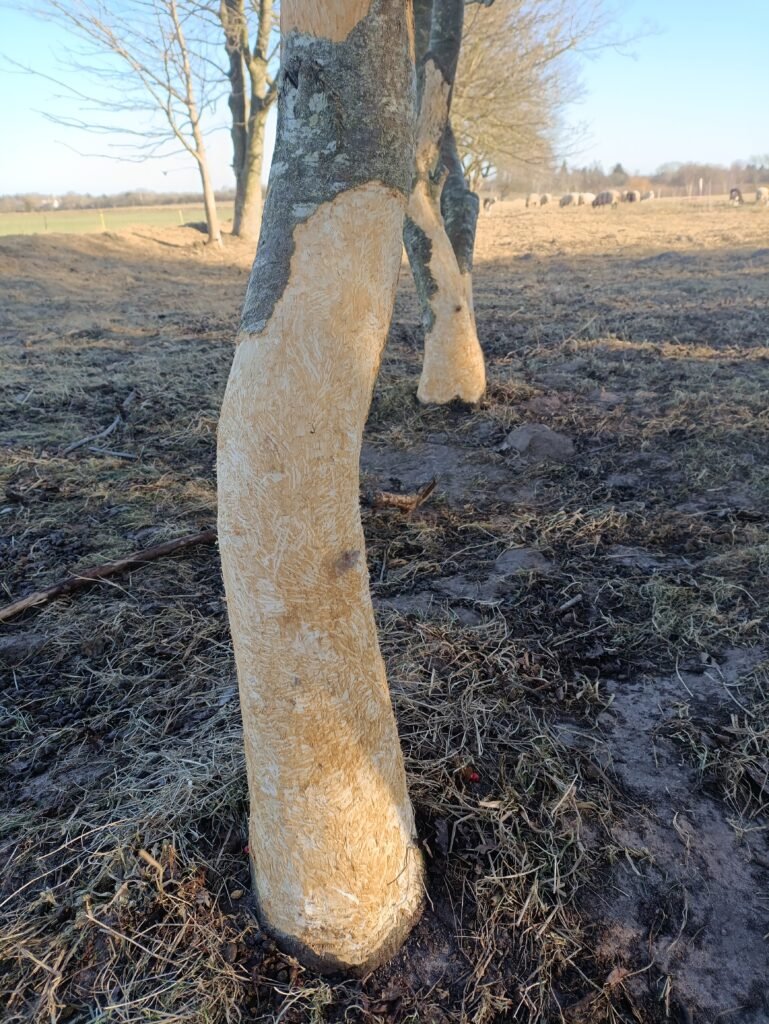
Some trees were almost completely stripped of their bark this morning. It remains to be seen whether the affected trees will survive.

img 20260203 135127

To treat the trees in the new section, I first let the collected dung thaw in our boiler room and then mixed it with a little water. If that doesn't help either, the trees will probably have to be completely removed from grazing in the winter.

30/1/26

The drying off of the goats did not work as well as I had imagined. After omitting the evening milking, the milk production of our two dairy goats dropped from a total of 750 ml daily to 700 ml. There the milk yield stagnated.

img 20260131 102829 scaled

My second step to reduce milk production was to milk only with the machine and not to assist by hand. As a result, the milk volume dropped to about 600 ml. At the moment, I am only milking for 1 minute per goat with the machine, and there is a total of about 500 ml of milk for both goats together.

As a final step, I will no longer milk every day and will increase the time intervals between milkings. The supplemental pellets (feed supplement) given during milking are also being reduced effective immediately. At the latest in two weeks, I will stop milking altogether.

16/1/26

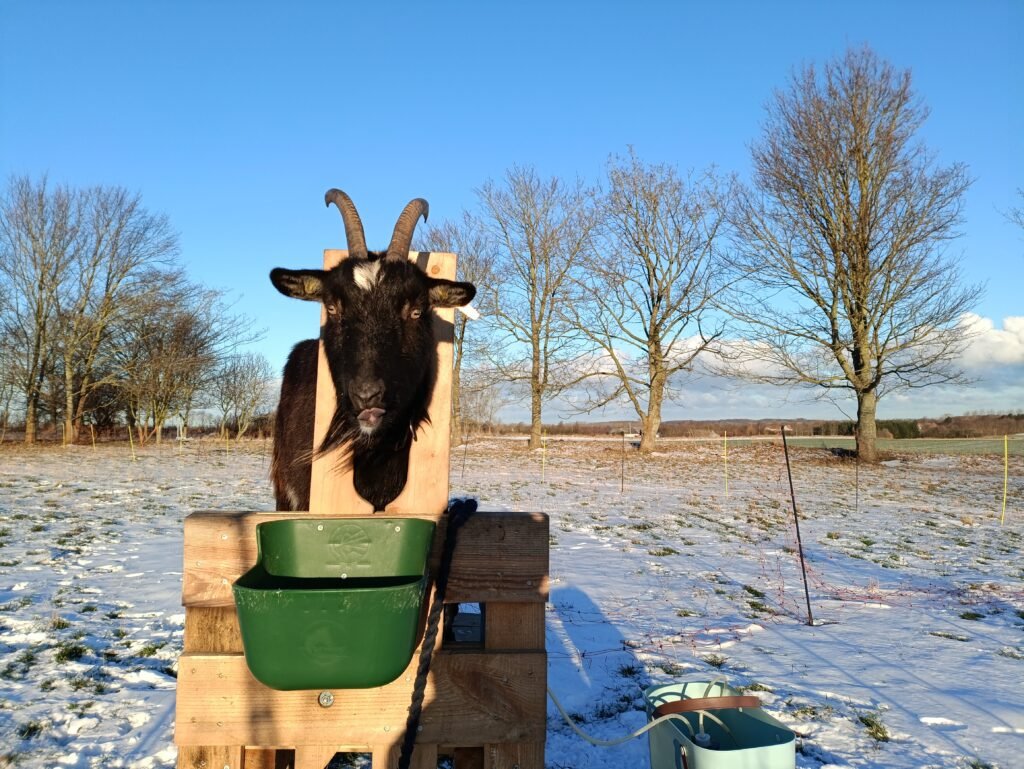
We also milk in winter. The goats have been milked continuously twice a day since May 2024 (which is 20 months). Recently, however, it has hardly been worth milking in the evening anymore. There wasn't more than a quarter of a liter. In the morning we get about half a liter.

bulette

Today I skipped the evening milking for the first time and am now only milking in the morning. The milk production in the udder should slowly decrease. If all goes well, I can stop milking completely at the beginning of February. We hope that Anna and Bulette, our two dairy goats, are pregnant, so they should be given at least two months to recover a bit and regain their strength.

anna

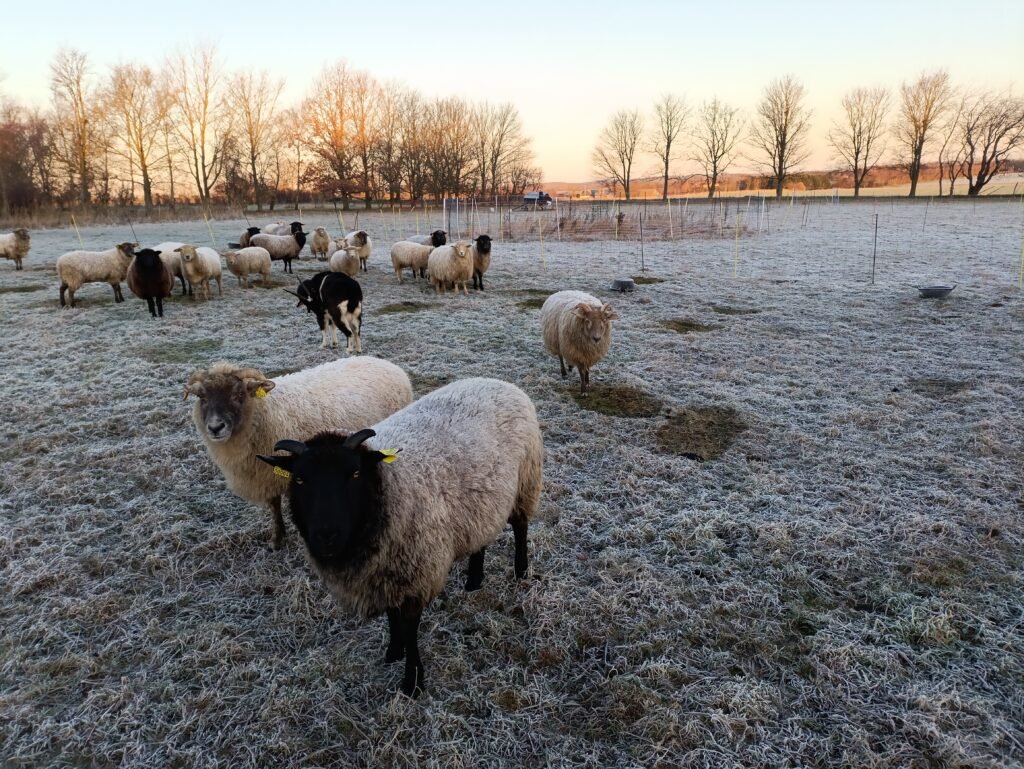
The goats are Danish Landrace goats and are so hardy that they can be kept outdoors all year round. However, they do not like rain and strong winds very much, and in such weather they hide in the small shelters that we try to position according to the wind direction. The goats also need hay and straw to keep themselves warm. On very cold days, they shiver all over when we bring the food.

Ertebølle sheep

The Ertebølle sheep are even hardier than the goats. In freezing weather, they lay scattered across the pasture at night and thawed the frozen grass cover slightly. Four years ago, we had a severe storm and drove the sheep into the open barn. However, they did not like that at all and quickly wanted to go back to their cold pasture.

7/1/26

Our animals have moved to the next piece of pasture.
Despite the light snow cover, they immediately started grazing.
Some even prefer the grass of the concurrently provided hay ration.

img 20260107 100226 scaled

There is not much left on the old piece.
If we hadn't supplemented with hay and our daily ration, that certainly wouldn't have been enough.
The sheep and goats didn't seem too stressed before the move.
Without supplementary feeding, we would have had to move them after one to two days.

img 20260107 100552 scaled
Scroll to Top