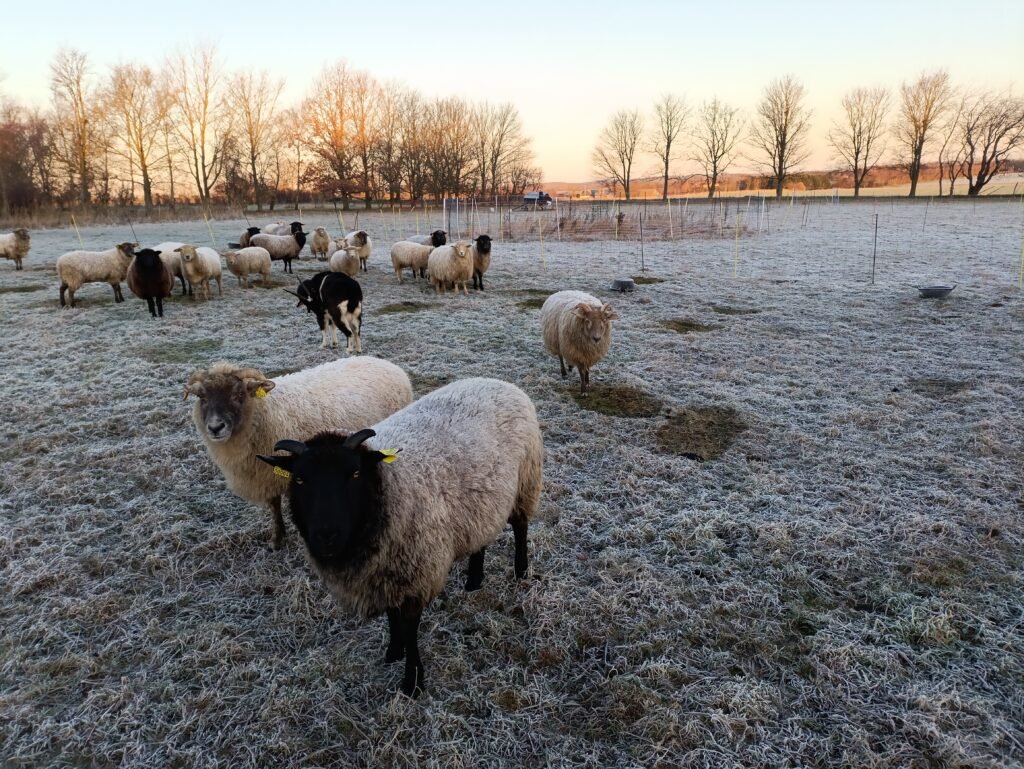
13/2/26

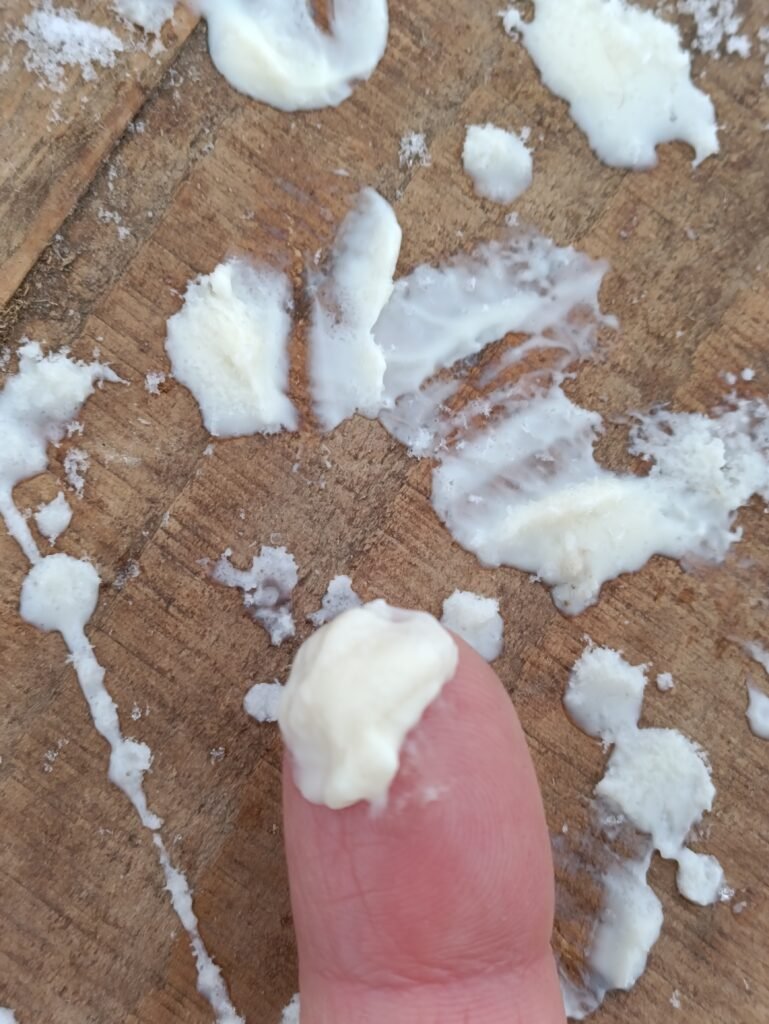
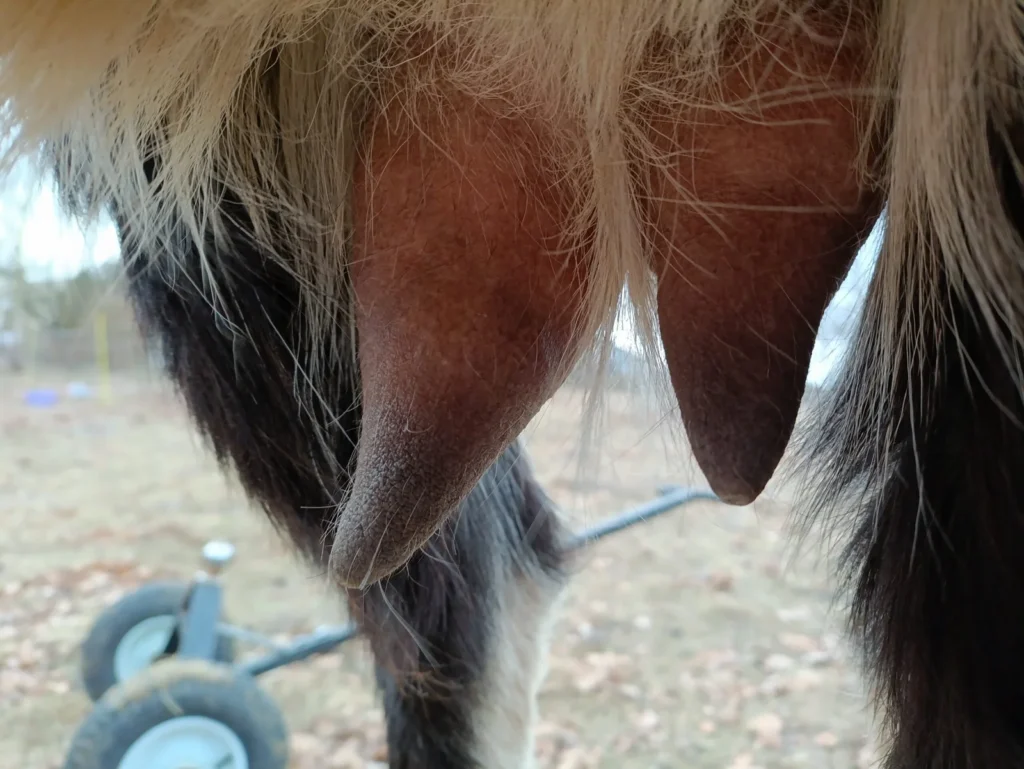
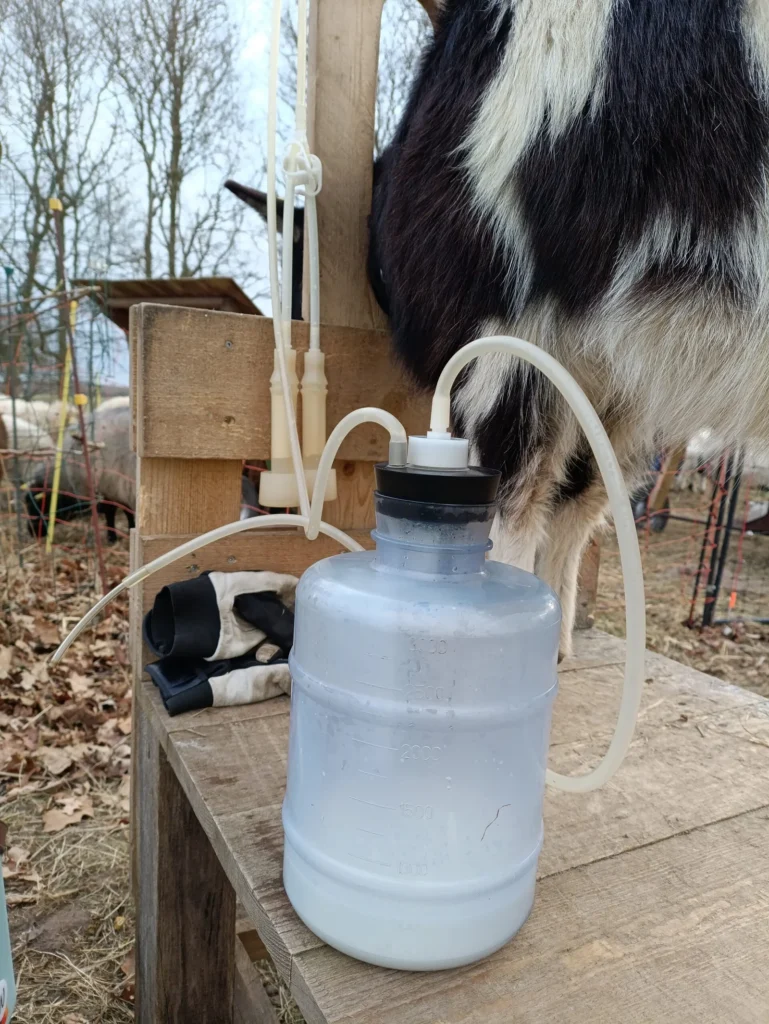
Gestern habe ich zum letzten Mal gemolken. Eigentlich hatte ich vor, erst fünf Tage später aufzuhören. Die ersten zwei bis drei Strahlen melken wir nicht in die Flasche, da sich in denen zu viele Keime sammeln können. Außerdem kann man die Beschaffenheit der Milch sehen. Bei Bulette kam gestern zu großen Teilen eine dicke, sahneartige Substanz heraus. Das Euter war auch deutlich kleiner. 
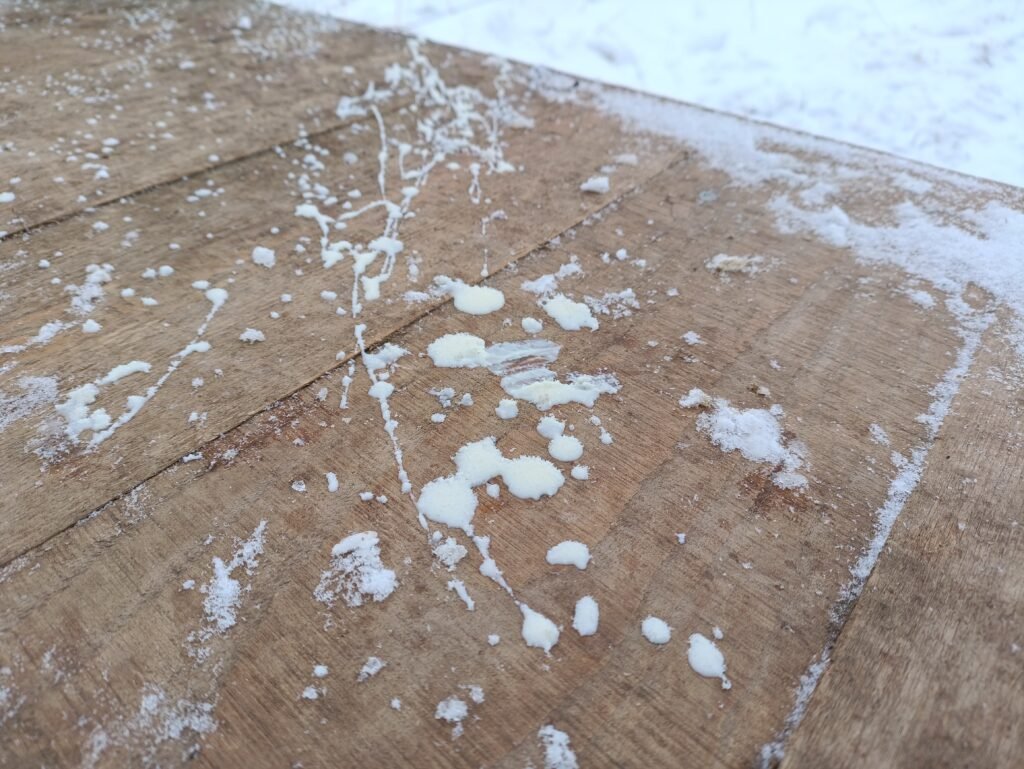
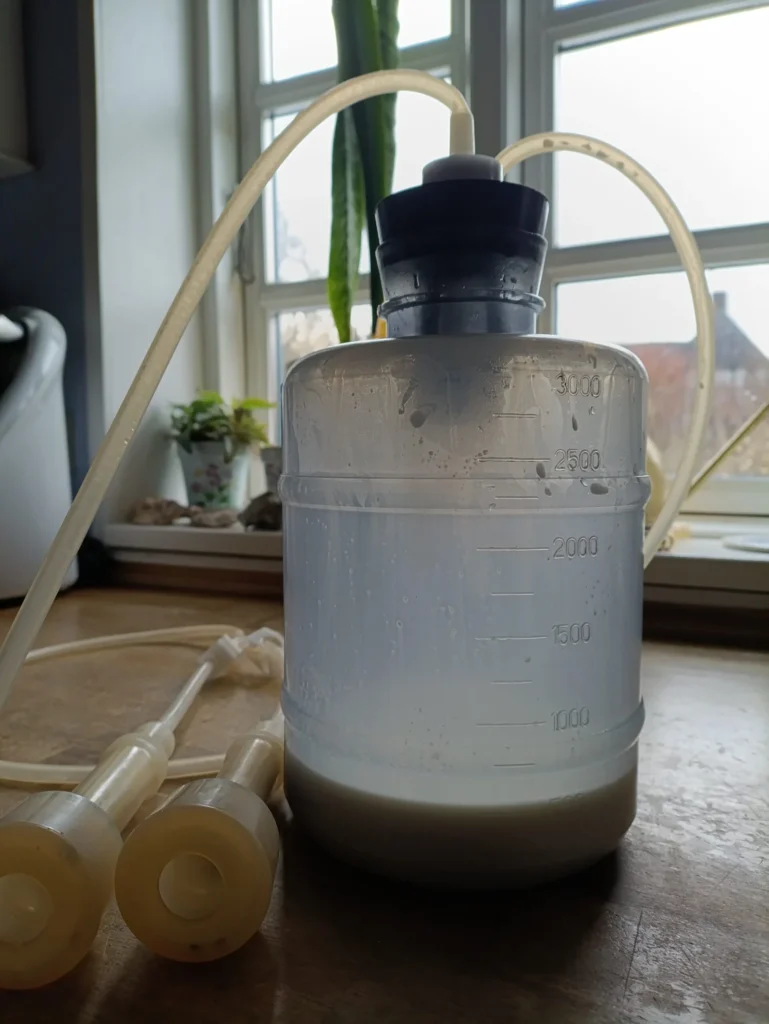
Bei Anna habe ich noch eine Minute mit der Maschine gemolken, es kamen aber nur 150 ml. Das Euter war ebenfalls nicht groß. Deswegen habe ich beschlossen, nicht weiter einzugreifen. Ich denke, Anna und Bulette schaffen es die Milchproduktion einzustellen. Bleibt zu hoffen, dass die beiden trächtig sind und wir in ca. zwei Monaten Zicklein bekommen.

Annas Milch hat auch eine viel dickflüssigere Konsistenz. Anscheinend hat bereits der Prozess begonnen, bei dem Flüssigkeit im Euter resorbiert wird. In dem Zuge soll angeblich der Anteil von Abwehrstoffen ansteigen. Die Milch werde ich deswegen nicht mehr verwerten.
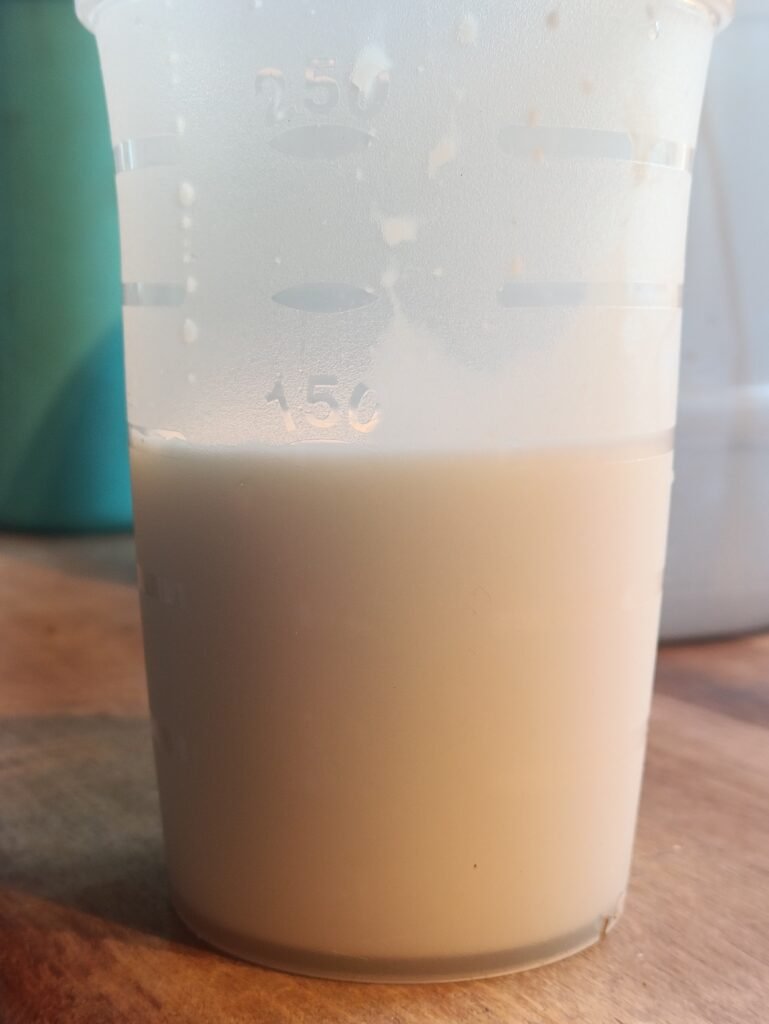
mælk

Das vorletzte Mal hatte ich vor vier Tagen gemolken. Da war die Milch auch schon recht dickflüssig. Vielleicht hätte ich schon zu diesem Zeitpunkt stoppen können.
30/1/26

The drying off of the goats did not work as well as I had imagined. After omitting the evening milking, the milk production of our two dairy goats dropped from a total of 750 ml daily to 700 ml. There the milk yield stagnated.

img 20260131 102829 scaled

My second step to reduce milk production was to milk only with the machine and not to assist by hand. As a result, the milk volume dropped to about 600 ml. At the moment, I am only milking for 1 minute per goat with the machine, and there is a total of about 500 ml of milk for both goats together.

As a final step, I will no longer milk every day and will increase the time intervals between milkings. The supplemental pellets (feed supplement) given during milking are also being reduced effective immediately. At the latest in two weeks, I will stop milking altogether.

16/1/26

We also milk in winter. The goats have been milked continuously twice a day since May 2024 (which is 20 months). Recently, however, it has hardly been worth milking in the evening anymore. There wasn't more than a quarter of a liter. In the morning we get about half a liter.

bulette

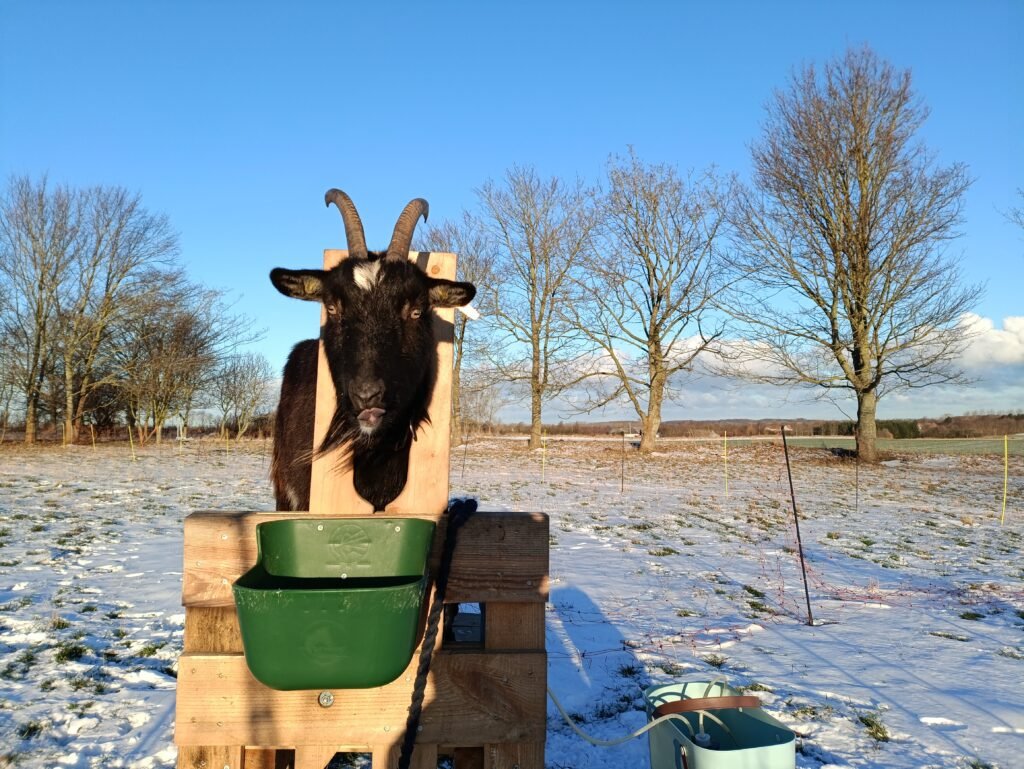
Today I skipped the evening milking for the first time and am now only milking in the morning. The milk production in the udder should slowly decrease. If all goes well, I can stop milking completely at the beginning of February. We hope that Anna and Bulette, our two dairy goats, are pregnant, so they should be given at least two months to recover a bit and regain their strength.

anna

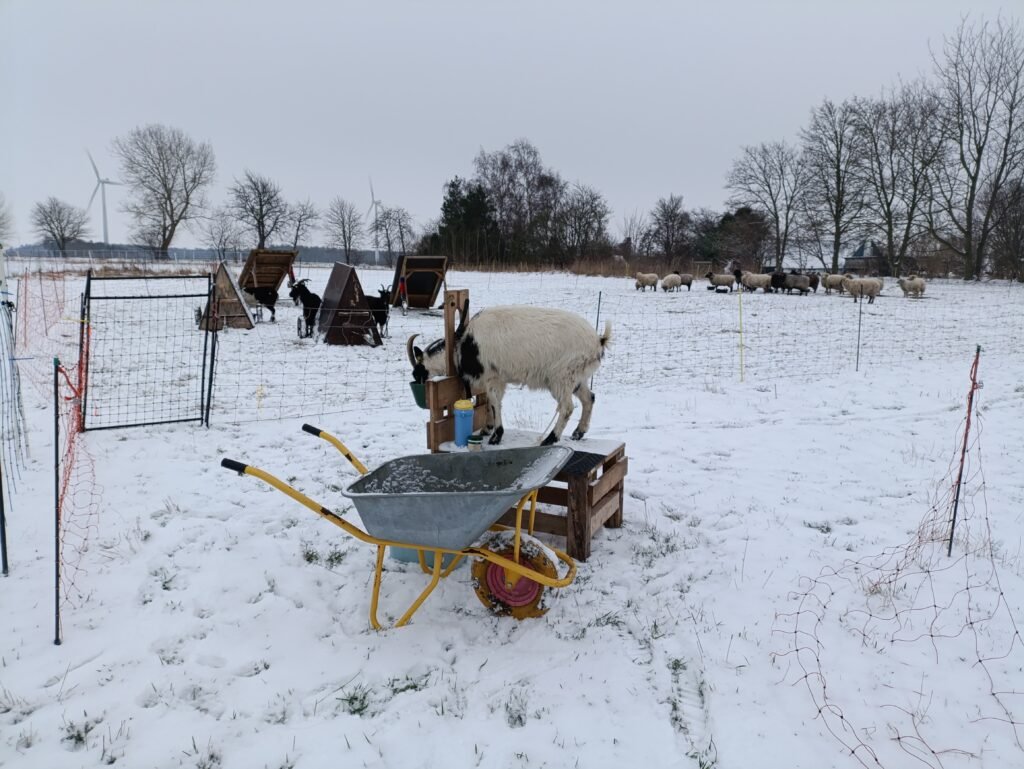
The goats are Danish Landrace goats and are so hardy that they can be kept outdoors all year round. However, they do not like rain and strong winds very much, and in such weather they hide in the small shelters that we try to position according to the wind direction. The goats also need hay and straw to keep themselves warm. On very cold days, they shiver all over when we bring the food.

Ertebølle sheep

The Ertebølle sheep are even hardier than the goats. In freezing weather, they lay scattered across the pasture at night and thawed the frozen grass cover slightly. Four years ago, we had a severe storm and drove the sheep into the open barn. However, they did not like that at all and quickly wanted to go back to their cold pasture.

Scroll to Top